


Wydawcy
Katalog tematyczny
- Archeologia (109)
- Ekonomia, finanse, business (13704)
- Filozofia (1445)
- Historia (3040)
- Języki i językoznawstwo (2356)
- Lifestyle, hobby i rozrywka (475)
- Medycyna (9704)
- Nauki humanistyczne (4)
- Nauki o Ziemi i środowisku (2638)
- Nauki ścisłe (20412)
- Nauki społeczne (8486)
- Edukacja (229)
- Kryminologia, opieka spełeczna (284)
- Obronność (10)
- Polityka (1389)
- Psychologia (777)
- Socjologia (410)
- Społeczeństwo i kultura (187)
- Nauki techniczne (13450)
- Prawo (1696)
- Publikacje informacyjne i interdyscyplinarne (1288)
- Religia i wierzenia (917)
- Technika komputerowa (4067)
- Zdrowie, relacje międzyludzkie i rozwój osobisty (657)





Informacje szczegółowe o książce
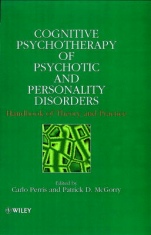
Cognitive Psychotherapy of Psychotic and Personality Disorders: Handbook of Theory and Practice
ISBN 9780471982210
Autor: Carlo Perris, Patrick D. McGorry
Wydawca: Wiley
Dostępność: 3-6 tygodni
Cena: 1 086,75 zł
Przed złożeniem zamówienia prosimy o kontakt mailowy celem potwierdzenia ceny.
ISBN13: |
9780471982210 |
ISBN10: |
0471982210 |
Autor: |
Carlo Perris, Patrick D. McGorry |
Oprawa: |
Hardback |
Rok Wydania: |
1998-12-03 |
Ilość stron: |
468 |
Wymiary: |
254x180 |
Tematy: |
JC |
Psychotic and personality disorders account for a large proportion of serious mental disorder, which can strike at the young and threaten normality and well–being through a lifetime, as well as at the old, destroying the quality of life in later years. These disorders are now being given priority by funders of mental health services. Many clinicians are using cognitive psychotherapy as an effective, person–centred psychological approach to the assessment, treatment and prevention of these serious mental disorders. This volume represents an authoritative survey of knowledge and practice by the leading research and clinical workers in this field of cognitive psychotherapy. Over recent years an impressive amount of research and clinical evidence has supported the effectiveness of cognitive therapy and related psychological treatment approaches, sometimes in conjunction with a new generation of antipsychotic and antidepressant drugs with better efficacy and lower side effects. The attraction of cognitive interventions is that they are empowering and humanistic in their respect for the person, they are based on clinically testable theories, they are highly compatible with biological models of vulnerability and disorder, and they are pragmatic in terms of length and depth of intervention. Further, within the cognitive approach, as demonstrated in this volume, there can be a range of approaches to the patient. All of these have in common an optimistic and humane approach to patients and their disorders. From the Foreword by Aaron Beck " the different articles in the book have been successful in applying many of the principles of cognitive therapy and have added much more in verifying the treatment of conditions such as dissociative disorders and personality disorders."
Spis treści:
Psychotherapeutic and Cognitive–behavioral Treatments for Schizophrenia: Developing a Disorder–specific Form of Psychotherapy for Person
s with Psychosis (L. Davidson, et al.).
Defining the Concept of Individual Vulnerability as a Base for Psychotherapeutic Interventions (C. Perris).
When the Going Gets Tough: Cognitive Therapy for the Severely Disturbed (T. Vallis).
The Assessment of Dysfunctional Working Models of Self and Others in Severely Disturbed Patients: A Preliminary Cross–National Study (C. Perris, et al.).
State–of–the–Art Approaches in the Treatment of Information–Processing Disorders in Schizophrenia (B. Hodel & H. Brenner).
Cognitive–behavioural Coping–Orientated Therapy for Schizophrenia: A New Treatment Model for Clinical Service and Research (A. Schaub).
Options and Clinical Decision Making in the Assessment and Psychological Treatment of Persistent Hallucinations and Delusions (L. Yusupoff & G. Haddock).
Understanding the Inexplicable: An Individually Formulated Cognitive Approach to Delusional Beliefs (D. Fowler, et al.).
Pathogeny and Therapy (S. Sassaroli & R. Lorenzini).
Early Intervention in Psychotic Disorders: A Critical Step in the Prevention of Psychological Morbidity (J. Edwards & P. McGorry).
An Integrated, Multilevels, Metacognitive Approach to the Treatment of Patients with a Schizophrenic Disorder or a Severe Personality Disorder (C. Perris & L. Skagerlind).
Preventively–Orientated Psychological Interventions in Early Psychosis (P. McGorry, et al.).
The Grief of Mental Illness: Context for the Cognitive Therapy of Schizophrenia (V. Lafond).
A Systematic Cognitive Therapy Approach to Schizo–Affective Psychosis (D. Turkington & D. Kingdon).
Cognitive–behavioral Approaches to the Treatment of Personality Disorders (J. Pretzer).
The Assessment of Personality Disorder: Selected Issues and Directions (H. Jackson).
Less Common Therapeutic Strategies and Techniques in the Cognitive Psychotherapy of Severely Disturbed Patients (H. Perris).
Met
acognition and Motivational Systems in Psychotherapy: A Cognitive–evolutionary Approach to the Treatment of Difficult Patients (G. Liotti & B. Intreccialagli).
A Cognitive–behavioural Approach to the Understanding and Management of Obsessive–compulsive Personality Disorder (M. Kyrios).
Interpersonal Process in the Treatment of Narcissistic Personality Disorders (E. Peyton & J. Safran).
Cognitive Psychotherapy in the Treatment of Personality Disorders in the Elderly (L. Bizzini).
Indexes.
Okładka tylna:
Psychotic and personality disorders account for a large proportion of serious mental disorder, which can strike at the young and threaten normality and well–being through a lifetime, as well as at the old, destroying the quality of life in later years. These disorders are now being given priority by funders of mental health services. Many clinicians are using cognitive psychotherapy as an effective, person–centred psychological approach to the assessment, treatment and prevention of these serious mental disorders. This volume represents an authoritative survey of knowledge and practice by the leading research and clinical workers in this field of cognitive psychotherapy. Over recent years an impressive amount of research and clinical evidence has supported the effectiveness of cognitive therapy and related psychological treatment approaches, sometimes in conjunction with a new generation of antipsychotic and antidepressant drugs with better efficacy and lower side effects. The attraction of cognitive interventions is that they are empowering and humanistic in their respect for the person, they are based on clinically testable theories, they are highly compatible with biological models of vulnerability and disorder, and they are pragmatic in terms of length and depth of intervention. Further, within the cognitive approach, as demonstrated in this volume, there can be a range of approaches to the p
atient. All of these have in common an optimistic and humane approach to patients and their disorders. From the Foreword by Aaron Beck " the different articles in the book have been successful in applying many of the principles of cognitive therapy and have added much more in verifying the treatment of conditions such as dissociative disorders and personality disorders."
Koszyk
Książek w koszyku: 0 szt.
Wartość zakupów: 0,00 zł
Informacje


Kontakt
Gambit
Centrum Oprogramowania
i Szkoleń Sp. z o.o.
Al. Pokoju 29b/22-24
31-564 Kraków
Siedziba Księgarni
ul. Kordylewskiego 1
31-542 Kraków
+48 12 410 5991
+48 12 410 5987
+48 12 410 5989
Subskrypcje
Administratorem danych osobowych jest firma Gambit COiS Sp. z o.o. Na podany adres będzie wysyłany wyłącznie biuletyn informacyjny.
Autoryzacja płatności

Informacje na temat autoryzacji płatności poprzez PayU.

© Copyright 2012: GAMBIT COiS Sp. z o.o. Wszelkie prawa zastrzeżone.
Projekt i wykonanie: Alchemia Studio Reklamy