


Wydawcy
Katalog tematyczny
- Archeologia (109)
- Ekonomia, finanse, business (13704)
- Filozofia (1445)
- Historia (3040)
- Języki i językoznawstwo (2356)
- Lifestyle, hobby i rozrywka (475)
- Medycyna (9704)
- Chirurgia (272)
- Inne gałęzie medycyny (1871)
- Medycyna kliniczna (4187)
- Medycyna niekonwencjonalna (14)
- Medycyna przedkliniczna (269)
- Medycyna, ogólnie (1740)
- Medyczne służby pomocnicze (745)
- Studia medyczne (16)
- Weterynaria (548)
- Nauki humanistyczne (4)
- Nauki o Ziemi i środowisku (2638)
- Nauki ścisłe (20412)
- Nauki społeczne (8486)
- Nauki techniczne (13450)
- Prawo (1696)
- Publikacje informacyjne i interdyscyplinarne (1288)
- Religia i wierzenia (917)
- Technika komputerowa (4067)
- Zdrowie, relacje międzyludzkie i rozwój osobisty (657)





Informacje szczegółowe o książce
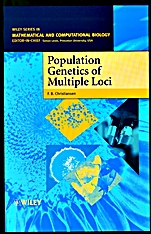
Population Genetics of Multiple Loci
ISBN 9780471979791
Autor: Freddy B. Christiansen
Wydawca: Wiley
Dostępność: 3-6 tygodni
Cena: 1 332,45 zł
Przed złożeniem zamówienia prosimy o kontakt mailowy celem potwierdzenia ceny.
ISBN13: |
9780471979791 |
ISBN10: |
0471979791 |
Autor: |
Freddy B. Christiansen |
Oprawa: |
Hardback |
Rok Wydania: |
1999-10-28 |
Ilość stron: |
384 |
Wymiary: |
261x177 |
Tematy: |
MFN |
Population Genetics of Multiple Loci F. B. Christiansen University of Aarhus, Denmark "This is a very beautiful and powerful study of an area that Christiansen has dominated for many years." – Marcus Feldman, Stanford University, USA Population genetics thrives on the constant interaction between theoretical and empirical knowledge. In the first instance, population genetics was developed using one–locus, two–allele models for genetic variation. The simplicity of these models opened up theoretical developments in population and evolutionary genetics to biologists without specialist training in mathematics. Population genetics of multi–allelic loci is more complex and requires more mathematical insight, and its study is predominantly undertaken by mathematical biologists. Traditional formulations of multi–locus theory do not simplify by assuming two alleles per locus. In this elegant presentation the author provides a formulation of multi–locus population genetics that retains the simplicity of two–allele models.
∗ Provides an accessible and natural extension of classical population genetics to multiple loci
∗ Exposes the population genetic aspects of sexual reproduction
∗ Describes the complexity of evolutionary interactions among genes
∗ Provides the background for insight into the functioning of genetic algorithms applied in computer science
∗ Written by a world leader in the field
The book is divided into two main sections. Part I – Recombination and Segregation – includes coverage of random mating, inbreeding, migration and mixing. Part II – Selection – covers numerous phenomena involving natural selection including viability, fertility, mutation and migration. The author has successfully presented the theory in a way that is intelligible to anyone with a reasonably good background in basic mathematics and is devoted to learning multiple loci popula
tion genetics. The text is primarily aimed at advanced undergraduate and postgraduate students and researchers interested in genetics and population biology. It is also essential reading for those working or researching in biomathematics and adaptive computing.
Spis treści:
Interactions among Genes.
RECOMBINATION AND SEGREGATION.
Random Mating: Sexes Equal.
Random Mating: Sex Difference.
Inbreeding: Partial Selfing.
Migration and Mixing.
Phenotypic Variation.
SELECTION.
Viability Selection.
Symmetric Viability Selection.
Fertility Selection.
Mutation and Selection.
Migration and Selection.
Evolution of Recombination.
Glossary.
References.
Index.
Okładka tylna:
Population Genetics of Multiple Loci F. B. Christiansen University of Aarhus, Denmark "This is a very beautiful and powerful study of an area that Christiansen has dominated for many years." – Marcus Feldman, Stanford University, USA Population genetics thrives on the constant interaction between theoretical and empirical knowledge. In the first instance, population genetics was developed using one–locus, two–allele models for genetic variation. The simplicity of these models opened up theoretical developments in population and evolutionary genetics to biologists without specialist training in mathematics. Population genetics of multi–allelic loci is more complex and requires more mathematical insight, and its study is predominantly undertaken by mathematical biologists. Traditional formulations of multi–locus theory do not simplify by assuming two alleles per locus. In this elegant presentation the author provides a formulation of multi–locus population genetics that retains the simplicity of two–allele models.
∗ Provides an accessible and natural extension of classical population genetics to multiple loci
∗ Exposes the population genetic aspects of sexual re
production
∗ Describes the complexity of evolutionary interactions among genes
∗ Provides the background for insight into the functioning of genetic algorithms applied in computer science
∗ Written by a world leader in the field
The book is divided into two main sections. Part I – Recombination and Segregation – includes coverage of random mating, inbreeding, migration and mixing. Part II – Selection – covers numerous phenomena involving natural selection including viability, fertility, mutation and migration. The author has successfully presented the theory in a way that is intelligible to anyone with a reasonably good background in basic mathematics and is devoted to learning multiple loci population genetics. The text is primarily aimed at advanced undergraduate and postgraduate students and researchers interested in genetics and population biology. It is also essential reading for those working or researching in biomathematics and adaptive computing.
Koszyk
Książek w koszyku: 0 szt.
Wartość zakupów: 0,00 zł
Informacje


Kontakt
Gambit
Centrum Oprogramowania
i Szkoleń Sp. z o.o.
Al. Pokoju 29b/22-24
31-564 Kraków
Siedziba Księgarni
ul. Kordylewskiego 1
31-542 Kraków
+48 12 410 5991
+48 12 410 5987
+48 12 410 5989
Subskrypcje
Administratorem danych osobowych jest firma Gambit COiS Sp. z o.o. Na podany adres będzie wysyłany wyłącznie biuletyn informacyjny.
Autoryzacja płatności

Informacje na temat autoryzacji płatności poprzez PayU.

© Copyright 2012: GAMBIT COiS Sp. z o.o. Wszelkie prawa zastrzeżone.
Projekt i wykonanie: Alchemia Studio Reklamy