


Wydawcy
Katalog tematyczny
- Archeologia (109)
- Ekonomia, finanse, business (13704)
- Filozofia (1445)
- Historia (3040)
- Języki i językoznawstwo (2356)
- Lifestyle, hobby i rozrywka (475)
- Medycyna (9704)
- Nauki humanistyczne (4)
- Nauki o Ziemi i środowisku (2638)
- Nauki ścisłe (20412)
- Astronomia (294)
- Biologia (5119)
- Chemia (6540)
- Fizyka (3309)
- Matematyka (4574)
- Nauki ścisłe, ogólnie (503)
- Nauki społeczne (8486)
- Nauki techniczne (13450)
- Prawo (1696)
- Publikacje informacyjne i interdyscyplinarne (1288)
- Religia i wierzenia (917)
- Technika komputerowa (4067)
- Zdrowie, relacje międzyludzkie i rozwój osobisty (657)





Informacje szczegółowe o książce
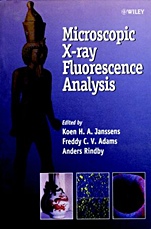
Microscopic X–Ray Fluorescence Analysis
ISBN 9780471974260
Autor: Koen H. A. Janssens, Freddy C. V. Adams, Anders Rindby
Wydawca: Wiley
Dostępność: 3-6 tygodni
Cena: 1 897,35 zł
Przed złożeniem zamówienia prosimy o kontakt mailowy celem potwierdzenia ceny.
ISBN13: |
9780471974260 |
ISBN10: |
0471974269 |
Autor: |
Koen H. A. Janssens, Freddy C. V. Adams, Anders Rindby |
Oprawa: |
Hardback |
Rok Wydania: |
2000-04-20 |
Ilość stron: |
434 |
Wymiary: |
246x166 |
Tematy: |
PDG |
Microscopic X–ray Fluorescence Analysis Edited by Koen H. A. Janssens, Freddy C. V. Adams Department of Chemistry, University of Antwerp, Belgium and Anders Rindby Department of Physics, Chalmers University of Technology, Göteborg, Sweden In the last 10–15 years many analytical advances in X–ray fluorescence analysis (XRF) have taken place, giving rise to non–destructive ultrasensitive surface analyses of materials. One of the variants of XRF developed is micro–XRF (μ–XRF), which is able to analyse the distribution of major, minor and trace elements in microscopic sample surface areas. Due to the availability of commercial instrumentation and the development of simple devices for focusing X–rays, μ–XRF has increased in popularity and is able to fill the gap between bulk X–ray fluorescence and electron probe X–ray microanalysis (EPXMA). Microscopic X–ray Fluorescence Analysis is the first single volume to bring together introductory and advanced information on the essential aspects of the technique, thereby providing an excellent overview of the developments and applications of μ–XRF. Topics discussed in the book include:
∗ Interaction of X–rays with matter
∗ Micro–focusing X–ray optics
∗ Instrumentation for μ–XRF with laboratory and synchrotron sources
∗ Evaluation and calibration of μ–XRF data
∗ Comparison of μ–XRF to other microanalytical techniques.
In addition, the final chapters of the book describe applications of μ–XRF in the geosciences, in art and archaeology, environmental and biological applications, and the use of μ–XRF for industrial purposes. Finally an overview is presented of some of the new directions both laboratory and synchrotron μ–XRF are likely to take in the 21st Century.
Spis treści:
Overview (K. Jan
ssens, et al.).
Interaction of X–Rays with Matter (J. Fernández).
Microfocusing X–Ray Optics (A. Rindby, et al.).
Instrumentation for μ–XRF with Laboratory Sources (A. Rindby).
Instrumentation for μ–XRF at Synchrotron Sources (A. Iida).
Evaluation and Calibration of μ–XRF Data (K. Janssens, et al.).
Comparison with Other Microanalytical Techniques (K. Janssens).
Applications in the Geological Sciences (K. Jones).
Applications in Art and Archaeology (K. Janssens & F. Adams).
Environmental and Biological Applications of μ–XRF (J. Osán, et al.).
Industrial Applications of μ–XRF (D. Carpenter).
The Future of μ–XRF (F. Adams & K. Janssens).
Index.
Okładka tylna:
Microscopic X–ray Fluorescence Analysis Edited by Koen H. A. Janssens, Freddy C. V. Adams Department of Chemistry, University of Antwerp, Belgium and Anders Rindby Department of Physics, Chalmers University of Technology, Göteborg, Sweden In the last 10–15 years many analytical advances in X–ray fluorescence analysis (XRF) have taken place, giving rise to non–destructive ultrasensitive surface analyses of materials. One of the variants of XRF developed is micro–XRF (μ–XRF), which is able to analyse the distribution of major, minor and trace elements in microscopic sample surface areas. Due to the availability of commercial instrumentation and the development of simple devices for focusing X–rays, μ–XRF has increased in popularity and is able to fill the gap between bulk X–ray fluorescence and electron probe X–ray microanalysis (EPXMA). Microscopic X–ray Fluorescence Analysis is the first single volume to bring together introductory and advanced information on the essential aspects of the technique, thereby providing an excellent overview of the developments and applications of _
6;–XRF. Topics discussed in the book include:
∗ Interaction of X–rays with matter
∗ Micro–focusing X–ray optics
∗ Instrumentation for μ–XRF with laboratory and synchrotron sources
∗ Evaluation and calibration of μ–XRF data
∗ Comparison of μ–XRF to other microanalytical techniques.
In addition, the final chapters of the book describe applications of μ–XRF in the geosciences, in art and archaeology, environmental and biological applications, and the use of μ–XRF for industrial purposes. Finally an overview is presented of some of the new directions both laboratory and synchrotron μ–XRF are likely to take in the 21st Century.
Koszyk
Książek w koszyku: 0 szt.
Wartość zakupów: 0,00 zł
Informacje


Kontakt
Gambit
Centrum Oprogramowania
i Szkoleń Sp. z o.o.
Al. Pokoju 29b/22-24
31-564 Kraków
Siedziba Księgarni
ul. Kordylewskiego 1
31-542 Kraków
+48 12 410 5991
+48 12 410 5987
+48 12 410 5989
Subskrypcje
Administratorem danych osobowych jest firma Gambit COiS Sp. z o.o. Na podany adres będzie wysyłany wyłącznie biuletyn informacyjny.
Autoryzacja płatności

Informacje na temat autoryzacji płatności poprzez PayU.

© Copyright 2012: GAMBIT COiS Sp. z o.o. Wszelkie prawa zastrzeżone.
Projekt i wykonanie: Alchemia Studio Reklamy