


Wydawcy
Katalog tematyczny
- Archeologia (109)
- Ekonomia, finanse, business (13704)
- Filozofia (1445)
- Historia (3040)
- Języki i językoznawstwo (2356)
- Lifestyle, hobby i rozrywka (475)
- Medycyna (9704)
- Nauki humanistyczne (4)
- Nauki o Ziemi i środowisku (2638)
- Nauki ścisłe (20412)
- Nauki społeczne (8486)
- Edukacja (229)
- Kryminologia, opieka spełeczna (284)
- Obronność (10)
- Polityka (1389)
- Psychologia (777)
- Socjologia (410)
- Społeczeństwo i kultura (187)
- Nauki techniczne (13450)
- Prawo (1696)
- Publikacje informacyjne i interdyscyplinarne (1288)
- Religia i wierzenia (917)
- Technika komputerowa (4067)
- Zdrowie, relacje międzyludzkie i rozwój osobisty (657)





Informacje szczegółowe o książce
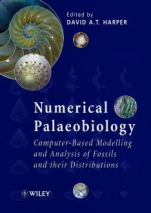
Numerical Palaeobiology: Computer–based Modelling and Analysis of Fossils and their Distributions
ISBN 9780471974055
Autor: David A. T. Harper
Wydawca: Wiley
Dostępność: 3-6 tygodni
Cena: 1 372,35 zł
Przed złożeniem zamówienia prosimy o kontakt mailowy celem potwierdzenia ceny.
ISBN13: |
9780471974055 |
ISBN10: |
0471974056 |
Autor: |
David A. T. Harper |
Oprawa: |
Hardback |
Rok Wydania: |
1999-04-26 |
Ilość stron: |
478 |
Wymiary: |
232x172 |
Tematy: |
JBB |
Microcomputers have become an everyday part of the palaeobiologists tool–kit. Moreover, there is now a wide range of computer software available to handle all sorts of palaeontological data and problems. This book, aimed at final year undergraduates, graduate students and professional palaeontologists, biologists and geologists, brings together the many strands of contemporary palaeontology through the medium of numeracy. It provides a comprehensive review, with applications, of the many computer based techniques available for the analysis and modelling of palaeontological data. The first part of the book covers classical phenetic taxonomy through cladistics and the computer–generated reconstructions of fossils to actual models for fossil growth. This leads onto distribution analysis and modelling of fossils in time and space. Detailed stratigraphical distributions of fossils are described in quantitative terms together with the larger–scale patterns in the history of life itself, while palaeoecology, palynofacies, trace fossils and palaeogeography are all introduced through a spectrum of numerical algorithms. The majority of the studies are linked to specific software packages and many are illustrated with case histories. Although there are a number of books available on computer modelling and data analysis in geology, no study has integrated the two with such a range of palaeontological subject material.
Spis treści:
Quantitative and Morphometric Methods in Taxonomy (D. Harper & A. Owen).
Phylogenetic Systematics and Palaeontology (S. Carlson).
Computer–based Serial Section Reconstruction (M. Herbert).
Statistical and Imaging Methods Applied to Deformed Fossils (N. Hughes).
Computer Models of Fossil Morphology (A. Swan).
Quantitative Biostratigraphy (H. Armstrong).
The Quantitative Description of Biotic Change Using Palaeontological Databases (K. Johnson & T. McCormick).
The History of Lif
e: Large Databases in Palaeontology (M. Benton).
Community Analysis (W. Etter).
Multivariate Techniques in Palynofacies Analysis (J. Smith).
Quantitative Approaches to the Resolution of Taxonomic Problems in Invertebrate Ichnology (P. Orr).
A New Approach to Seriation (P. Ryan, et al.).
Indexes.
Okładka tylna:
Microcomputers have become an everyday part of the palaeobiologists tool–kit. Moreover, there is now a wide range of computer software available to handle all sorts of palaeontological data and problems. This book, aimed at final year undergraduates, graduate students and professional palaeontologists, biologists and geologists, brings together the many strands of contemporary palaeontology through the medium of numeracy. It provides a comprehensive review, with applications, of the many computer based techniques available for the analysis and modelling of palaeontological data. The first part of the book covers classical phenetic taxonomy through cladistics and the computer–generated reconstructions of fossils to actual models for fossil growth. This leads onto distribution analysis and modelling of fossils in time and space. Detailed stratigraphical distributions of fossils are described in quantitative terms together with the larger–scale patterns in the history of life itself, while palaeoecology, palynofacies, trace fossils and palaeogeography are all introduced through a spectrum of numerical algorithms. The majority of the studies are linked to specific software packages and many are illustrated with case histories. Although there are a number of books available on computer modelling and data analysis in geology, no study has integrated the two with such a range of palaeontological subject material.
Koszyk
Książek w koszyku: 0 szt.
Wartość zakupów: 0,00 zł
Informacje


Kontakt
Gambit
Centrum Oprogramowania
i Szkoleń Sp. z o.o.
Al. Pokoju 29b/22-24
31-564 Kraków
Siedziba Księgarni
ul. Kordylewskiego 1
31-542 Kraków
+48 12 410 5991
+48 12 410 5987
+48 12 410 5989
Subskrypcje
Administratorem danych osobowych jest firma Gambit COiS Sp. z o.o. Na podany adres będzie wysyłany wyłącznie biuletyn informacyjny.
Autoryzacja płatności

Informacje na temat autoryzacji płatności poprzez PayU.

© Copyright 2012: GAMBIT COiS Sp. z o.o. Wszelkie prawa zastrzeżone.
Projekt i wykonanie: Alchemia Studio Reklamy