


Wydawcy
Katalog tematyczny
- Archeologia (109)
- Ekonomia, finanse, business (13704)
- Filozofia (1445)
- Historia (3040)
- Języki i językoznawstwo (2356)
- Lifestyle, hobby i rozrywka (475)
- Medycyna (9704)
- Nauki humanistyczne (4)
- Nauki o Ziemi i środowisku (2638)
- Nauki ścisłe (20412)
- Astronomia (294)
- Biologia (5119)
- Chemia (6540)
- Chemia analityczna (361)
- Chemia fizyczna (346)
- Chemia nieorganiczna (137)
- Chemia organiczna (535)
- Krystalografia (27)
- Minerologia (46)
- Fizyka (3309)
- Matematyka (4574)
- Nauki ścisłe, ogólnie (503)
- Nauki społeczne (8486)
- Nauki techniczne (13450)
- Prawo (1696)
- Publikacje informacyjne i interdyscyplinarne (1288)
- Religia i wierzenia (917)
- Technika komputerowa (4067)
- Zdrowie, relacje międzyludzkie i rozwój osobisty (657)





Informacje szczegółowe o książce
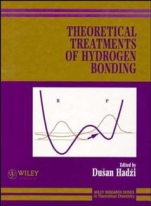
Theoretical Treatments of Hydrogen Bonding
ISBN 9780471973959
Autor: Dušan Hadži
Wydawca: Wiley
Dostępność: 3-6 tygodni
Cena: 1 871,10 zł
Przed złożeniem zamówienia prosimy o kontakt mailowy celem potwierdzenia ceny.
ISBN13: |
9780471973959 |
ISBN10: |
0471973955 |
Autor: |
Dušan Hadži |
Oprawa: |
Hardback |
Rok Wydania: |
1997-10-23 |
Ilość stron: |
332 |
Wymiary: |
253x200 |
Tematy: |
PN |
Hydrogen bonding is crucial in many chemical and biochemical reactions, as well as in determining material properties. A good insight into the theoretical methods of treating hydrogen bonding is essential for those wishing to model its effects computationally in a wide range of fields involving hydrogen bonding, as well as those wishing to extract the maximal amount of information from experimental data. Theoretical Treatments of Hydrogen Bonding presents the reader with the state of the art of the key theoretical approaches to hydrogen bonding and considers the hydrogen bond from the various aspects. The first five chapters are devoted to the methods used for treating the electronic basis of hydrogen bonding, including a consideration of the electrostatic model, density functional theory and molecular orbital methods. Later chapters consider the dynamics of hydrogen bonds with particular attention to the treatment of proton transfer; manifestations of dynamics as reflected in infrared spectra and nuclear magnetic relaxation are also considered. Hydrogen bonding in liquids and solids such as ferroelectrics are included. The book concludes with an epilogue which discusses the likely development of hydrogen bond computations in very large chemical systems. Theoretical Treatments of Hydrogen Bonding offers the reader a comprehensive view of the current theoretical approaches to hydrogen bonding. It is a valuable presentation of theoretical tools useful to those looking for the most appropriate approach for treating a particular problem involving hydrogen bonding.
Spis treści:
The Hydrogen Bond: An Electrostatic Interaction?
(A. Buckingham).
Ab Initio Methods Applied to Hydrogen–Bonded Systems (J. de Rejdt & F. van Duijneveldt).
Density Functional Theory and its Application to Hydrogen–Bonded Systems (H. Guo, et al.).
Ab Initio GIAO Magnetic Shielding Tensor for Hydrogen–Bonded Systems (J. Hinton & K. Wolinski
).
Hydrogen Bonding by Semiempirical Molecular Orbital Methods (D. Hadzi & J. Koller).
Simulating Proton Transfer Processes: Quantum Dynamics Embedded in a Classical Environment (H. Berendsen & J. Mavri).
Theory of Solvent Effects and the Description of Chemical Reactions: Proton and Hydride Transfer Processes (O. Tapia, et al.).
Infrared Spectra of Hydrogen Bonds: Basic Theories, Indirect and Direct Relaxation Mechanisms in Weak Hydrogen–Bonded Systems (O. Henri–Rousseau & P. Blaise).
Infrared Pump–Probe Spectroscopy of Water on Pico– and Subpicosecond Time Scales (S. Bratos & A. Laubereau).
Hydrogen Bonding and Nuclear Magnetic Relaxation in Liquids (H. Hertz).
Collective Behavior of Hydrogen Bonds in Ferroelectrics and Proton Glasses (R. Blinc & R. Pirc).
Computational Experiments on Hydrogen–Bonded Systems: From Gas Phase to Solutions (E. Clementi & G. Corongiu).
Epilogue: On Hydrogen–Bond Computations in Very Large Chemical Systems (E. Clementi).
Indexes.
List of Compounds and Hydrogen–Bonded Systems.
Okładka tylna:
Hydrogen bonding is crucial in many chemical and biochemical reactions, as well as in determining material properties. A good insight into the theoretical methods of treating hydrogen bonding is essential for those wishing to model its effects computationally in a wide range of fields involving hydrogen bonding, as well as those wishing to extract the maximal amount of information from experimental data. Theoretical Treatments of Hydrogen Bonding presents the reader with the state of the art of the key theoretical approaches to hydrogen bonding and considers the hydrogen bond from the various aspects. The first five chapters are devoted to the methods used for treating the electronic basis of hydrogen bonding, including a consideration of the electrostatic model, density functional theory and molecular orbital methods. Later chap
ters consider the dynamics of hydrogen bonds with particular attention to the treatment of proton transfer; manifestations of dynamics as reflected in infrared spectra and nuclear magnetic relaxation are also considered. Hydrogen bonding in liquids and solids such as ferroelectrics are included. The book concludes with an epilogue which discusses the likely development of hydrogen bond computations in very large chemical systems. Theoretical Treatments of Hydrogen Bonding offers the reader a comprehensive view of the current theoretical approaches to hydrogen bonding. It is a valuable presentation of theoretical tools useful to those looking for the most appropriate approach for treating a particular problem involving hydrogen bonding.
Koszyk
Książek w koszyku: 0 szt.
Wartość zakupów: 0,00 zł
Informacje


Kontakt
Gambit
Centrum Oprogramowania
i Szkoleń Sp. z o.o.
Al. Pokoju 29b/22-24
31-564 Kraków
Siedziba Księgarni
ul. Kordylewskiego 1
31-542 Kraków
+48 12 410 5991
+48 12 410 5987
+48 12 410 5989
Subskrypcje
Administratorem danych osobowych jest firma Gambit COiS Sp. z o.o. Na podany adres będzie wysyłany wyłącznie biuletyn informacyjny.
Autoryzacja płatności

Informacje na temat autoryzacji płatności poprzez PayU.

© Copyright 2012: GAMBIT COiS Sp. z o.o. Wszelkie prawa zastrzeżone.
Projekt i wykonanie: Alchemia Studio Reklamy