


Wydawcy
Katalog tematyczny
- Archeologia (109)
- Ekonomia, finanse, business (13704)
- Filozofia (1445)
- Historia (3040)
- Języki i językoznawstwo (2356)
- Lifestyle, hobby i rozrywka (475)
- Medycyna (9704)
- Nauki humanistyczne (4)
- Nauki o Ziemi i środowisku (2638)
- Nauki ścisłe (20412)
- Astronomia (294)
- Biologia (5119)
- Chemia (6540)
- Fizyka (3309)
- Matematyka (4574)
- Nauki ścisłe, ogólnie (503)
- Nauki społeczne (8486)
- Nauki techniczne (13450)
- Prawo (1696)
- Publikacje informacyjne i interdyscyplinarne (1288)
- Religia i wierzenia (917)
- Technika komputerowa (4067)
- Zdrowie, relacje międzyludzkie i rozwój osobisty (657)





Informacje szczegółowe o książce
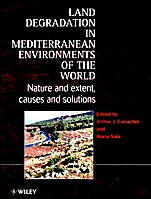
Land Degradation in Mediterranean Environments of the World: Nature and Entent, Causes and Solutions
ISBN 9780471963172
Autor: Arthur J. Conacher, Maria Sala
Wydawca: Wiley
Dostępność: 3-6 tygodni
Cena: 1 855,35 zł
Przed złożeniem zamówienia prosimy o kontakt mailowy celem potwierdzenia ceny.
ISBN13: |
9780471963172 |
ISBN10: |
0471963178 |
Autor: |
Arthur J. Conacher, Maria Sala |
Oprawa: |
Hardback |
Rok Wydania: |
1998-04-23 |
Ilość stron: |
520 |
Wymiary: |
257x199 |
Tematy: |
PDW |
The book is an integrated geographical assessment of land degradation in the world’s Mediterranean regions. Part I, written by specialist contributors, comprises a brief geography of the Mediterranean–climate regions – the Mediterranean basin, California, central Chile, the Southwest Cape and southern Australia – to provide a context for Parts II and III. Material written by the regional contributors has been compiled into an integrated set of thematic chapters for these major sections. Part II discusses the nature, extent, history, causes and implications of land degradation in the regions. Major problems include soil, vegetation and water degradation, fire, drought, flooding and sedimentation. Historical and contemporary human responses to these problems are also considered and indeed at times become part of the problem. Solutions – actual and potential –are evaluated in Part III, and include those dealing with animals, cultivation, horticulture, engineering–type practices, agro–forestry, whole farm planning, integrated catchment management and regional planning. Throughout there is an emphasis on the distinctive nature of the Mediterranean–type environments – especially the seasonally hot, dry climates, the species–rich and highly inflammable vegetation, steep topography and coastal orientations – and the ways in which these environments interact with human populations with their contrasting histories and cultures to result in a special set of environmental problems and responses.
Spis treści:
THE NATURE OF THE WORLD′S MEDITERRANEAN–TYPE ENVIRONMENTS
Iberian Peninsul and Balearic Islands
The South of France and Corsica
Italy
The Croatian Adriatic Coast
Greece
The Eastern Mediterranean
North Africa
Greater California
Chile
The Southwestern Cape of South Africa
Southern Australia
PROBLEMS OF LAND DEGRADATION
Introduction<
br>The Main Problems of Land Degradation: Their Nature, Extent and Severity: 1. Erosion and Soil Deterioration, Flooding, Vegetation Loss and Degradation
The Main Problems of Land Degradation: Their Nature, Extent and Severity: 2. Drought, Water Shortages, and Water Quality, and other Forms of Degradation
The Historical Development of Land Degradation in the Mediterranean World
The Causes of Land Degradation 1. The Nature of the Biophysical Environment
The Causes of Land Degradation 2. Vegetation Clearing and Agricultural Practices
The Causes of Land Degradation 3. Other Human Actions
Some Broader Implications of Land Degradation
SOLUTIONS TO LAND DEGRADATION
Introduction
Solutions dealing with Animals, Cultivation and Horticultural Practices
Technical Solutions
Vegetation–Related Solutions
Economic, Social, Agency and Policy Solutions. 1. The Mediterranean Basin
Economic, Social, Agency and Policy Solutions 2. The New World
Summary and Conclusions
Nota biograficzna:
Arthur J. ConacherUniversity of Western Australia, Australia and Maria Sala University of Barcelona, Spain
Okładka tylna:
The book is an integrated geographical assessment of land degradation in the world’s Mediterranean regions. Part I, written by specialist contributors, comprises a brief geography of the Mediterranean–climate regions – the Mediterranean basin, California, central Chile, the Southwest Cape and southern Australia – to provide a context for Parts II and III. Material written by the regional contributors has been compiled into an integrated set of thematic chapters for these major sections. Part II discusses the nature, extent, history, causes and implications of land degradation in the regions. Major problems include soil, vegetation and water degradation, fire, drought, flooding and sedimentation. Historical and contemporary human responses to these problems are also consider
ed and indeed at times become part of the problem. Solutions – actual and potential –are evaluated in Part III, and include those dealing with animals, cultivation, horticulture, engineering–type practices, agro–forestry, whole farm planning, integrated catchment management and regional planning. Throughout there is an emphasis on the distinctive nature of the Mediterranean–type environments – especially the seasonally hot, dry climates, the species–rich and highly inflammable vegetation, steep topography and coastal orientations – and the ways in which these environments interact with human populations with their contrasting histories and cultures to result in a special set of environmental problems and responses.
Koszyk
Książek w koszyku: 0 szt.
Wartość zakupów: 0,00 zł
Informacje


Kontakt
Gambit
Centrum Oprogramowania
i Szkoleń Sp. z o.o.
Al. Pokoju 29b/22-24
31-564 Kraków
Siedziba Księgarni
ul. Kordylewskiego 1
31-542 Kraków
+48 12 410 5991
+48 12 410 5987
+48 12 410 5989
Subskrypcje
Administratorem danych osobowych jest firma Gambit COiS Sp. z o.o. Na podany adres będzie wysyłany wyłącznie biuletyn informacyjny.
Autoryzacja płatności

Informacje na temat autoryzacji płatności poprzez PayU.

© Copyright 2012: GAMBIT COiS Sp. z o.o. Wszelkie prawa zastrzeżone.
Projekt i wykonanie: Alchemia Studio Reklamy