


Wydawcy
Katalog tematyczny
- Archeologia (109)
- Ekonomia, finanse, business (13704)
- Filozofia (1445)
- Historia (3040)
- Języki i językoznawstwo (2356)
- Lifestyle, hobby i rozrywka (475)
- Medycyna (9704)
- Nauki humanistyczne (4)
- Nauki o Ziemi i środowisku (2638)
- Nauki ścisłe (20412)
- Nauki społeczne (8486)
- Nauki techniczne (13450)
- Prawo (1696)
- Publikacje informacyjne i interdyscyplinarne (1288)
- Religia i wierzenia (917)
- Technika komputerowa (4067)
- Zdrowie, relacje międzyludzkie i rozwój osobisty (657)





Informacje szczegółowe o książce
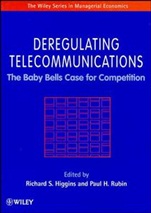
Deregulating Telecommunications: The Baby Bells Case for Competition
ISBN 9780471962953
Autor: Richard S. Higgins, Paul H. Rubin
Wydawca: Wiley
Dostępność: 3-6 tygodni
Cena: 1 014,30 zł
Przed złożeniem zamówienia prosimy o kontakt mailowy celem potwierdzenia ceny.
ISBN13: |
9780471962953 |
ISBN10: |
0471962953 |
Autor: |
Richard S. Higgins, Paul H. Rubin |
Oprawa: |
Hardback |
Rok Wydania: |
1995-09-28 |
Ilość stron: |
225 |
Wymiary: |
256x198 |
Tematy: |
KJ |
In 1984, the Department of Justice settled its antitrust case against AT&T. The agreement, embedded in the Modification of Final Judgment, led to a divestiture of the local telephone exchanges from AT&T to the Regional Bell Operating Companies (known as the ‘Baby Bells’). This agreement gave unprecedented power over a major US industry to one man, Judge Harold Greene of the US District Court of the District of Columbia. The Baby Bells could not enter any line of business without approval from Judge Greene. With technological change it became increasingly desirable for the Baby Bells to enter different lines of business, but each attempt was subject to legal challenge and lengthy, costly litigation. In 1994, the Baby Bells mounted a major legal challenge to the Modification of Final Judgement (MFJ). As part of their strategy, they asked leading scholars in the field to examine the costs and benefits of the MFJ and provide evidence in the form of affidavits regarding its effect. Using a cost–benefit framework, the conclusion of the analysis is that the MFJ should be vacated and competition should be allowed in the industry. Deregulating Telecommunications draws together a group of leading practitioners and academics in the fields of regulation, industrial organisation and antitrust to explore:A cost–benefit analysis of the 1984 AT&T antitrust settlementTheoretical and empirical studies that analyse the results of the settlement from its inception in 1984 to 1994An explanation for the recent policy decisions to reduce the amount of regulation in telecommunicationsAnalysis vital to predicting the results of any deregulation in telecommunications in the futureThis book will prove invaluable to economists interested in telecommunications, as well as those interested in antitrust and in regulation.
Spis treści:
Partial table of contents:
THE BASIS FOR THE MFJ, 1984 AND 1994.
The MFJ:
An Imperfect Solution (P. Temin).
The Competitive Effects of Line–of–Business Restrictions in Telecommunications (K. Arrow, et al.).
BENEFITS OF REMOVING THE MFJ LINE OF BUSINESS RESTRICTIONS.
Vertical Integration and Regulation in the Telephone Industry (A. Alchian).
The Benefits of Releasing the Bell Companies from the Interexchange Restrictions (P. Brandon & R. Schmalensee).
Realignment in Telecommunications (M. Maloney & R. McCormick).
THE POTENTIAL COSTS OF REMOVING THE LINE–OF–BUSINESS RESTRICTIONS.
Deterring Predation in Telecommunications: Are Line–of–Business Restraints Needed?
(S. Gates, et al.).
Empirical Tests of RBOC Leveraging and Cross–Subsidization (R. Higgins & M. McDonald).
Okładka tylna:
In 1984, the Department of Justice settled its antitrust case against AT&T. The agreement, embedded in the Modification of Final Judgment, led to a divestiture of the local telephone exchanges from AT&T to the Regional Bell Operating Companies (known as the ‘Baby Bells’). This agreement gave unprecedented power over a major US industry to one man, Judge Harold Greene of the US District Court of the District of Columbia. The Baby Bells could not enter any line of business without approval from Judge Greene. With technological change it became increasingly desirable for the Baby Bells to enter different lines of business, but each attempt was subject to legal challenge and lengthy, costly litigation. In 1994, the Baby Bells mounted a major legal challenge to the Modification of Final Judgement (MFJ). As part of their strategy, they asked leading scholars in the field to examine the costs and benefits of the MFJ and provide evidence in the form of affidavits regarding its effect. Using a cost–benefit framework, the conclusion of the analysis is that the MFJ should be vacated and competition should be allowed in the industry. Deregulating T
elecommunications draws together a group of leading practitioners and academics in the fields of regulation, industrial organisation and antitrust to explore:A cost–benefit analysis of the 1984 AT&T antitrust settlementTheoretical and empirical studies that analyse the results of the settlement from its inception in 1984 to 1994An explanation for the recent policy decisions to reduce the amount of regulation in telecommunicationsAnalysis vital to predicting the results of any deregulation in telecommunications in the futureThis book will prove invaluable to economists interested in telecommunications, as well as those interested in antitrust and in regulation.
Koszyk
Książek w koszyku: 0 szt.
Wartość zakupów: 0,00 zł
Informacje


Kontakt
Gambit
Centrum Oprogramowania
i Szkoleń Sp. z o.o.
Al. Pokoju 29b/22-24
31-564 Kraków
Siedziba Księgarni
ul. Kordylewskiego 1
31-542 Kraków
+48 12 410 5991
+48 12 410 5987
+48 12 410 5989
Subskrypcje
Administratorem danych osobowych jest firma Gambit COiS Sp. z o.o. Na podany adres będzie wysyłany wyłącznie biuletyn informacyjny.
Autoryzacja płatności

Informacje na temat autoryzacji płatności poprzez PayU.

© Copyright 2012: GAMBIT COiS Sp. z o.o. Wszelkie prawa zastrzeżone.
Projekt i wykonanie: Alchemia Studio Reklamy