


Wydawcy
Katalog tematyczny
- Archeologia (109)
- Ekonomia, finanse, business (13704)
- Filozofia (1445)
- Historia (3040)
- Języki i językoznawstwo (2356)
- Lifestyle, hobby i rozrywka (475)
- Medycyna (9704)
- Nauki humanistyczne (4)
- Nauki o Ziemi i środowisku (2638)
- Nauki ścisłe (20412)
- Nauki społeczne (8486)
- Nauki techniczne (13450)
- Budownictwo lądowe (1045)
- Chemia przemysłowa (2258)
- Elektronika i telekomunikacja (3287)
- Energetyka (1122)
- Inne nauki stosowane (363)
- Inżynieria biochemiczna (507)
- Inżynieria transportu (232)
- Mechanika i materiały (3316)
- Nauka o środowisku (321)
- Rolnictwo (507)
- Technika, ogólnie (475)
- Prawo (1696)
- Publikacje informacyjne i interdyscyplinarne (1288)
- Religia i wierzenia (917)
- Technika komputerowa (4067)
- Zdrowie, relacje międzyludzkie i rozwój osobisty (657)





Informacje szczegółowe o książce
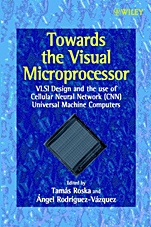
Towards the Visual Microprocessor: VLSI Design and the Use of Cellular Neural Network Universal Machines
ISBN 9780471956068
Autor: Tamás Roska, Ángel Rodríguez–Vázquez
Wydawca: Wiley
Dostępność: 3-6 tygodni
Cena: 1 106,70 zł
Przed złożeniem zamówienia prosimy o kontakt mailowy celem potwierdzenia ceny.
ISBN13: |
9780471956068 |
ISBN10: |
0471956066 |
Autor: |
Tamás Roska, Ángel Rodríguez–Vázquez |
Oprawa: |
Hardback |
Rok Wydania: |
2000-11-21 |
Ilość stron: |
400 |
Wymiary: |
246x174 |
Tematy: |
TJ |
Visual microprocessors are software–controlled analogic (analog–and–logic) array computers on a single chip. To create them requires designing highly complex integrated circuits called VLSIs (Very Large Scale Integration) operating in mixed–mode (analog and digital). The architecture of these chips is based on Cellular Neural/nonlinear Networks (CNNs) extended by building blocks to become a full–featured array computer, called the CNN Universal Machine (CNN–UM). The elementary component–computers are electronic mini organism–like cells that can be re–programmed either externally or internally.
Opening with a foreword by the respected academic, Professor Leon Chua, the book progresses to explore circuit design, prototyping and analogial algorithms. Subjects covered include the VLSI design and implementation of CNNs and CNN–UMs, the testing of CNN chips and a detailed analysis of a new chip prototyping system and interfacing the CNN universal chips to a digital environment.
Distinctive features include:
∗ a textbook–like introduction to the new field of analogic super–computing
∗ design methodology of CMOS mixed–mode (analogic) array computers and optical sensors
∗ applications in neuro–computing, machine vision, image processing and VSL signal processing
∗ design methodology of a new type of algorithm for solving complex spatiotemporal tasks
∗ important pioneering work about a rapidly–developing and increasingly influential field of computation circuit design, and sensory computers
∗ a vertical coverage of topics on a new type of computer from high level language down to physical circuit design
The wide spectrum covered in this volume will be beneficial for students engaging in advanced reseacrh, professionals in electrical and electronic engineering, computer engineering, computer science, mathematics and neurobiol
ogy.
Spis treści:
List of Contributors.
Foreword.
Preface.
The Cellular Neural Network (CNN) and the CNN Universal Machine: Concept, Architecture and Operation Modes (L. Chua & T. Roska).
CNN Chip Prototyping and Development Systems (Á. Zarándy, et al.).
CMOS Analogue Design Primitives (Á. Rodríguez–Vázquez, et al.).
On the Implementation of Linear and Nonlinear Interaction Operators for CNNS (Á. Rodríguez–Vázquez, et al.).
Light–Sensitive Devices in CMOS (E. Roca, et al.).
Examples of CMOS CNN Universal Chip Design (R. Domínguez–Castro, et al.).
Short–Term Storage of Analogue Signals for CNN Universal Machine Based Image Processing (R. Carmona, et al.).
Application Case Studies (G. Liska, et al.).
Index.
Okładka tylna:
Visual microprocessors are software–controlled analogic (analog–and–logic) array computers on a single chip. To create them requires designing highly complex integrated circuits called VLSIs (Very Large Scale Integration) operating in mixed–mode (analog and digital). The architecture of these chips is based on Cellular Neural/nonlinear Networks (CNNs) extended by building blocks to become a full–featured array computer, called the CNN Universal Machine (CNN–UM). The elementary component–computers are electronic mini organism–like cells that can be re–programmed either externally or internally.
Opening with a foreword by the respected academic, Professor Leon Chua, the book progresses to explore circuit design, prototyping and analogial algorithms. Subjects covered include the VLSI design and implementation of CNNs and CNN–UMs, the testing of CNN chips and a detailed analysis of a new chip prototyping system and interfacing the CNN universal chips to a digital environment.
Distinctive features include:
∗ a textbook–li
ke introduction to the new field of analogic super–computing
∗ design methodology of CMOS mixed–mode (analogic) array computers and optical sensors
∗ applications in neuro–computing, machine vision, image processing and VSL signal processing
∗ design methodology of a new type of algorithm for solving complex spatiotemporal tasks
∗ important pioneering work about a rapidly–developing and increasingly influential field of computation circuit design, and sensory computers
∗ a vertical coverage of topics on a new type of computer from high level language down to physical circuit design
The wide spectrum covered in this volume will be beneficial for students engaging in advanced reseacrh, professionals in electrical and electronic engineering, computer engineering, computer science, mathematics and neurobiology.
Koszyk
Książek w koszyku: 0 szt.
Wartość zakupów: 0,00 zł
Informacje


Kontakt
Gambit
Centrum Oprogramowania
i Szkoleń Sp. z o.o.
Al. Pokoju 29b/22-24
31-564 Kraków
Siedziba Księgarni
ul. Kordylewskiego 1
31-542 Kraków
+48 12 410 5991
+48 12 410 5987
+48 12 410 5989
Subskrypcje
Administratorem danych osobowych jest firma Gambit COiS Sp. z o.o. Na podany adres będzie wysyłany wyłącznie biuletyn informacyjny.
Autoryzacja płatności

Informacje na temat autoryzacji płatności poprzez PayU.

© Copyright 2012: GAMBIT COiS Sp. z o.o. Wszelkie prawa zastrzeżone.
Projekt i wykonanie: Alchemia Studio Reklamy