


Wydawcy
Katalog tematyczny
- Archeologia (109)
- Ekonomia, finanse, business (13704)
- Filozofia (1445)
- Historia (3040)
- Języki i językoznawstwo (2356)
- Lifestyle, hobby i rozrywka (475)
- Medycyna (9704)
- Nauki humanistyczne (4)
- Nauki o Ziemi i środowisku (2638)
- Nauki ścisłe (20412)
- Astronomia (294)
- Biologia (5119)
- Chemia (6540)
- Chemia analityczna (361)
- Chemia fizyczna (346)
- Chemia nieorganiczna (137)
- Chemia organiczna (535)
- Krystalografia (27)
- Minerologia (46)
- Fizyka (3309)
- Matematyka (4574)
- Nauki ścisłe, ogólnie (503)
- Nauki społeczne (8486)
- Nauki techniczne (13450)
- Prawo (1696)
- Publikacje informacyjne i interdyscyplinarne (1288)
- Religia i wierzenia (917)
- Technika komputerowa (4067)
- Zdrowie, relacje międzyludzkie i rozwój osobisty (657)





Informacje szczegółowe o książce
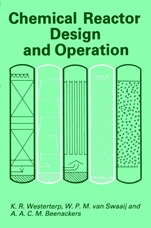
Chemical Reactor Design and Operation
ISBN 9780471917304
Autor: K. Roel Westerterp, W. P. M. Van Swaaij, A. A. C. M. Beenackers
Wydawca: Wiley
Dostępność: 3-6 tygodni
Cena: 1 634,85 zł
Przed złożeniem zamówienia prosimy o kontakt mailowy celem potwierdzenia ceny.
ISBN13: |
9780471917304 |
ISBN10: |
0471917303 |
Autor: |
K. Roel Westerterp, W. P. M. Van Swaaij, A. A. C. M. Beenackers |
Oprawa: |
Paperback |
Rok Wydania: |
1987-10-28 |
Numer Wydania: |
2nd Edition |
Ilość stron: |
800 |
Wymiary: |
229x152 |
Tematy: |
PN |
Chemical Reactor Design and Operation K. R. Westerterp, W. P. M. van Swaaij and A. A. C. M. Beenackers Chemical Reaction Engineering Laboratories, Twente University of Technology, Enschede, The Netherlands This is a comprehensive handbook on the design and operation of chemical reactors which are vital elements in every manufacturing process. The book offers an introduction to the modern literature and covers in depth the relevant theory of chemical reactors. The theory is illustrated by numerous worked examples typical to chemical reaction engineering practice in research, development, design and operation. The examples range from fine chemicals to large scale production and from water purification to metallurgical processes, commencing with simple homogenous model reactors and then moving to the complicated, multi–phase, heterogeneous reactors met with in reality. All the examples are based on the industrial experience of the authors. Much effort is dedicated to the behaviour of reactors in practice and to the capacity, yield and selectivity of the reactor. The book is thoroughly indexed and cross–referenced. This edition will be particularly useful to undergraduate and graduate students studying chemical reactors. Contents Fundamentals of chemical reactor calculations Model reactors: single reactions, isothermal single phase reactor calculations Model reactors: multiple reactions, isothermal single phase reactors Residence time distribution and mixing in continuous flow reactors Influence of micromixing on chemical reactions The role of the heat effect in model reactors Multi–phase reactors, single reactions Multi–phase reactors, multiple reactions Heat effects in multi–phase reactors The authors: The authors have accumulated a long experience both in fine chemicals and in the petrochemicals industry, in Europe as well as abroad. Currently they are jointly responsible for the research work in chemical reaction engineering and proces
s development at Twente University. Several new reactor types and new processes have been developed at their institute and present research interests include gasification, fluidization and gas—liquid reactors, three–phase reactors, high–pressure technology in chemical reaction engineering, thermal behaviour of heterogeneous reactors and computer design and economic evaluation of reaction units and chemical plants.
Spis treści:
Preface to the First Edition
Preface to the Second Edition
Preface to the Student Edition
List of Symbols
Chapter I Fundamentals of chemical reactor calculations
1.1 Introduction
1.2 The material, energy and economic balance
—Material balance
—Energy balance
—Economic balance
1.3 Thermodynamic data: heat of reaction and chemical equilibrium
—Heat of reaction
—Chemical equilibrium
1.4 Conversion rate, chemical reaction rate and chemical reaction rate equations
—Influence of temperature on kinetics
—Influence of concentration on kinetics
1.5 The degree of conversion
—Relation between conversion and concentration expressions
1.6 Selectivity and yield
—Selectivity and yield in a reactor section with recycle of non–converted reactant
1.7 Classification of chemical reactors
References
Chapter II Model reactors: single reactions, isothermal single phase reactor calculations
II.1 The well–mixed batch reactor
II.2 The continuously operated ideal tubular reactor
II.3 The continuously operated ideal tank reactor
11.4 The cascade of tank reactors
II.5 The semi–continuous tank reactor
II.6 The recycle reactor
II.7 A comparison between the different model reactors
—Batch versus continuous operation
—Tubular reactor versus tank reactor
II.8 Some examples of the influence of reactor design a
nd operation on the economics of the process
—The use of one of the reactants in excess
—Recirculation of unconverted reactant
—Maximum production rate and optimum load with intermittent operation
References
Chapter III Model reactors: multiple reactions, isothermal single phase reactors
III.1 Fundamental concepts
—Differential selectivity and selectivity ratio
—The reaction path
III.2 Parallel reactions
—Parallel reactions with equal order rate equations
—Parallel reactions with differing reaction order rate equations
—A cascade of tank reactors
III.3 The continuous cross flow reactor system
III.4 Consecutive reactions
—First order consecutive reactions in a plug flow reactor
—First order consecutive reactions in a tank reactor
—General discussion
III.5 Combination reactions
—Graphical methods
—Optimum yield in a cascade of tank reactors
—Algebraic methods
III.6 Autocatalytic reactions
—Single biochemical reactions
—Multiple autocatalytic reactions
References
Chapter IV Residence time distribution and mixing in continuous flow reactors
IV.1 The residence time distribution (RTD)
—The E and the F diagram
—The application of the RTD in practice
IV.2 Experimental determination of the residence time distribution
—Input functions
IV.3 Residence time distribution in a continuous plug flow and in a continuous ideally stirred tank reactor.
IV.4 Models for intermediate mixing
—Model of a cascade of N equal ideally mixed tanks
—The axially dispersed plug flow model
IV.5 Conversion in reactors with intermediate mixing
IV.6 Some data on the longitudinal dispersion in continuous flow systems
—Flow through empty tubes
—Packed beds
—Fluidized beds
—Mixing
in gas–liquid reactors
References
Chapter V Influence of micromixing on chemical reactions
V.1 Nature of the micromixing phenomena
—Macro or gross overall mixing as characterized by the residence time distribution
—The state of aggregation of the reacting fluid
—The earliness of the mixing
V.2 Boundaries to micromixing phenomena
—The model tubular and tank reactors
—Boundaries for micromixing for reactors with arbitrary RTDs
V.3 Intermediate degree of micromixing in continuous stirred tank reactors
—Formal models
—Agglomeration models
—Model for micromixing via exchange of mass between agglomerates and their ‘average’ environment, the IEM model
V.4 Experimental results on micromixing in stirred vessels
V.5 Concluding remarks on micromixing
References
Chapter VI The role of the heat effect in model reactors
VI.1 The energy balance and heat of reaction
VI.2 The well–mixed batch reactor
—Batch versus semi–batch operation
VI.3 The tubular reactor with external heat exchange
—Maximum temperature with exothermic reactions; para–metric sensitivity
VI.4 The continuous tank reactor with heat exchange
VI.5 Autothermal reactor operation
—The tank reactor
— An adiabatic tubular reactor with heat exchange between reactants and products
—A multi–tube reactor with internal heat exchange between the reaction mixture and the feed
—Determination of safe operating conditions
VI.6 Maximum permissible reaction temperatures
VI.7 The dynamic behaviour of model reactors
—The autothermal tank reactor
—Tubular reactor
References
Chapter VII Multiphase reactors, single reactions
VII.1 The role of mass transfer
VII.2 A qualitative discussion on mass transfer with homogeneous reaction
—Con
Koszyk
Książek w koszyku: 0 szt.
Wartość zakupów: 0,00 zł
Informacje


Kontakt
Gambit
Centrum Oprogramowania
i Szkoleń Sp. z o.o.
Al. Pokoju 29b/22-24
31-564 Kraków
Siedziba Księgarni
ul. Kordylewskiego 1
31-542 Kraków
+48 12 410 5991
+48 12 410 5987
+48 12 410 5989
Subskrypcje
Administratorem danych osobowych jest firma Gambit COiS Sp. z o.o. Na podany adres będzie wysyłany wyłącznie biuletyn informacyjny.
Autoryzacja płatności

Informacje na temat autoryzacji płatności poprzez PayU.

© Copyright 2012: GAMBIT COiS Sp. z o.o. Wszelkie prawa zastrzeżone.
Projekt i wykonanie: Alchemia Studio Reklamy