


Wydawcy
Katalog tematyczny
- Archeologia (109)
- Ekonomia, finanse, business (13704)
- Filozofia (1445)
- Historia (3040)
- Języki i językoznawstwo (2356)
- Lifestyle, hobby i rozrywka (475)
- Medycyna (9704)
- Nauki humanistyczne (4)
- Nauki o Ziemi i środowisku (2638)
- Nauki ścisłe (20412)
- Nauki społeczne (8486)
- Nauki techniczne (13450)
- Prawo (1696)
- Publikacje informacyjne i interdyscyplinarne (1288)
- Religia i wierzenia (917)
- Technika komputerowa (4067)
- Zdrowie, relacje międzyludzkie i rozwój osobisty (657)





Informacje szczegółowe o książce
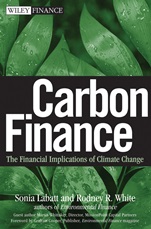
Carbon Finance: The Financial Implications of Climate Change
ISBN 9780471794677
Autor: Sonia Labatt, Rodney R. White
Wydawca: Wiley
Dostępność: 3-6 tygodni
Cena: 432,60 zł
Przed złożeniem zamówienia prosimy o kontakt mailowy celem potwierdzenia ceny.
ISBN13: |
9780471794677 |
ISBN10: |
0471794678 |
Autor: |
Sonia Labatt, Rodney R. White |
Oprawa: |
Hardback |
Rok Wydania: |
2007-05-04 |
Ilość stron: |
288 |
Wymiary: |
240x169 |
Tematy: |
KF |
Praise for Carbon Finance
"A timely, objective, and informative analysis of the financial opportunities and challenges presented by climate change, including a thorough description of adaptive measures and insurance products for managing risk in a carbon constrained economy."
—James R. Evans, M. Eng. P. Geo., Senior Manager, Environmental Risk Management, RBC Financial Group
"Climate change will have enormous financial implications in the years to come. How businesses and investors respond to the risks and opportunities from this issue will have an enormous rippling effect in the global economy. Sonia Labatt and Rodney White′s insights and thoughtful analysis should be read by all who want to successfully navigate this global business issue."
—Andrea Moffat, Director, Corporate Programs, Ceres
"In Carbon Finance, Labatt and White present a clear and accessible description of the climate change debate and the carbon market that is developing. Climate change is becoming an important factor for many financial sector participants. The authors illustrate how challenges and opportunities will arise within the carbon market for banking, insurance, and investment activities as well as for the regulated and energy sector of the economy."
—Charles E. Kennedy, Director and Portfolio Manager, MacDougall, MacDougall & MacTier Inc.
"Climate change is the greatest environmental challenge of our generation. Its impact on the energy sector has implications for productivity and competitiveness. At the same time, environmental risk has emerged as a major challenge for corporations in the age of full disclosure. Carbon Finance explains how these disparate forces have spawned a range of financial products designed to help manage the inherent risk. It is necessary reading for corporate executives facing challenges that are unique in their business experience."
—Skip Willis, Managing Director Canadi
an Operations, ICF International
"In this timely publication, Labatt and White succeed in communicating the workings of carbon markets, providing simple examples and invaluable context to the new and changing mechanisms that underpin our transformation to a carbon–constrained world. Carbon Finance will be the definitive guide to this field for years to come."
—Susan McGeachie, Director, Innovest Strategic Value Advisors, Graduate Faculty Member, University of Toronto; and Jane Ambachtsheer, Principal, Mercer Investment Consulting, Graduate Faculty Member, University of Toronto
Spis treści:
Foreword.
About the Authors.
Acknowledgments.
List of Acronyms.
Chapter 1: Introduction.
Introduction.
The Changing Climate.
The Scientific Context of Climate Change.
The Political Context of Climate Change.
Corporate Climate Risk.
Regulatory Risk.
Physical Risks.
Business Risks.
Climate Policies.
Mitigation Policies.
Adaptation Measures.
Role of the Financial Services Sector.
Conclusion.
Chapter 2: The Energy Chain.
Introduction.
The Energy Chain and the Value Chain.
Carbon Policies.
Policy Approaches.
The Broader Policy Context.
National and Local Self–Sufficiency.
Impacts of Different Users and Uses on Climate Change.
Users: Business, Households, and Government.
Uses: Manufacturing, Transportation, Heating, Water, and Solid Waste.
Sources of Energy: Fossil Fuels.
Coal.
Oil 37
Gas.
Sources of Energy: Nuclear Energy.
Sources of Energy: Hydroelectric Power.
Sources of Energy: Renewables.
Traditional Biomass.
Wind Energy.
Solar Energy.
Tidal Energy and Wave Energy.
Modern Biomass and Biofuels.
Geothermal Energy.
Key Issues.
A Hydrogen Economy Based on Fuel Cells?
Carbon Sequestration.
Unintended Discharges.
Financing the Transformation of the Energy Chain
: The Role of Venture Capital.
Conclusion.
Chapter 3: Regulated and Energy–Intensive Sectors.
Introduction.
Power Industry.
Integrated Oil and Gas Industry.
Government Mandates.
Physical Capital.
Restricted Access to Oil and Gas Reserves.
The Coming Age of Gas, and Beyond.
Global Concerns Regarding Energy Security.
Transportation.
Automotive Industry.
Factors Affecting Auto Manufacturers’ Carbon Profile.
Aviation.
Cement.
Competitive Implications of Climate Risk in Regulated and Energy–Intensive Sectors.
Conclusion.
Chapter 4: The Physical Impacts of Climate Change on the Evolution of Carbon Finance.
Introduction.
Physical Impacts on Unregulated Sectors.
Water Supply and Treatment.
Agriculture.
Forestry.
Fisheries.
Real Property and Production Facilities.
Transportation.
Tourism.
Municipalities.
The Built Environment.
Physical Impacts on Carbon–Regulated Sectors.
Electric Power.
Oil and Gas Producers.
Financial Services.
Banking.
Investment.
Insurance.
Conclusion.
Chapter 5: Institutional Investors and Climate Change.
Introduction.
Institutional Investors: Size and Global Reach.
Environmental Reporting.
Corporations.
Institutional Investors.
Corporate Environmental Reporting.
New Era of Fiduciary Responsibility for Institutional Investors.
Investment Decision Making.
Active Engagement.
Shareholder Resolutions and Proxy Voting.
Mutual Funds.
New Momentum in the Corporate World.
Barriers to the Financial Consideration of Climate Change.
Institutional Investors and Climate Change.
Institutional Investors’ Group on Climate Change (IIGCC).
Carbon Disclosure Project (CDP).
The Equator Principles.
Investor Network on Climate Risk (INCR).
Conclusion.
Chapter 6: Emissions Trading in Theory and Practice.
Introduction.
How Carbon Is Traded No
w.
The Kyoto Protocol.
The Chicago Climate Exchange.
The European Union Emission Trading Scheme.
The Price of Carbon in the EU ETS.
Countries outside Europe with Kyoto Caps.
Carbon Markets in the United States and Australia.
Setting up the Clean Development Mechanism and Joint Implementation.
The Role of Carbon Funds, Carbon Brokers, and Exchanges.
Key Issues.
Verification—Protocols for Measuring Emission Reductions.
Controlling the Sale of "Hot Air."
The Quality and Price of Carbon Credits.
Enforcing Compliance.
Integrating the Various Trading Platforms.
The CDM Bottleneck.
Extending the Time Horizon beyond 2012.
Extending Carbon Caps to Uncapped Parties.
The Carbon Offset Market.
The Role of Insurance in Emissions Trading.
Issues for Dispute Resolution.
Conclusion.
Chapter 7: Climate Change and Environmental Security: Individuals, Communities, Nations.
Introduction.
Direct Effect of Extreme Weather Events.
Health Effects of Climate Change.
Direct Effects of Temperature Extremes: Heat Waves and Cold Spells.
Indirect Effects of Climate Change: Vector–Borne Infectious Diseases.
Polar Regions.
Climate Systems and National Sovereignty.
The Gulf Stream and the Thermohaline Current.
The El Ni ˜ no/Southern Oscillation (ENSO).
Conclusion.
Chapter 8: Adapting to Adverse and Severe Weather.
Introduction.
Adverse Weather: The Role of Weather Derivatives.
Weather Derivative Instruments.
Examples of Weather Derivative Contracts.
Current Status of Weather Markets.
Constraints on the Weather Derivatives Market.
Severe Weather: The Role of Catastrophe Bonds.
The Structure of a Catastrophe Bond.
Catastrophe Bonds and Carbon Finance.
Conclusion.
Chapter 9: Key Players in the Carbon Markets by Martin Whittaker, guest author.
Introduction.
Basic Elements of the Market.
EU ETS Trading.
Clean Development M
Koszyk
Książek w koszyku: 0 szt.
Wartość zakupów: 0,00 zł
Informacje


Kontakt
Gambit
Centrum Oprogramowania
i Szkoleń Sp. z o.o.
Al. Pokoju 29b/22-24
31-564 Kraków
Siedziba Księgarni
ul. Kordylewskiego 1
31-542 Kraków
+48 12 410 5991
+48 12 410 5987
+48 12 410 5989
Subskrypcje
Administratorem danych osobowych jest firma Gambit COiS Sp. z o.o. Na podany adres będzie wysyłany wyłącznie biuletyn informacyjny.
Autoryzacja płatności

Informacje na temat autoryzacji płatności poprzez PayU.

© Copyright 2012: GAMBIT COiS Sp. z o.o. Wszelkie prawa zastrzeżone.
Projekt i wykonanie: Alchemia Studio Reklamy