


Wydawcy
Katalog tematyczny
- Archeologia (109)
- Ekonomia, finanse, business (13704)
- Filozofia (1445)
- Historia (3040)
- Języki i językoznawstwo (2356)
- Lifestyle, hobby i rozrywka (475)
- Medycyna (9704)
- Nauki humanistyczne (4)
- Nauki o Ziemi i środowisku (2638)
- Nauki ścisłe (20412)
- Astronomia (294)
- Biologia (5119)
- Chemia (6540)
- Chemia analityczna (361)
- Chemia fizyczna (346)
- Chemia nieorganiczna (137)
- Chemia organiczna (535)
- Krystalografia (27)
- Minerologia (46)
- Fizyka (3309)
- Matematyka (4574)
- Nauki ścisłe, ogólnie (503)
- Nauki społeczne (8486)
- Nauki techniczne (13450)
- Prawo (1696)
- Publikacje informacyjne i interdyscyplinarne (1288)
- Religia i wierzenia (917)
- Technika komputerowa (4067)
- Zdrowie, relacje międzyludzkie i rozwój osobisty (657)





Informacje szczegółowe o książce
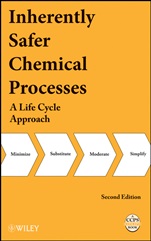
Inherently Safer Chemical Processes: A Life Cycle Approach
ISBN 9780471778929
Autor: CCPS (Center for Chemical Process Safety)
Wydawca: Wiley
Dostępność: 3-6 tygodni
Cena: 565,95 zł
Przed złożeniem zamówienia prosimy o kontakt mailowy celem potwierdzenia ceny.
ISBN13: |
9780471778929 |
ISBN10: |
0471778923 |
Autor: |
CCPS (Center for Chemical Process Safety) |
Oprawa: |
Hardback |
Rok Wydania: |
2009-01-09 |
Numer Wydania: |
2nd Edition |
Ilość stron: |
432 |
Wymiary: |
243x167 |
Tematy: |
PN |
All the latest practical tools for eliminating or reducing the risks of chemical processes
Learn to take full advantage of inherently safer design, a tested and proven holistic approach to developing, manufacturing, and using chemicals as safely as possible. With this Second Edition, you′ll learn the latest strategies to eliminate or significantly reduce the hazards of chemical processes rather than accept those hazards as a given. Specifically, the book shows you how to manage important tasks such as:
Substituting less harmful chemicals at the development stage
Moderating the hazards of chemicals and manufacturing processes
Using safer processing methods for manufacturing
Simplifying plants to make them more user friendly
This Second Edition features the latest developments and practical tools that inherently safer design offers, including:
Methods for developing and implementing inherently safer processes and plants
Techniques for measuring and evaluating inherent safety
Real–world examples illustrating the benefits of inherently safer processes
Trade–offs and conflicts among the hazards considered in identifying inherently safer options
The Role of inherent safety in process safety management programs
In addition to learning effective approaches for evaluating and implementing inherent safety, you′ll also learn inherent safety′s limits. Filled with all the latest information and tactics, Inherently Safer Chemical Processes allows you to fully leverage and reap the benefits of this proven and increasingly popular technique for managing the risk associated with chemical processing.
Center for Chemical Process Safety (CCPS) was established by the AIChE in 1985 to study and develop engineering and management practices that help prevent or mitigate catastrophic process safety accidents. CCPS publ
ications provide the latest guidelines for the production, storage, and handling of flammable, explosive, and reactive materials. With the help of the CCPS, companies can operate facilities safely and measure their own practices against today′s most accepted industry practices.
Spis treści:
1. Introduction.
1.1.Objectives, Intended Audience and Scope of This Book.
1.2 Integration of this Guidance with Other CCPS Guidance.
1.3 Organization of the Book.
1.4 History of Inherent Safety.
2. The Concept of Inherent Safety.
2.1 Process Risk Management and Inherent Safety.
2.2 Inherent Safety Defined.
2.3 Inherently Safer Approaches.
2.4 Layers of Protection.
2.5 Levels of Inherent Safety.
2.6 Worked Example.
2.7 Summary.
3. The Role of Inherently Safer Concepts in Process Risk.
Management.
3.1 Integrating Inherent Safety in Process Risk Management Systems.
3.2 Timing for Consideration of Inherently Safer Options.
3.3 Inherent Safety Constraints.
3.4 Resolving Inherent Safety Issues.
3.5 Inherently Safer Strategies.
3.6 Summary.
4. Inherently Safer Strategies.
4.1 Definition of Inherently Safer Strategies.
4.2 Minimize.
4.3 Substitute.
4.4 Moderate.
4.5 Simplify.
4.6 Other Strategies.
4.7 Summary.
5. Life Cycle Stages.
5.1 General Principles Across All Life Cycle Stages.
5.2 Research.
5.3 Process Development.
5.4 Detailed Design and Construction.
5.5 Operations, Maintenance, and Modifications.
5.6 Decommissioning.
5.7 Transportation.
6. Human Factors.
6.1 Overview.
6.2 Operability and Personnel Safety.
6.3 Maintainability.
6.4 Error Prevention.
6.5 Error Recovery.
6.6 System Audits.
6.7 Organizational Culture.
6.8 Summary.
7. Inherent Safety and Security.
7.1 Introduction.
7.2 Chemical Security Risk.
7.3 Security Strategies.
7.4 Countermeasures.
7
.5 Assessing Security Vulnerabilities.
7.6 Inherent Safety and Chemical Security.
7.7 Limitations to Implementing IS Concepts in Security Management.
7.8 Conclusions.
8. Implementing Inherently Safer Design.
8.1 Introduction.
8.2 Management Systems Approach for IS.
8.3 Education and Awareness.
8.4 Organizational Culture.
8.5 Inherent Safety Reviews.
8.6 IS Review Methods––Overview.
8.7 Incorporating IS Consideration into Existing PSM Activities.
8.8. Human Factors and Inherent Safety Reviews.
8.9 Reactive Chemicals Screening.
8.10 Inherent Safety Review Training.
8.11 Documentation of the Inherently Safer Design Features of a Process.
8.12. IS Review Documentation.
8.13 Time Required for an Inherent Safety Review.
8.14 Summary.
9. Inherently Safer Design Conflicts.
9.1 Introduction.
9.2 Examples of inherent safety conflicts.
9.3 Inherent Safety – Environmental Hazards.
9.4 Inherent Safety and Health Conflicts.
9.5 Inherent Safety and Economic Conflicts.
9.6 Tools for understanding and resolving conflicts.
9.7 Measuring Inherent Safety characteristics.
9.8 Summary.
10. Inherently Safer Design Regulatory Initiatives.
10.1 Inherent Safety Regulatory Developments and Issues.
10.2 Experience with IS Regulations.
10.3 Issues in Regulating Inherent Safety.
10.4 Summary.
11. Worked Examples and Case Studies.
11.1 Introduction.
11.2 Application of an Inherent Safety Strategic Approach to a Process.
11.3 Case studies from Carrithers, et al..
11.4 Process Route Selection – Early R&D Example.
11.5 Example of an Inherently Safer Study of a Steam Production Facility.
11.6 Case Study: Bhopal.
11.7 Summaries in Brief: Examples by IS Strategy.
11.8 Additional Literature Giving Examples of Inherently Safer Operations.
12. Future Initiatives.
12.1 Incorporating Inherently Safer Design into P
rocess Safety Management.
12.2 Encouraging Invention within the Chemical and Chemical Engineering Community.
12.3 Including Inherent Safety into the Education of Chemists and Chemical Engineers.
12.4 Developing Inherently Safer Design Databases and Libraries.
12.5 Developing Tools to Apply Inherently Safer Design.
Appendix A. Inherently Safer Technology Checklist.
Appendix B. Inherent Safety Analysis Approaches.
B.1 Inherent Safety Analysis–Checklist Process Hazard Analysis (PHA).
B.2 Inherent Safety Analysis–Independent Process Hazard Analysis (PHA).
B.3 Inherent Safety Analysis– Integral to Process Hazard Analysis (PHA).
Appendix C. Applying Inherent Safety to Risk Based Process Safety.
Glossary.
References.
Chapter References.
Key Literature in Inherent Safety and Additional Reading.
Index.
Okładka tylna:
All the latest practical tools for eliminating or reducing the risks of chemical processes
Learn to take full advantage of inherently safer design, a tested and proven holistic approach to developing, manufacturing, and using chemicals as safely as possible. With this Second Edition, you′ll learn the latest strategies to eliminate or significantly reduce the hazards of chemical processes rather than accept those hazards as a given. Specifically, the book shows you how to manage important tasks such as:
Substituting less harmful chemicals at the development stage
Moderating the hazards of chemicals and manufacturing processes
Using safer processing methods for manufacturing
Simplifying plants to make them more user friendly
This Second Edition features the latest developments and practical tools that inherently safer design offers, including:
Methods for developing and implementing inherently safer processes and plants
Techniques for measuring and evaluating inherent safety
Koszyk
Książek w koszyku: 0 szt.
Wartość zakupów: 0,00 zł
Informacje


Kontakt
Gambit
Centrum Oprogramowania
i Szkoleń Sp. z o.o.
Al. Pokoju 29b/22-24
31-564 Kraków
Siedziba Księgarni
ul. Kordylewskiego 1
31-542 Kraków
+48 12 410 5991
+48 12 410 5987
+48 12 410 5989
Subskrypcje
Administratorem danych osobowych jest firma Gambit COiS Sp. z o.o. Na podany adres będzie wysyłany wyłącznie biuletyn informacyjny.
Autoryzacja płatności

Informacje na temat autoryzacji płatności poprzez PayU.

© Copyright 2012: GAMBIT COiS Sp. z o.o. Wszelkie prawa zastrzeżone.
Projekt i wykonanie: Alchemia Studio Reklamy