


Wydawcy
Katalog tematyczny
- Archeologia (109)
- Ekonomia, finanse, business (13704)
- Filozofia (1445)
- Historia (3040)
- Języki i językoznawstwo (2356)
- Lifestyle, hobby i rozrywka (475)
- Medycyna (9704)
- Nauki humanistyczne (4)
- Nauki o Ziemi i środowisku (2638)
- Nauki ścisłe (20412)
- Nauki społeczne (8486)
- Nauki techniczne (13450)
- Prawo (1696)
- Publikacje informacyjne i interdyscyplinarne (1288)
- Religia i wierzenia (917)
- Technika komputerowa (4067)
- Zdrowie, relacje międzyludzkie i rozwój osobisty (657)





Informacje szczegółowe o książce
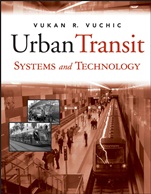
Urban Transit Systems and Technology
ISBN 9780471758235
Autor: Vukan R. Vuchic
Wydawca: Wiley
Dostępność: 3-6 tygodni
Cena: 719,25 zł
Przed złożeniem zamówienia prosimy o kontakt mailowy celem potwierdzenia ceny.
ISBN13: |
9780471758235 |
ISBN10: |
047175823X |
Autor: |
Vukan R. Vuchic |
Oprawa: |
Hardback |
Rok Wydania: |
2007-03-06 |
Ilość stron: |
624 |
Wymiary: |
252x191 |
Tematy: |
AM |
"Probably the most important book for the industry since Peter White′s Planning for Public Transportation , Professor Vuchic′s contribution is valuable because in its pages it gives references to almost every basic hardware option likely to face the transport planner or entice the politician." —Bus and Coach "Contains between two covers for the first time most everything anybody would want to know about the history, evolution, technology, characteristics, and applications of transit systems." — APA Journal "Probably one of the most complete histories ever written on the development and growth of the various forms of urban transportation. It is a well–written, well–illustrated volume that belongs on the bookshelf of anyone seriously interested in mass transit." — National Railway Bulletin "Every engineer and planner of urban public transit facilities and systems needs [this] book." — ITE News A comprehensive modern guide to urban transportation The founding, shaping, and growth of human communities throughout history have been products of complex interactions of many forces. One major force has always been transportation. Transportation has played a key role in determining the location of cities; their size; their form; and their structure. Today, the United States has a population of 300 million people driving 136 million cars and served by over 6,000 public transit agencies. With such daunting statistics, the challenge to the transportation professional is significant indeed. In Urban Transit: Systems and Technology , Vukan Vuchic has assembled the guide to urban transportation that the industry needs. Broad in scope and deeply researched, this book covers the entire field of transit in all its modes and aspects. Vuchic begins with an overview of the history of transit and its role in urban development, illuminating how transportation both responded to the needs of communities and, in turn, helped shape them. Defining relevant terms and concepts, the text then examines: Urban transit modes—highway, rail, automated, specialized, paratransit, and unconventional concepts—and the most efficient systems designs for each System components, vehicles, travel ways, terminals, and control systems Vehicle propulsion (diesel, electric, and others), fully supported with equations and analytical methods for vehicle dynamic performance and travel times Bringing every aspect of urban transport between two covers, Urban Transit: Systems and Technology is a primary resource for professionals and students who are designing and operating these key components of urban infrastructure.
Preface. Acknowledgments. 1 HISTORY AND ROLE OF PUBLIC TRANSPORTATION IN URBAN DEVELOPMENT. 1.1 Early Development of Cities. 1.1.1 Transportation and Locations of Cities. 1.1.2 Transportation and City Size. 1.1.3 Form and Structure of Cities. 1.1.4 The Industrial Revolution, Urbanization, and the Growth of Cities. 1.2 Beginnings of Public Transportation. 1.2.1 Public Transportation before the Nineteenth Century. 1.2.2 Horse–Drawn Omnibuses. 1.2.3 Horse–Drawn Tramways. 1.2.4 Mechanized Street Transit Technologies before 1880. 1.3 Invention of Electric Streetcars /Tramways. 1.3.1 Beginnings of Electric Streetcars in the United States. 1.3.2 Introduction of Electric Tramways in Europe. 1.4 Street Transit Development since 1900. 1.4.1 Streetcars /Tramways. 1.4.2 Motorbuses. 1.4.3 Trolleybuses. 1.5 Development of High–Speed Rail Transit Modes. 1.5.1 Suburban Railways/Regional Rail. 1.5.2 Electric Interurban Railways. 1.5.3 Rapid Transit /Metro. 1.6 Overview and Conclusions: Transit Development and Cities. 2 URBAN PASSENGER TRANSPORT MODES. 2.1 Transport System Definitions and Classification. 2.1.1 Classification by Type of Usage. 2.1.2 Transit Modes. 2.1.3 Transit System Components. 2.1.4 Transit System Operations, Service, and Characteristics. 2.2 Theory of Urban Passenger Transport Modes. 2.2.1 Evolution of a Transportation System in a Model Urban Area. 2.2.2 Review of Modal Features. 2.3 The Family of Transit Modes: Categories and Descriptions. 2.3.1 Paratransit. 2.3.2 Street Transit Modes. 2.3.3 Medium–Capacity Modes: Semirapid Transit. 2.3.4 High–Performance Modes: Rapid Transit. 2.3.5 Specialized Transit Modes. 2.3.6 Review of the Family of Regular Transit Modes. 2.3.7 Commuter Transit. 2.4 Trends in Transit Ridership and in Use of Different Modes. 2.4.1 Urban Travel and Transit Ridership. 2.4.2 Increasing Diversity of Transit Modes. 3 VEHICLE MOTION AND PERFORMANCE. 3.1 Vehicle Motion. 3.2 Resistance to Motion. 3.2.1 Vehicle Resistance. 3.2.2 Alignment Resistance. 3.3 Internal Combustion Engine Propulsion. 3.3.1 Characteristic Diagram for ICEs. 3.3.2 Speed–Tractive Effort Diagram: TE f(V). 3.3.3 Vehicle Motion Force as a Function of Speed. 3.4 Electric Propulsion. 3.4.1 Wayside Electric Power Supply and Its Distribution to Lines. 3.4.2 Propulsion Motors and Their Control. 3.4.3 Electronic Motor Control. 3.4.4 AC Propulsion Motors and Their Electronic Control. 3.4.5 Comparison of Motor Control Types. 3.4.6 Other Propulsion Systems. 3.4.7 Vehicle Acceleration Force. 3.4.8 Comparison of Electric and Diesel Propulsions. 3.5 Vehicle Acceleration, Braking, and Stopping Distances. 3.5.1 Adhesion for Wheel Traction. 3.5.2 Acceleration and Braking Forces and Distances. 3.6 Station–to–Station Travel Analysis. 3.6.1 Basic Variables of Vehicle Motion. 3.6.2 Regimes of Motion. 3.6.3 Travel Time Equations and Diagrams. 3.6.4 Sensitivity of Travel Time and Speed to Individual Parameters. 3.7 Energy Consumption and Efficiency. 3.7.1 Structure of Energy Consumption Analysis. 3.7.2 Influence of Operating Regimes. 3.7.3 Potential Energy Savings through Preprogrammed Driving. 3.7.4 Influence of Stop/Station Spacing. 3.7.5 Measures of Energy Consumption. 4 TRANSIT SYSTEM PERFORMANCE: CAPACITY, PRODUCTIVITY, EFFICIENCY, AND UTILIZATION. 4.1 Definitions of Quantitative Performance Attributes. 4.1.1 Basic Attributes. 4.1.2 Transportation Work and Productivity. 4.1.3 Transit System Efficiency and Productivity. 4.1.4 Consumption and Utilization. 4.2 Transit Line Capacity. 4.2.1 Definitions. 4.2.2 Vehicle Capacity. 4.3 Way Capacity. 4.3.1 Basic Elements. 4.3.2 Vehicle Control Categories in Transit Operation. 4.3.3 Operating Safety Regimes. 4.3.4 Impacts of Train Size and Control Characteristics. 4.3.5 Application of Equations to Different Modes. 4.4 Station Capacity. 4.4.1 Significance and Definitions. 4.4.2 Components and Influencing Factors. 4.4.3 Capacity Diagrams and Equations. 4.4.4 Measures to Increase Station Capacity. 4.5 Theoretical and Practical Capacities of Major Transit Modes. 4.5.1 Important Considerations in Capacity Computations. 4.5.2 Review of Theoretical Capacities. 4.5.3 Actual Capacities of Major Transit Modes. 4.6 Other Quantitative Performance Measures. 4.6.1 Transportation Quantity or Volume. 4.6.2 System and Network Performance. 4.6.3 Transportation Work and Productivity. 4.6.4 Transit System Efficiency (Productivity) Indicators. 4.6.5 Consumption Rates and Utilization Indicators. 5 HIGHWAY TRANSIT: BUS, TROLLEYBUS, AND BUS RAPID TRANSIT. 5.1 Family of Highway Transit Modes. 5.1.1 Definitions. 5.1.2 General Characteristics. 5.1.3 Bus Transit System and Bus Rapid Transit Concepts. 5.2 The Vehicles. 5.2.1 Classification by Propulsion Systems. 5.2.2 Classification by Body Type. 5.2.3 Propulsion, Equipment, and Performance. 5.2.4 Body Structure and Form. 5.2.5 Review of Bus Models, Characteristics, and Design Trends. 5.3 Travel Ways. 5.3.1 Geometric Elements. 5.3.2 Operation in Mixed Traffic. 5.3.3 Bus Preferential Treatments. 5.3.4 Bus Lanes on Streets. 5.3.5 Bus Operations on Freeways. 5.3.6 Busways. 5.4 Bus Rapid Transit. 5.4.1 Definitions of Bus Transit Modes. 5.4.2 Evolution of BRT as a Mode. 5.4.3 Vehicles. 5.4.4 Infrastructure: Lines and Stations. 5.4.5 Operations and ITS Applications. 5.4.6 Review and Evaluation of BTS and BRT. 5.5 Stops, Stations, and Maintenance Facilities. 5.5.1 Bus Stops on Streets. 5.5.2 Stations and Terminals. 5.5.3 Garages, Storage Facilities, and Maintenance Shops. 5.6 Operations, Performance, and Costs. 5.6.1 Operations and Types of Service. 5.6.2 Performance Characteristics. 5.6.3 Service Quality and System Impacts. 5.6.4 Costs. 5.6.5 Trolleybuses: Characteristics and Applications. 5.7 Present and Future Roles of Highway Transit Modes. 6 RAIL TRANSIT: STREETCARS/TRAMWAYS, LIGHT RAIL, RAPID TRANSIT, AND REGIONAL RAIL. 6.1 Family of Rail Transit Modes. 6.1.1 General Characteristics. 6.1.2 Definitions and Characteristics of Individual Rail Modes. 6.2 Rolling Stock. 6.2.1 Rail Vehicle Types and Basic Components. 6.2.2 Trucks and Mechanical/ Electrical Equipment. 6.2.3 Vehicle Body. 6.2.4 Review of Characteristics of Different Vehicle Models. 6.2.5 Basic Operating Units and Train Consists. 6.3 Rail Transit Ways: Geometry and Facilities. 6.3.1 Geometric Elements. 6.3.2 Track Superstructure. 6.3.3 Rights–of–Way. 6.4 Rubber–Tired Rapid Transit (RTRT). 6.4.1 Description of the Technology. 6.4.2 Characteristics and Comparison with Rail Technology. 6.4.3 Potential Applications of Rubber–Tired Rapid Transit. 6.5 Stops, Stations, and Yards. 6.5.1 At–Grade Stops. 6.5.2 At–Grade Transfer Stations. 6.5.3 Controlled–Access Stations. 6.5.4 Auto–Transit Interface Stations. 6.5.5 Rail Transit Yards and Shops. 6.6 Operations, Performance, and Costs. 6.6.1 Vehicle /Train Travel Control and Automation. 6.6.2 Performance Characteristics of Rail Modes. 6.6.3 Rail Transit Costs. 6.7 Present and Future Role of Rail Transit. 6.7.1 Trends and Impacts of Urban Population and Growth of Auto Ownership. 6.7.2 Goals and Objectives in Building Rail Transit Systems. 6.7.3 What Size City for Rapid Transit? 6.7.4 Development of Rail Transit in the United States. 6.7.5 Present and Future Role of Rail Transit around the World. 7 UNCONVENTIONAL CONCEPTS AND SYSTEMS: AUTOMATED GUIDED TRANSIT AND MONORAILS. 7.1 Evaluation of Conventional Systems and Potential for Innovations. 7.2 Analysis of Systems Components. 7.2.1 Vehicle Support, Guidance, and Switches. 7.2.2 Vehicle /TU Capacity. 7.2.3 Dual–Mode Operations. 7.2.4 Fully Automatic Operation. 7.3 Unconventional Modes and Systems. 7.3.1 Automated Guided Transit and Automated People Movers. 7.3.2 Monorails. 7.3.3 Personal Rapid Transit (PRT). 7.4 Evaluation of Unconventional Modes and New Concepts. 8 SPECIALIZED TECHNOLOGY SYSTEMS. 8.1 Short–Haul and Shuttle Transit Systems. 8.1.1 Pedestrians and Pedestrian–Assisting Systems. 8.1.2 Short–Haul Transit Modes. 8.1.3 Significance of Short–Haul Transportation. 8.1.4 Point–to–Point Shuttles and Lines. 8.2 Terrain–Specialized Technologies. 8.2.1 Rail Systems with Auxiliary Traction. 8.2.2 Aerial Tramways. 8.3 Waterborne Transit Systems. 8.3.1 Types of Vessels. 8.3.2 Ferryboat Services. 9 PARATRANSIT. 9.1 Definition and Classification. 9.2 Modified Uses of Private Transportation. 9.2.1 Car Rentals. 9.2.2 Carpools. 9.3 Semipublic Paratransit. 9.3.1 Vanpools. 9.3.2 Subscription Buses. 9.3.3 Car Sharing. 9.4 Public (Regular) Paratransit. 9.4.1 Taxis. 9.4.2 Jitneys. 9.4.3 Dial–a–Ride and Other Hybrid–Type Services. 9.5 Evaluation of Paratransit and Its Roles. 9.5.1 Characteristics of Paratransit. 9.5.2 Potential Improvements. 9.5.3 Present and Potential Roles of Paratransit. 10 CHARACTERISTICS AND COMPARISONS OF TRANSIT MODES. 10.1 Basic Elements of Transit Modes. 10.1.1 Significance of Right–of–Way Categories. 10.1.2 Transit Systems Technology. 10.1.3 Interdependence of ROW and System Technology. 10.1.4 Review of Technological and Operational Features. 10.2 Medium–Performance Transit Modes. 10.2.1 Bus Rapid Transit. 10.2.2 Trolleybus System. 10.2.3 Light Rail Transit. 10.2.4 Automated Guided Transit Systems. 10.2.5 Comparisons of Medium–Performance Modes. 10.3 High–Performance Modes. 10.3.1 Light Rail Rapid Transit Modes. 10.3.2 Rail Rapid Transit /Metro. 10.3.3 Rubber–Tired Rapid Transit and Monorails. 10.3.4 Review of Guided Modes and Their Automation. 10.4 Regional Transit Modes. 10.4.1 Regional Buses. 10.4.2 Commuter Rail. 10.4.3 Regional Rail. 10.4.4 Regional Rapid Transit. 10.4.5 Trends in Regional Rail Transit Development. 10.5 Progress and Problems in Mode Selection. 10.5.1 Increased Mode Diversification. 10.5.2 Support for and Attacks on Public Transit. 10.5.3 Campaigns against Rail Transit. 10.5.4 Discrepancies between Theoretical Analyses and Real World Systems. 10.5.5 Systems Approach in Mode Selection and Intermodal Relationships. 10.5.6 Importance of Rational Choice of Transit Modes. Bibliography. Appendix I SI and English Units and Conversion Factors. Appendix II List of Abbreviations. Appendix III Definitions of Transit Systems Terms. Appendix IV Answers to Selected Exercise Questions. Index of Cities. Index.
Vukan R. Vuchic , PhD, is UPS Foundation Professor of Transportation Engineering in the Department of Electrical and Systems Engineering at the University of Pennsylvania. He is the author of Urban Transit: Operations, Planning, and Economics (Wiley), Transportation for Livable Cities , and other acclaimed books and articles on the subject of urban transit. He has consulted for over a dozen cities around the world and lectured at over seventy universities.
"Fully supported with equations and analytical methods, this book is the primary resource for students of transit, as well as those professionals who design and operate these key pieces of urban infrastructures." ( ENR.com , December 2008) "This book is filled with essential instructional information for not only understanding history and current technology, but all of the intricate details involved with any transit project." ( ENR.com ; 10/31/07)
Koszyk
Książek w koszyku: 0 szt.
Wartość zakupów: 0,00 zł
Informacje


Kontakt
Gambit
Centrum Oprogramowania
i Szkoleń Sp. z o.o.
Al. Pokoju 29b/22-24
31-564 Kraków
Siedziba Księgarni
ul. Kordylewskiego 1
31-542 Kraków
+48 12 410 5991
+48 12 410 5987
+48 12 410 5989
Subskrypcje
Administratorem danych osobowych jest firma Gambit COiS Sp. z o.o. Na podany adres będzie wysyłany wyłącznie biuletyn informacyjny.
Autoryzacja płatności

Informacje na temat autoryzacji płatności poprzez PayU.

© Copyright 2012: GAMBIT COiS Sp. z o.o. Wszelkie prawa zastrzeżone.
Projekt i wykonanie: Alchemia Studio Reklamy