


Wydawcy
Katalog tematyczny
- Archeologia (109)
- Ekonomia, finanse, business (13704)
- Filozofia (1445)
- Historia (3040)
- Języki i językoznawstwo (2356)
- Lifestyle, hobby i rozrywka (475)
- Medycyna (9704)
- Nauki humanistyczne (4)
- Nauki o Ziemi i środowisku (2638)
- Nauki ścisłe (20412)
- Astronomia (294)
- Biologia (5119)
- Chemia (6540)
- Chemia analityczna (361)
- Chemia fizyczna (346)
- Chemia nieorganiczna (137)
- Chemia organiczna (535)
- Krystalografia (27)
- Minerologia (46)
- Fizyka (3309)
- Matematyka (4574)
- Nauki ścisłe, ogólnie (503)
- Nauki społeczne (8486)
- Nauki techniczne (13450)
- Prawo (1696)
- Publikacje informacyjne i interdyscyplinarne (1288)
- Religia i wierzenia (917)
- Technika komputerowa (4067)
- Zdrowie, relacje międzyludzkie i rozwój osobisty (657)





Informacje szczegółowe o książce
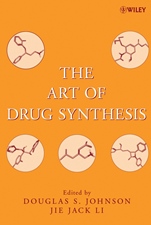
The Art of Drug Synthesis
ISBN 9780471752158
Autor: Douglas S. Johnson, Jie Jack Li
Wydawca: Wiley
Dostępność: 3-6 tygodni
Cena: 643,65 zł
Przed złożeniem zamówienia prosimy o kontakt mailowy celem potwierdzenia ceny.
ISBN13: |
9780471752158 |
ISBN10: |
0471752150 |
Autor: |
Douglas S. Johnson, Jie Jack Li |
Oprawa: |
Hardback |
Rok Wydania: |
2007-07-20 |
Ilość stron: |
296 |
Wymiary: |
262x178 |
Tematy: |
PN |
DISCOVER THE INS ANDOUTS OF DRUG SYNTHESIS, FROM IDENTIFYING A LEAD MOLECULE TO COMMERCIAL PRODUCTION.
Learn how chemistry, biology, pharmacokinetics, and a host of other disciplines all play a role in the successful discovery of new drugs and therapeutics. This text features contributions from seventeen leading medicinal and process chemists who show you how it is done. Some of the contributors were instrumental in the discovery of the drugs they review, offering you a unique and invaluable perspective on the complete drug discovery process.
The first two chapters of this text introduce the stringent requirements for a potential therapeutic molecule, approaches in finding molecular structures that ′hit" a biological target, and the many steps needed to go from initial small–scale laboratory synthesis to commercial and the many steps needed to go from initial small–scale laboratory synthesis to commercial production. The remaining fifteen chapters are divided into three major therapeutic areas:Cancer and infectious DiseasesCardiovascular and Metabolic DiseasesCentral Nervous System Diseases
These three section collectively cover twenty–one categories of drugs and more than sixty individual drugs, highlighting both medicinal and process synthetic routes. The authors present detailed accounts of the synthesis of such high–profile drugs as Actos®, Levaquin®, Avelox®, Diflucan®, Tamiflu®, Zetia®, Lyrica®, and Strattera®. You gain new insight into how a first generational agent is refined and improved by the application of medicinal chemistry for the discovery of second and third generation medicines.
This text is an excellent companion to the bestselling Contemporary Drug Synthesis, covering all new drugs. In addition to serving as a reference for medicinal chemists and pharmacologists, this book is highly recommended as a graduate–level text for me
dicinal pharmacologists, this book is highly recommended as a graduate–level text for medicinal and pharmaceutical chemistry courses. With its many examples and insights into successful and pharmaceutical chemistry courses. With its many examples and insights into successful syntheses, it enables students to make the bridge from theory to practice.
Spis treści:
Foreword.
Preface.
Contributors.
1 THE ROLE OF MEDICINAL CHEMISTRY IN DRUG DISCOVERY (John A. Lowe, III).
1.1 Introduction.
1.2 Hurdles in the Drug Discovery Process.
1.3 The Tools of Medicinal Chemistry.
1.3.1 In Silico Modeling.
1.3.2 Structure–Based Drug Design (SBDD).
1.4 The Role of Synthetic Chemistry in Drug Discovery.
References.
2 PROCESS RESEARCH: HOW MUCH? HOW SOON? (Neal G. Anderson).
2.1 Introduction.
2.2 Considerations for Successful Scale–up to Tox Batches and Phase I Material.
2.3 Considerations for Phase 2 Material and Beyond.
2.3.1 Reagent Selection.
2.3.2 Solvent Selection.
2.3.3 Unit Operations.
2.3.4 Developing Simple, Effective, Efficient Work–ups and Isolations.
2.3.5 The Importance of Physical States.
2.3.6 Route Design and Process Optimization to Minimize COG.
2.4 Summary.
References.
I CANCER AND INFECTIOUS DISEASES.
3 AROMATASE INHIBITORS FOR BREAST CANCER: EXEMESTANE (AROMASIN), ANASTROZOLE (ARIMIDEX), AND LETROZOLE (FEMARA) (Jie Jack Li).
3.1 Introduction.
3.2 Synthesis of Exemestane.
3.3 Synthesis of Anastrozole.
3.4 Synthesis of Letrozole.
References.
4 QUINOLONE ANTIBIOTICS: LEVOFLOXACIN (LEVAQUIN), MOXIFLOXACIN (AVELOX), GEMIFLOXACIN (FACTIVE), AND GARENOXACIN (T–3811) (Chris Limberakis).
4.1 Introduction.
4.1.1 Mechanism of Action.
4.1.2 Modes of Resistance.
4.1.3 Structure–Activity Relationship (SAR) and Structure–Toxicity Relationship (STR).
4.1.4 Pharmacokinetics.
4.1.5 Synthetic Approaches.
4
.2 Levofloxacin.
4.3 Moxifloxacin.
4.4 Gemifloxacin.
4.5 Garenoxacin (T–3811): A Promising Clinical Candidate.
References.
5 TRIAZOLE ANTIFUNGALS: ITRACONAZOLE (SPORANOX), FLUCONAZOLE (DIFLUCAN), VORICONAZOLE (VFEND), AND FOSFLUCONAZOLE (PRODIF) (Andrew S. Bell).
5.1 Introduction.
5.2 Synthesis of Itraconazole.
5.3 Synthesis of Fluconazole.
5.4 Synthesis of Voriconazole.
5.5 Synthesis of Fosfluconazole.
References.
6 NON–NUCLEOSIDE HIV REVERSE TRANSCRIPTASE INHIBITORS (Arthur Harms).
6.1 Introduction.
6.2 Synthesis of Nevirapine.
6.3 Synthesis of Efavirenz.
6.4 Synthesis of Delavirdine Mesylate.
References.
7 NEURAMINIDASE INHIBITORS FOR INFLUENZA: OSELTAMIVIR PHOSPHATE (TAMIFLU) AND ZANAMIVIR (RELENZA) (Douglas S. Johnson and Jie Jack Li).
7.1 Introduction.
7.1.1 Relenza.
7.1.2 Tamiflu.
7.2 Synthesis of Oseltamivir Phosphate (Tamiflu).
7.3 Synthesis of Zanamivir (Relenza).
References.
II CARDIOVASCULAR AND METABOLIC DISEASES.
8 PEROXISOME PROLIFERATOR–ACTIVATED RECEPTOR (PPAR) AGONISTS FOR TYPE 2 DIABETES (Jin Li).
8.1 Introduction.
8.1.1 Insulin.
8.1.2 Sulfonylurea Drugs.
8.1.3 Meglitinides.
8.1.4 Biguanides.
8.1.5 Alpha–Glucosidase Inhibitors.
8.1.6 Thiazolidinediones.
8.2 Synthesis of Rosiglitazone.
8.3 Synthesis of Pioglitazone.
8.4 Synthesis of Muraglitazar.
References.
9 ANGIOTENSIN AT1 ANTAGONISTS FOR HYPERTENSION (Larry Yet).
9.1 Introduction.
9.2 Losartan Potassium.
9.2.1 Introduction to Losartan Potassium.
9.2.2 Synthesis of Losartan Potassium.
9.3 Valsartan.
9.3.1 Introduction to Valsartan.
9.3.2 Synthesis of Valsartan.
9.4 Irbesartan.
9.4.1 Introduction to Irbesartan.
9.4.2 Synthesis of Irbesartan.
9.5 Candesartan Cilexetil.
9.5.1 Introduction to Candesartan Cilexetil.
9.5.2 Synthesis of Candesartan Cilexetil.
9.6 Olmesartan Medoxomil.
9.6.1 Introduction
to Olmesartan Medoxomil.
9.6.2 Synthesis of Olmesartan Medoxomil.
9.7 Eprosartan Mesylate.
9.7.1 Introduction to Eprosartan Mesylate.
9.7.2 Synthesis of Eprosartan Mesylate.
9.8 Telmisartan.
9.8.1 Introduction to Telmisartan.
9.8.2 Synthesis of Telmisartan.
References.
10 LEADING ACE INHIBITORS FOR HYPERTENSION (Victor J. Cee and Edward J. Olhava).
10.1 Introduction.
10.2 Synthesis of Enalapril Maleate.
10.3 Synthesis of Lisinopril.
10.4 Synthesis of Quinapril.
10.5 Synthesis of Benazepril.
10.6 Synthesis of Ramipril.
10.7 Synthesis of Fosinopril Sodium.
References.
11 DIHYDROPYRIDINE CALCIUM CHANNEL BLOCKERS FOR HYPERTENSION (Daniel P. Christen).
11.1 Introduction.
11.2 Synthesis of Nifedipine (Adalatw).
11.3 Synthesis of Felodepine (Plendilw).
11.4 Synthesis of Amlodipine Besylate (Norvascw).
11.5 Synthesis of Azelnidipine (Calblockw).
References.
12 SECOND–GENERATION HMG–CoA REDUCTASE INHIBITORS (Jeffrey A. Pfefferkorn).
12.1 Introduction.
12.2 Synthesis of Fluvastatin (Lescolw).
12.3 Synthesis of Rosuvastatin (Crestorw).
12.4 Synthesis of Pitavastatin (Livalow).
References.
13 CHOLESTEROL ABSORPTION INHIBITORS: EZETIMIBE (ZETIA) (Stuart B. Rosenblum).
13.1 Introduction.
13.2 Discovery Path to Ezetimibe.
13.3 Synthesis of Ezetimibe (Zetia).
References.
III CENTRAL NERVOUS SYSTEM DISEASES.
14 DUAL SELECTIVE SEROTONIN AND NOREPINEPHRINE REUPTAKE INHIBITORS (SSNRIs) FOR DEPRESSION (Marta Piñeiro–Núñez)
14.1 Introduction.
14.2 Synthesis of Venlafaxine.
14.3 Synthesis of Milnacipran.
14.4 Synthesis of Duloxetine.
References.
15 GABAA RECEPTOR AGONISTS FOR INSOMNIA: ZOLPIDEM (AMBIEN), ZALEPLON (SONATA), ESZOPICLONE (ESTORRA, LUNESTA), AND INDIPLON (Peter R. Guzzo).
15.1 Introduction.
15.2 Synthesis of Zolpidem.
15.3 Synthesis of Zaleplon.
15.4 Synthesis of Eszo
Koszyk
Książek w koszyku: 0 szt.
Wartość zakupów: 0,00 zł
Informacje


Kontakt
Gambit
Centrum Oprogramowania
i Szkoleń Sp. z o.o.
Al. Pokoju 29b/22-24
31-564 Kraków
Siedziba Księgarni
ul. Kordylewskiego 1
31-542 Kraków
+48 12 410 5991
+48 12 410 5987
+48 12 410 5989
Subskrypcje
Administratorem danych osobowych jest firma Gambit COiS Sp. z o.o. Na podany adres będzie wysyłany wyłącznie biuletyn informacyjny.
Autoryzacja płatności

Informacje na temat autoryzacji płatności poprzez PayU.

© Copyright 2012: GAMBIT COiS Sp. z o.o. Wszelkie prawa zastrzeżone.
Projekt i wykonanie: Alchemia Studio Reklamy