


Wydawcy
Katalog tematyczny
- Archeologia (109)
- Ekonomia, finanse, business (13704)
- Filozofia (1445)
- Historia (3040)
- Języki i językoznawstwo (2356)
- Lifestyle, hobby i rozrywka (475)
- Medycyna (9704)
- Nauki humanistyczne (4)
- Nauki o Ziemi i środowisku (2638)
- Nauki ścisłe (20412)
- Astronomia (294)
- Biologia (5119)
- Chemia (6540)
- Chemia analityczna (361)
- Chemia fizyczna (346)
- Chemia nieorganiczna (137)
- Chemia organiczna (535)
- Krystalografia (27)
- Minerologia (46)
- Fizyka (3309)
- Matematyka (4574)
- Nauki ścisłe, ogólnie (503)
- Nauki społeczne (8486)
- Nauki techniczne (13450)
- Prawo (1696)
- Publikacje informacyjne i interdyscyplinarne (1288)
- Religia i wierzenia (917)
- Technika komputerowa (4067)
- Zdrowie, relacje międzyludzkie i rozwój osobisty (657)





Informacje szczegółowe o książce
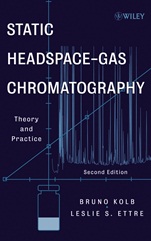
Static Headspace–Gas Chromatography: Theory and Practice
ISBN 9780471749448
Autor: Bruno Kolb, Leslie S. Ettre
Wydawca: Wiley
Dostępność: 3-6 tygodni
Cena: 708,75 zł
Przed złożeniem zamówienia prosimy o kontakt mailowy celem potwierdzenia ceny.
ISBN13: |
9780471749448 |
ISBN10: |
0471749443 |
Autor: |
Bruno Kolb, Leslie S. Ettre |
Oprawa: |
Hardback |
Rok Wydania: |
2006-06-13 |
Numer Wydania: |
2nd Edition |
Ilość stron: |
384 |
Wymiary: |
246x165 |
Tematy: |
PN |
The only reference to provide both current and thorough coverage of this important analytical technique
Static headspace–gas chromatography (HS–GC) is an indispensable technique for analyzing volatile organic compounds, enabling the analyst to assay a variety of sample matrices while avoiding the costly and time–consuming preparation involved with traditional GC.
Static Headspace–Gas Chromatography: Theory and Practice has long been the only reference to provide in–depth coverage of this method of analysis. The Second Edition has been thoroughly updated to reflect the most recent developments and practices, and also includes coverage of solid–phase microextraction (SPME) and the purge–and–trap technique. Chapters cover:Principles of static and dynamic headspace analysis, including the evolution of HS–GC methods and regulatory methods using static HS–GCBasic theory of headspace analysis—physicochemical relationships, sensitivity, and the principles of multiple headspace extractionHS–GC techniques—vials, cleaning, caps, sample volume, enrichment, and cryogenic techniquesSample handlingCryogenic HS–GCMethod development in HS–GCNonequilibrium static headspace analysisDetermination of physicochemical functions such as vapor pressures, activity coefficients, and more
Comprehensive and focused, Static Headspace–Gas Chromatography, Second Edition provides an excellent resource to help the reader achieve optimal chromatographic results. Practical examples with original data help readers to master determinations in a wide variety of areas, such as forensic, environmental, pharmaceutical, and industrial applications.
Spis treści:
Preface.
Preface to the First Edition.
List of Acronyms and Symbols.
1. General introduction.
1.1 Principles of headspace anal
ysis .
1.2 Types of headspace analysis.
1.2.1 Principles of static headspace – gas chromatography (HS–GC).
1.2.2 Principles of dynamic headspace –– gas chromatography.
1.3 The evolution of the HS–GC methods.
1.4 Headspace –– gas chromatography literature.
1.5 Regulatory methods utilizing (static) HS–GC.
1.6 References.
2. Theoretical background of HS–GC and its applications.
2.1 Basic theory of headspace analysis.
2.2 Basic physicochemical relationships.
2.3 Headspace sensitivity.
2.3.1 Influence of temperature on vapor pressure and partition coefficient.
2.3.2 Influence of temperature on headspace sensitivity for compounds with differing partition coefficients.
2.3.3 Influence of sample volume on headspace sensitivity for compounds with differing partition coefficients.
2.3.4 Changing the sample matrix by varying the activity coefficient.
2.4 Headspace linearity.
2.5 Duplicate analyses.
2.6 Multiple headspace extraction (MHE).
2.6.1 Principles of MHE.
2.6.2 Theoretical background of MHE.
2.6.3 Simplified MHE calculation.
2.7 References.
3. The technique of HS–GC.
3.1 Sample vials.
3.1.1 Types.
3.1.2 Selection of vial volume.
3.1.3 Vial cleaning.
3.1.4 Wall adsorption effects.
3.2 Caps.
3.2.1 Pressure on caps.
3.2.2 Safety closures.
3.3 Septa.
3.3.1 Types.
3.3.2 Septum blank.
3.3.3 Should a septum be pierced twice?.
3.4 Thermostatting.
3.4.1 Influence of temperature.
3.4.2 Working modes.
3.5 The fundamentals of headspace sampling systems.
3.5.1 Systems using gas syringes.
3.5.2 Solid–phase microextraction (SPME).
3.5.2.1 Comparison of the sensitivities in HS–SPME and direct static HS–GC.
3.5.3 Balanced–pressure sampling systems.
3.5.4 Pressure/loop systems.
3.5.5 Conditions for pressurization systems.
3.5.6 The volume of the he
adspace sample.
3.5.6.1 Sample volume with gas syringes.
3.5.6.2 Sample volume with loop systems.
3.5.6.3 Sample volume with the balanced–pressure system.
3.6 Use of open–tubular (capillary) columns.
3.6.1 Properties of open–tubular columns for gas samples.
3.6.2 Headspace sampling with split or spitless?.
3.6.3 Comparison of split– and splitless headspace sampling.
3.6.4 Band broadening during sample introduction.
3.6.5 Temperature influence on band broadening.
3.6.6 The combination of different columns and detectors.
3.7 Enrichment techniques in HS–GC.
3.7.1 Systems for cryogenic trapping.
3.7.1.1 Systems for Cryogenic condensation.
3.7.1.2 Trapping by cryogenic focusing.
3.7.1.3 Influence of temperature on cryogenic focusing.
3.7.1.4 Comparison of the various techniques of cryogenic trapping.
3.7.2 Influence of water in cryogenic HS–GC.
3.7.2.1 Water removal in static HS–GC.
3.7.2.2 Applications.
3.7.3 Enrichment by adsorption.
3.7.3.1 Water removal from an adsorption trap.
3.8 Special techniques with the balanced–pressure systems.
3.8.1 Instrumentation for MHE.
3.8.2 Backflushing.
3.9. Reaction HS–GC.
3.9.1 Derivatization in the headspace vial.
3.9.1.1 Methylation.
3.9.1.2 Esterification.
3.9.1.3 Transesterification.
3.9.1.4 Acetylation.
3.9.1.5 Carbonyl compounds.
3.9.2 Subtraction HS–GC.
3.9.3 Special reactions.
3.9.4 HS–GC analysis of volatile derivatives from inorganic compounds.
3.10 References.
4. Sample handling in HS–GC.
4.1 Equilibration.
4.1.1 Gas samples.
4.1.2 Liquid samples.
4.1.3 Solid samples.
4.2 Solution approach.
4.3 Sample handling and sample introduction.
4.3.1 Gas samples.
4.3.2 Liquid samples.
4.3.3 Solid samples.
4.4 Preparation of standard solutions.
4.4.1 Preparation of a standard solution from a liquid or solid substanc
e.
4.4.2 Preparation of a standard solution from a gaseous compound.
4.5 Influence of the matrix.
4.5.1 Clean matrix is available.
4.5.2 Matric effect can be eliminated.
4.5.3 Artificial matrix can be prepared.
4.6 Methods aiming the complete evaporation of the analyte.
4.6.1 The total vaporization technique (TVT).
4.6.2 The full evaporation technique (FET).
4.6.3 Calculation of the extraction yield in FET.
4.6.4 Comparison of headspace sensitivities.
4.7 References.
5. Headspace methods for quantitative analysis.
5.1 Internal normalization.
5.2 Internal standard method.
5.3 External standard method.
5.4 Standard addition method.
5.4.1 Single addition.
5.4.2 Handling of the added standard (Gas–phase addition and sample–phase addition).
5.4.3 Determination by multiple additions.
5.5 Multiple headspace extraction (MHE).
5.5.1 Principles of MHE.
5.5.2 Calibration in MHE.
5.5.2.1 External standard.
5.5.2.2 Internal standard.
5.5.2.3 Standard addition.
5.5.3 The use of gaseous external standards in MHE.
5.5.4 The role of quotient Q.
5.5.4.1 Relationship between Q and pressures.
5.5.4.2 Value of Q in the case of total vaporization.
5.5.4.3 The relative position of the MHE plots as a function of Q.
5.5.5 The correlation coefficient (r).
5.5.6 Evaluation of the shape of the regression plot.
5.5.7 Influence of K/ß.
5.6 Analysis of solid samples (adsorption systems).
5.6.1 Suspension approach.
5.6.2 Surface–modification techniques.
5.6.3 Highly adsorptive samples.
5.7 Calibration techniques with headspace samples of varying volumes.
5.8 Analysis of gas samples.
5.9 References.
6. Method development in HS–GC.
6.1 General guidelines.
6.2 Determination of the residual monomer content of polystyrene pellets.
6.2.1 First approach: use of internal standard
Koszyk
Książek w koszyku: 0 szt.
Wartość zakupów: 0,00 zł
Informacje


Kontakt
Gambit
Centrum Oprogramowania
i Szkoleń Sp. z o.o.
Al. Pokoju 29b/22-24
31-564 Kraków
Siedziba Księgarni
ul. Kordylewskiego 1
31-542 Kraków
+48 12 410 5991
+48 12 410 5987
+48 12 410 5989
Subskrypcje
Administratorem danych osobowych jest firma Gambit COiS Sp. z o.o. Na podany adres będzie wysyłany wyłącznie biuletyn informacyjny.
Autoryzacja płatności

Informacje na temat autoryzacji płatności poprzez PayU.

© Copyright 2012: GAMBIT COiS Sp. z o.o. Wszelkie prawa zastrzeżone.
Projekt i wykonanie: Alchemia Studio Reklamy