


Wydawcy
Katalog tematyczny
- Archeologia (109)
- Ekonomia, finanse, business (13704)
- Filozofia (1445)
- Historia (3040)
- Języki i językoznawstwo (2356)
- Lifestyle, hobby i rozrywka (475)
- Medycyna (9704)
- Nauki humanistyczne (4)
- Nauki o Ziemi i środowisku (2638)
- Nauki ścisłe (20412)
- Nauki społeczne (8486)
- Nauki techniczne (13450)
- Prawo (1696)
- Publikacje informacyjne i interdyscyplinarne (1288)
- Religia i wierzenia (917)
- Technika komputerowa (4067)
- Zdrowie, relacje międzyludzkie i rozwój osobisty (657)





Informacje szczegółowe o książce
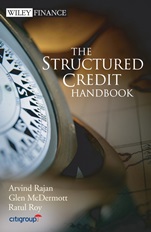
The Structured Credit Handbook
ISBN 9780471747499
Autor: Arvind Rajan, Glen McDermott, Ratul Roy
Wydawca: Wiley
Dostępność: 3-6 tygodni
Cena: 401,10 zł
Przed złożeniem zamówienia prosimy o kontakt mailowy celem potwierdzenia ceny.
ISBN13: |
9780471747499 |
ISBN10: |
0471747491 |
Autor: |
Arvind Rajan, Glen McDermott, Ratul Roy |
Oprawa: |
Hardback |
Rok Wydania: |
2007-03-02 |
Ilość stron: |
496 |
Wymiary: |
238x165 |
Tematy: |
KF |
“The Structured Credit Handbook is an outstanding achievement. It provides and excellent and well–written tutorial on all aspects of structured credit markets and includes many interesting examples and applications. The book brings a wealth of institutional knowledge together with first–class economic analysis by some of the leading practitioners in the field. Rejan, McDermott, and Roy have written the definitive reference that students, researchers, investors, and market professionals have been waiting for.”
—Francis Longstaff, Allstate Professor of Insurance and Finance, UCLA Anderson School of Management
“The Structured Credit Handbook is a unique blend of products and trading strategies. This is an authoritative and colorful treatment designed for investors and sales–and–trading professionals covering structured credit products. All of the key products are covered.”
—Darrell Duffie, Dean Witter Distinguished Professor of Finance, Stanford University
“Finally, a clearly written and comprehensive road map of the world of structured credit! The Structured Credit Handbook incisively analyzes the entire spectrum of structured credit products, from single name CDS to CDOs. Well–suited for students and practitioners alike, this book provides a unique, practical framework for understanding this complex and rapidly changing field. This book is destined to become a fixture in trading rooms, investment departments, and classrooms around the world.”
—Ian Lui, Chief Investment Officer and Christopher Ni, Deputy Chief Investment Officer, Shin Kong Life Insurance Co. Ltd.
Spis treści:
Acknowledgments.
About the Authors.
About the Contributors.
Introduction: A Roadmap of the New World of Structured Credit.
How Structured Credit Completes Markets.
Enabling Technology.
Improved Liquidity, Trans
parency, and Customizability.
Growth of Structured Credit Markets.
Core Uses of Structured Credit.
Who Should Read This Book?
How This Book Is Organized.
PART ONE: Index and Single–Name Products.
CHAPTER 1: A Primer on Credit Default Swaps (Arvind Rajan).
The Market for Credit Default Swaps.
Transaction Terminology and Mechanics.
Prerequisites for Credit Derivatives Transactions.
Some Uses of Default Swaps.
Case Study: Relative Value—Cashing In on the Curve Steepness in Telecoms.
Appendix: Equivalence of a Bond Spread and Default Swap Premium.
CHAPTER 2: Credit Default Swaptions (Arvind Rajan and Terry Benzschawel).
Payer Options.
Receiver Options.
Credit Swaption Payoffs in Default.
Conclusion.
Case Study: Are Tight Spreads Giving You Butterflies?
CHAPTER 3: Constant Maturity Credit Default Swaps (Olivier Renault and Ratul Roy).
Basics of CMCDSs.
Participation Rate.
Behavior of CMCDSs.
Capped CMCDS.
Hedging CMCDSs.
Trading Strategies with CMCDSs.
Conclusion.
Case Study: Taking Curve Views with CMCDSs.
Appendix: Computing the Participation Rate.
CHAPTER 4: Credit Derivatives Indexes (Jure Skarabot and Gaurav Bansal).
Introduction.
Family of Credit Derivatives Indexes.
Structure of the CDX/iTraxx Index Family.
Administration of Indexes.
Basket of Credit Default Swaps.
Up–Front and Running Payments.
What Happens in Case of a Credit Event?
Settlement Process after Credit Event.
Recent Defaults in CDX Indexes.
Index versus Intrinsics.
Investment Strategies with Credit Derivatives Indexes.
Conclusion.
Case Study: DJ CDX HY and DJ CDX EM—Conversion of Price Level into a Spread Level.
Case Study: Using iTraxx to Replicate Bond Portfolios.
Appendix: Description of the Roll Process.
CHAPTER 5: The Added Dimensions of Credit—A Guide to Relative Val
ue Trading (Matt King and Michael Sandigursky).
Overview of Curve Trades.
Putting on a Curve Trade.
Cross–Currency Trades.
Basis Trades.
Debt–Equity Trades.
iTraxx Credit Indexes.
Credit Options.
PART TWO: Portfolio Credit Derivatives.
CHAPTER 6: Single–Tranche CDOs (Jure Skarabot, Ratul Roy, and Ji–Hoon Ryu).
Overview of Single–Tranche CDOs.
Case Study: Dispersion Trades and Tranches.
Case Study: Attractions of Hedged Mezzanines.
CHAPTER 7: Trading Credit Tranches: Taking Default Correlation out of the Black Box (Ratul Roy).
The Credit Tranche Market.
Skew in Default Correlation.
Trading Opportunities for Investors.
Conclusion and Future Agenda.
Case Study: Curve Trades in Tranche Markets.
CHAPTER 8: Understanding CDO–Squareds (Ratul Roy and Matt King).
CDOs versus CDO2.
Value of CDO2s Derives Broadly from Inner CDOs.
CDO2 versus Inner CDO.
Like Mezzanine, but with Tails.
CDO2 versus Master CDO.
Economic Value versus Rating Quality.
Uses of CDO2: Long, Short, and Correlation!
Structures: Good, Bad, and Ugly.
How Managers Can Add Value.
Conclusion.
Case Study: Term Sheet.
CHAPTER 9: CPPI: Leveraging and Deleveraging Credit (Olivier Renault).
Product Mechanics.
Managed CPPIs.
Case Study: Performance Comparison of Strategies.
Appendix: Our Methodology.
PART THREE: Collateralized Debt Obligations.
CHAPTER 10: Collateralized Loan Obligations (Glen McDermott, William E. Deitrick, Alexei Kroujiline, and Robert Mandery).
Leveraged Loan Market Overview.
Pro Rata Loans.
Middle–Market Loans.
European Leveraged Loans.
European Mezzanine Bank Loans.
Collateralized Loan Obligations.
Conclusion.
Middle–Market CLO Handbook.
Conclusion.
Appendix A: Middle–Market Loan Characteristics.
Appendix
B: The Basic CLO Structure.
Case Study: CDO Combination Securities—Tailoring Risk/Return Profiles.
CHAPTER 11: ABS CDOs (Ratul Roy and Glen McDermott).
Overview of the Structured Finance Market.
Major Characteristics of Structured Finance Securities.
CDOs of Structured Finance Securities.
Conclusion.
Case Study: Relative Value in High–Grade Structured Finance CDOs.
Case Study: Untangling Mezzanine and High–Grade Structured Finance CDOs.
Appendix: Rating Transition Matrices of Common Structured Finance Collateral.
CHAPTER 12: CDO Equity (Glen McDermott and Alexei Kroujiline).
Cash Flow CDO Income Notes.
Return Analysis.
Collateral Manager.
Asset Characteristics.
Structure.
Conclusion.
Case Study: Diversifying Credit Risk Using a CDO Equity Fund.
CHAPTER 13: Commercial Real Estate CDOs (Darrell Wheeler and Ratul Roy).
CRE CDOs by the Numbers.
Building Blocks of a CRE CDO.
CRE CDO Managers and Sponsors.
CRE CDO Investors: A Diverse Group.
Key Events in the CRE CDO Market.
Investor Analysis of CRE CDOs.
Additional Suggested Collateral Analysis.
Appendix: List of CRE CDOs.
Glossary.
Term Sheet.
Notes.
Index.
Nota biograficzna:
Dr. Arvind Rajan is Managing Director in the Relative Value Group of Citigroup′s Global Fixed Income Division, where he engages in proprietary trading of Credit, Structured Credit, and Emerging Markets. For the past 13 years, Arvind has held a number of senior positions at Citigroup and Salomon Brothers, including Co–head of US Fixed Income Strategy, Global Head of Structured Credit Research and Strategy, and Global Head of EmergingMarkets Quantitative Strategy. Arvind was twice ranked first and once second in the All–America Fixed Income Research poll conducted annually by Institutional Investor magazine. In all, Arvind has
Koszyk
Książek w koszyku: 0 szt.
Wartość zakupów: 0,00 zł
Informacje


Kontakt
Gambit
Centrum Oprogramowania
i Szkoleń Sp. z o.o.
Al. Pokoju 29b/22-24
31-564 Kraków
Siedziba Księgarni
ul. Kordylewskiego 1
31-542 Kraków
+48 12 410 5991
+48 12 410 5987
+48 12 410 5989
Subskrypcje
Administratorem danych osobowych jest firma Gambit COiS Sp. z o.o. Na podany adres będzie wysyłany wyłącznie biuletyn informacyjny.
Autoryzacja płatności

Informacje na temat autoryzacji płatności poprzez PayU.

© Copyright 2012: GAMBIT COiS Sp. z o.o. Wszelkie prawa zastrzeżone.
Projekt i wykonanie: Alchemia Studio Reklamy