


Wydawcy
Katalog tematyczny
- Archeologia (109)
- Ekonomia, finanse, business (13704)
- Filozofia (1445)
- Historia (3040)
- Języki i językoznawstwo (2356)
- Lifestyle, hobby i rozrywka (475)
- Medycyna (9704)
- Nauki humanistyczne (4)
- Nauki o Ziemi i środowisku (2638)
- Nauki ścisłe (20412)
- Nauki społeczne (8486)
- Nauki techniczne (13450)
- Prawo (1696)
- Publikacje informacyjne i interdyscyplinarne (1288)
- Religia i wierzenia (917)
- Technika komputerowa (4067)
- Zdrowie, relacje międzyludzkie i rozwój osobisty (657)





Informacje szczegółowe o książce
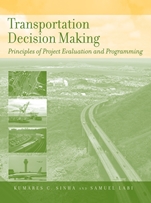
Transportation Decision Making: Principles of Project Evaluation and Programming
ISBN 9780471747321
Autor: Kumares C. Sinha, Samuel Labi
Wydawca: Wiley
Dostępność: 3-6 tygodni
Cena: 746,55 zł
Przed złożeniem zamówienia prosimy o kontakt mailowy celem potwierdzenia ceny.
ISBN13: |
9780471747321 |
ISBN10: |
0471747327 |
Autor: |
Kumares C. Sinha, Samuel Labi |
Oprawa: |
Hardback |
Rok Wydania: |
2007-06-12 |
Ilość stron: |
576 |
Wymiary: |
283x221 |
Tematy: |
AM |
A guide to effective decision making written just fortransportation professionals
This pioneering text provides a holistic approach to decisionmaking in transportation project development and programming, whichcan help transportation professionals to optimize their investmentchoices. The authors present a proven set of methodologies forevaluating transportation projects that ensures that all costs andimpacts are taken into consideration.
The text′s logical organization gets readers started with asolid foundation in basic principles and then progressively buildson that foundation. Topics covered include:
Developing performance measures for evaluation, estimatingtravel demand, and costing transportation projects
Performing an economic efficiency evaluation that accounts forsuch factors as travel time, safety, and vehicle operatingcosts
Evaluating a project′s impact on economic development and landuse as well as its impact on society and culture
Assessing a project′s environmental impact, including airquality, noise, ecology, water resources, and aesthetics
Evaluating alternative projects on the basis of multipleperformance criteria
Programming transportation investments so that resources can beoptimally allocated to meet facility–specific and system–widegoals
Each chapter begins with basic definitions and concepts followedby a methodology for impact assessment. Relevant legislation isdiscussed and available software for performing evaluations ispresented. At the end of each chapter, readers are providedresources for detailed investigation of particular topics. Theseinclude Internet sites and publications of international anddomestic agencies and research institutions. The authors alsoprovide a companion Web site that offers updates, data foranalysis, and case histories of project evaluation and decisionmaking.
Given that billions of dollars are spent each year ontransportation systems in the United States alone, and that thereis a need for thorough and rational evaluation and decision makingfor cost–effective system preservation and improvement, this textshould be on the desks of all transportation planners, engineers,and educators. With exercises in every chapter, this text is anideal coursebook for the subject of transportation systems analysisand evaluation.
Preface.
1. Introductory Concepts in TransportationDecision–Making.
1.0 General Introduction.
1.1 Overall Transportation Program Development.
1.1.1 Network–level Planning.
1.1.2 Project Development.
1.1.3 Programming.
1.1.4 Budgeting.
1.1.5 Financial planning.
1.2 The Process of Transportation Project Development.
1.2.1 TDP Steps.
1.2.2 Federal Legislation that affect the TransportationDevelopment Process.
1.3 Impacts of Transportation System Stimuli.
1.3.1 Types of Transportation Stimuli.
1.3.2 Impact Categories and Types.
1.3.3 Dimensions of the Evaluation.
1.4 Other Ways of Categorizing Transportation SystemImpacts.
1.4.1 Categorization on the Basis of Resource Consumption.
1.4.2 Categorization on the Basis of Affected Party and ResourceType Consumed.
1.4.3 Categorization on the Basis of Other Considerations.
1.5 Models Associated with Transportation Impact Evaluation.
1.6 Role of Evaluation In TDP and Basic Elements ofEvaluation.
1.6.1 Role of Evaluation in TDP.
1.7.2 Why Carry out Evaluation?
1.6.3 Goals, Criteria, Impact Types.
1.7 Procedural Framework for Transportation SystemsEvaluation.
1.7.1 Identification of Evaluation Subject.
1.7.2 Concerns of Decision–makers and Other Stakeholders.
1.7.3 Identification of Goals and Objectives of theTransportation Improvement.
1.7.4 Establishment of Performance Measures for Assessing theObjectives.
1.7.5 Establish Dimensions for the Analysis (EvaluationScopes).
1.7.6 Recognize Legal and Administrative Requirements.
1.7.7 Identify Possible Courses of Action and Develop FeasibleAlternatives.
1.7.8 Estimation of Agency and User Costs.
1.7.9 Estimation of Other Benefits and Costs.
1.7.10 The Comparison Process.
1.7.11 Good Practices in Evaluation.
1.8 Continuing and Emerging Trends in Transportation.
1.8.1 Operational Accountability of Highway Infrastructure.
1.8.2 Integrated Transportation Asset Management.
1.8.3 Increased Need to Evaluate Investments on Basis of Riskand Vulnerability Performance.
1.8.4Business–like Approach to Asset Management.
1.8.5 Transportation Deregulation.
1.8.6 Just–in–Time (JIT) Inventory Systems.
1.8.7 Increased Competition:.
1.8.8 Globalization of Business:.
1.9 Chapter Summary.
Exercises.
References.
2. Performance Measures in Transportation Evaluation.
2.0 Introduction.
2.1 Transportation System Goals, Objectives, and PerformanceMeasures.
2.2 Performance Measures at Network and Project Levels.
2.3 How to Select a Good Performance Measure.
2.4 Dimensions of Performance Measures.
2.5 Performance Measures Associated With Each Dimension.
2.5.1 Overall Goals.
2.5.2 System Objectives.
2.5.3 Sector Concerns/Interests.
2.5.4 Flow Entity.
2.5.5 Modal Scope.
2.5.6 Transportation Mode.
2.5.7 Affected Entity or Stakeholder.
2.5.8 Spatial Scope.
2.5.9 Agency Responsibility.
2.5.10 Time Frame and Level of Refinement.
2.6 Linking Agency Goals to Performance Measures – State OfPractice.
2.7 Benefits of Using Performance Measures.
2.8 Chapter Summary.
Exercises.
References.
3. Estimating Transportation Demand.
3.0 Introduction.
3.1 Transportation Demand.
3.1.1 Basic Concepts in Transportation Demand Estimation.
3.1.2 Causes of Shifts in the Transportation Demand Curve.
3.1.3 Categorization of Demand Estimation Models.
3.1.4 Aggregate Methods for Project–level Transportation DemandEstimation.
(a) On the basis of Attributes of the Entire Parent Network.
(b) On the basis of Facility Attributes Only.
(c) General Comments on Demand Estimation Models.
3.2 Transportation Supply.
3.2.1 The Concept of Transportation Supply.
3.2.2 Shifts in the Transportation Supply Curve.
3.3 Equilibration and Dynamics of Transportation Demand andSupply.
3.3.1 Demand–Supply Equilibration.
3.3.2 Simultaneous Equation Bias in Demand SupplyEquilibration.
3.3.3 Dynamics of Transportation Demand and Supply.
3.4 Elasticities of Travel Demand And Supply.
3.4.1 Classification of Elasticities by Method ofComputation.
3.4.2 Classification of Elasticities by Source ofElasticity.
3.4.3 Classification of Elasticity by Relative Direction ofResponse: Direct and Cross Elasticities.
3.4.4 Examples of Elasticity Values Used in Practice.
3.4.5 An Application of the Elasticity Concept –– DemandEstimation.
3.4.6 Consumer Surplus and Latent Demand.
3.5 Some Issues in Transportation Demand Estimation.
3.6 Chapter Summary.
Exercises.
References.
Selected Resources.
4. Transportation Costs.
4.0 Introduction.
4.1 Classification of Transportation Costs.
4.1.1 Classification by Incurring Party.
4.1.2 Classification by Nature of Cost Variation withOutput.
4.1.3 Classification by Expression of Unit Cost.
4.1.4 Classification by Position in Facility Life–Cycle.
4.1.5 Other Classifications of Transportation Costs.
4.2 Transportation Agency Costs.
4.2.1 Agency Costs over Facility Life Cycle.
4.2.2 Techniques for Estimating Agency Costs.
4.2.3 Risk as an Element of Agency Cost.
4.3 Transportation User Costs.
4.3.1 User Cost Categories.
4.3.2 Impacts of Demand Elasticity, Induced Demand and OtherExogenous Changes on User Benefits.
4.4 General Structure and Behavior of Cost Functions.
4.4.1 Components of a Transportation Cost Model.
4.4.2 Economies and Dis–economies of Scale.
4.5 Historical Cost Values and Models for Highway TransportationSystems.
4.5.1 Highway Agency Cost Models.
4.5.2 Transit Cost Values and Models.
4.5.3 Air Transportation Cost Values.
4.6 Issues in Transportation Cost Estimation.
4.6.1 Aggregated Estimates for Planning vs. Detailed EngineeringEstimates for Projects.
4.6.2 Adjustments for Temporal and Spatial Variations (How toUpdate Costs).
4.6.3 Adjustments for Economies of Scale.
4.6.4 The Problem of Cost Overruns.
4.6.5 Relative Weight of Agency and User Cost Unit Values.
4.7 Chapter Summary.
Exercises.
References.
Additional Resources.
5. Travel–Time Impacts.
5.0 Introduction.
5.1 Categorizations of Travel Time.
5.1.1 Trip Phase.
5.1.2 Other Bases of Categorization.
5.2 Framework for Assessing Travel Time Impacts.
5.3 Issues Relating to Travel Time Value Estimation.
5.3.1 The Conceptual Basis of Time Valuation.
5.3.2 Factors Affecting the Value of Travel Time.
5.3.3 Methods for Valuation of Travel Time.
5.4 Concluding Remarks.
5.5 Chapter Summary.
General Exercises.
References.
6. Evaluation of Safety Impacts.
6.0 Introduction.
6.1 Basic Definitions and Factors of Transportation Safety.
6.1.1 Definition of a Crash and Crash Patterns.
6.1.2 Severity Types of Transportation Crashes.
6.1.3 Categories of Factors Affecting TransportationCrashes.
6.2 Procedural Framework for Safety Impact Evaluation.
6.2.1 Step 1 Define the Analysis Area.
6.2.2 Step 2 Describe Intervention and Select EvaluationApproach.
6.2.3 Steps 3–6 Estimating Crash Frequency.
6.2.4 Step 7 Determine the Safety Benefits.
6.2.5 Step 8 Establish the Unit Monetary Crash Cost.
6.2.6 Step 9 Determine Overall Safety Cost Savings (or Increase)due to the Intervention.
6.3 Methods for Estimating Crash Reduction Factors.
6.3.1 Before and After Studies.
6.3.2 Cross–sectional Studies.
6.3.3 Comparison of the Two Approaches.
6.3.4 Elasticity of Crash Frequency.
6.4 Safety Related Legislation.
6.5 Software Packages for Safety Impact Evaluation.
6.6 Considerations in Safety Impact Evaluation.
6.7 Chapter Summary.
Exercises.
References.
Resources.
7. Vehicle Operating Cost (VOC) Impacts.
7.0 Introduction.
7.1 Components of Vehicle Operating Cost.
7.1.1 Fuel.
7.1.2 Shipping Inventory.
7.1.3 Lubricating Oils for Mechanical Working ofDrive–train.
7.1.4 Preservation of the Vehicle–Guideway Contact Surface.
7.1.5 Vehicle Repair and Maintenance.
7.1.6 Depreciation.
7.1.7 VOC Data Sources and Average National VOC Rates.
7.2 Factors that Affect Vehicle Operating Cost.
7.2.1 Vehicle Type.
7.2.2 Fuel Type.
7.2.3 Longitudinal Grade.
7.2.4 Vehicle Speed.
7.2.5 Delay.
7.2.6 Speed Changes.
7.2.7 Horizontal Curvature.
7.2.8 Road Surface Condition.
7.2.9 Other VOC Factors.
7.3 Procedural Framework for Assessing Voc Impacts.
7.3.1 Discussion of Steps of the Framework.
7.3.2 Implementation of Steps 4, 5 and 6 of the Framework usingHERS Methodology.
7.4 Special Case of Voc Estimation –– Workzones.
7.5 Selected Software Packages that Include a VOC EstimationComponent.
7.5.1 AASHTO Methodology.
7.5.2 HERS Package – National and State Versions.
7.5.3 HDM–4 Road User Effects (HDM–RUE).
7.5.4 Steam.
7.5.5 Other Models that Include a VOC Estimation Component.
7.6 Comparison of VOC Estimation Methodologies and Software.
7.6.1 Levels of Detail.
7.6.2 Fuel Consumption Rates.
7.7 Chapter Summary.
Exercises.
References.
Resources.
8. Economic Efficiency Impacts.
8.0 Introduction.
8.1 Interest Equations and Equivalencies.
8.1.1 Cash Flow Illustrations.
8.1.2 The Concept of Interest.
8.1.3 Types of Compounding and Interest Rates.
8.1.4 Interest Equations and Key Variables.
8.1.5 Special Cases of Interest Equations.
8.2 Criteria for Economic Efficiency Impact Evaluation.
8.2.1 Introduction.
8.2.2 Present Value of Costs.
8.2.3 Equivalent Uniform Annual Cost Method.
8.2.4 Equivalent Uniform Annual Return Method.
8.2.5 Net Present Value Method.
8.2.6 Internal Rate of Return.
8.2.7 Benefit Cost Ratio Method.
8.2.8 Evaluation Methods Using Incremental Attributes.
8.2.9 General Discussion on Economic Efficiency Criteria.
8.3 A Framework for Economic Efficiency Impact Evaluation.
8.4 Software Packages for Economic Efficiency Analysis.
8.4.1 Surface Transportation Efficiency Analysis Model(STEAM).
8.4.2 NCHRP s MicroBenCost Package.
8.4.3 Highway Development and Management Standards Package.
8.4.4 FHWA s Highway Economic Requirements System(HERS).
8.4.5 Indiana DOT s MCIBAS.
8.4.6 California DOT s Cal B/C Package.
8.5 Life Cycle Cost Analysis.
8.6 Case Study for Economic Efficiency Impact Evaluation.
8.7 Final Comments on Economic Efficiency Analysis.
8.8 Chapter Summary.
Exercises.
References.
Useful Resouces.
9. Economic Development Impacts.
9.1 Introduction.
9.2 Economic Development Impact Types.
9.2.1 Economic Development Impact Measures.
9.2.2 Economic Development Impact Mechanisms.
9.2.3 Selection of Appropriate Measures of Economic Impact.
9.3 Tools for Economic Development Impact Assessment.
9.3.1 Surveys and Interviews.
9.3.2 Market Studies.
9.3.3 Comparative Analysis Tools/Case Studies.
9.3.4 Economic Multiplier/Input–Output (I–O) Models.
9.3.5 Statistical Analysis Tools.
9.3.6 Economic Simulation Models.
9.4 Estimation of Long–Term Regional Economic DevelopmentImpacts.
9.5 Demonstration of Economic Impact Assessment Methodology.
9.6 Chapter Summary.
Exercises.
References.
10. Air Quality Impacts.
10.0 Introduction.
10.1 Air Pollution Sources and Trends.
10.1.1 Pollutant Types, Sources, and Trends.
10.1.2 Categories of Air Pollution.
10.2 Estimating Pollutant Emissions.
10.2.1 Some Definitions.
10.2.2 Factors Affecting Pollutant Emission from MotorVehicles.
10.2.3 Approaches for Estimating Pollutant Emissions fromHighways.
10.2.4 Steps (Procedural Framework) for the Estimation ofHighway Pollutant Emissions.
10.2.5 Software for Estimating Pollutant Emissions.
10.3 Estimating Pollutant Concentration.
10.3.1 Factors Affecting Pollutant Dispersion.
10.3.2 Pollution Dispersion Models.
10.3.3 Software for Estimating Pollutant Dispersion andConcentrations.
10.4 Air Pollution from Other Modes.
10.4.1 Air Transportation.
10.4.2 Rail Transportation.
10.4.3 Marine Transportation.
10.4.4 Transit (Various Modes).
10.5 The Monetary Costs of Air Pollution.
10.5.1 Methods of Air Pollution Cost Estimation.
10.5.2 Air Pollution Cost Values.
10.6 Air Quality Standards.
10.7 Mitigating Air Pollution from Transportation Sources.
10.7.1 Traffic Management and Policy Instruments.
10.7.2 Economic Instruments.
10.7.3 Other Modes.
10.8 Air Quality Legislation and Regulations.
10.8.1 National Legislation.
10.8.2 Global Agreements.
10.9 Case Study.
10.10 Chapter Summary.
Exercises.
References.
Useful Resources in Air Quality Impact Estimation.
11. Noise Impacts.
11.0 Introduction.
11.1 Fundamental Concepts of Sound.
11.2 Sources of Transportation Noise.
11.3 Factors Affecting Transportation Noise Propagation.
11.3.1 Nature of Source, Distance, and Ground Effects.
11.3.2 Effect of Noise Barriers.
11.4 General Methodology for Estimating Noise Impacts forHighways.
11.5 Application of the Framework Using FHWA ModelEquations.
11.5.1 Reference Energy Mean Emission Level (REMEL).
11.5.2 Traffic Flow Adjustment.
11.5.3 Distance Adjustment.
11.5.4 Adjustment for Finite Length Roadways.
11.5.5 Shielding Adjustment.
11.5.6 Combining Noises from Various Vehicle Classes.
11.6 Application of the Framework Using Software Packages.
11.6.1 The Traffic Noise Model (TNM).
11.7 Estimating Noise Impacts for Other Modes.
11.7.1 Transit Noise and Vibration.
11.7.2 Air Transportation.
11.7.3 Rail Transportation.
11.7.4 Marine Transportation.
11.7.5 General Guidelines for Evaluating Noise Impacts of NewTransportation Improvements.
11.8 Mitigation of Transportation Noise.
11.8.1 Cost Estimates of Noise Barriers.
11.9 Legislation and Regulations Related to TransportationNoise.
Chapter Summary.
Exercises.
References.
12. Impacts on Wetlands and Other Ecosystems.
12.0 Introduction.
12.1 Basic Ecological Concepts.
12.1.1 The Concept of Ecosystems.
12.1.2 The Physical Base.
12.1.3 Wetland Ecosystems.
12.2 Mechanisms of Ecological Impacts.
12.2.1 Direct vs. Indirect Mechanisms.
12.2.2 Impact Mechanism by Specie Type.
12.3 Ecological Impacts of Activities At Various TDP Phases.
12.3.1 Locational Planning and Preliminary Field Surveys.
12.3.2 Transportation System Design.
12.3.3 Construction.
12.3.4 Operations.
12.3.5 Maintenance.
12.4 Performance Goals for Ecological Impact Assessments.
12.4.1 Diversity of the Physical Base of the Ecosystem.
12.4.2 State of Habitat Fragmentation.
12.4.3 Significant Species and Habitats.
12.4.4 Diversity of Species.
12.4.5 Ecosystem Stability.
12.4.6 Ecosystem Quality or Productivity.
12.5 Methodology for Ecological Impact Assessment.
12.6 Key Legislation.
12.6.1 The Endangered Species Act of 1973.
12.6.2 Laws Related to Wetlands and other Habitats.
12.7 Mitigation of Ecological Impacts.
12.7.1 Mitigation at Various Phases of the TransportationDevelopment Process.
12.8 Methods and Software Packages for Ecological ImpactAssessment.
12.8.1 Wetland Functional Analysis (WET II).
12.8.2 Hydrogeomorphic Classification Method (HGM).
12.8.3 Habitat Evaluation Procedures (HEP) Software.
12.9 Chapter Summary.
Exercises.
References.
Additional Resources for Ecological Impact Evaluation.
13. Impacts on Water Resources.
13.0 Introduction.
13.0.1 The Hydrologic Cycle.
13.1 Categories of Hydrological Impacts.
13.1.1 Source of the Impact (Facility/Vehicle).
13.1.2 Impact Type.
13.1.3 Affected Water Source.
13.1.4 Transportation Mode and Activity.
13.2 Hydrological Impacts by Transportation Mode.
13.2.1 Highway Impacts.
13.2.2 Railway Impacts.
13.2.3 Air Transportation Impacts.
13.2.4 Marine Transportation Impacts.
13.3 Performance Measures for Hydrological ImpactAssessment.
13.3.1 Measures Related to Water Quantity and Flow Patterns.
13.3.2 Measures Related to Water Quality.
13.4 Methodology for Water Quality Impact Assessment.
Step 1: Define the Study Area and Temporal Scope of theAnalysis.
Step 2: Carry out Hydrological Inventory of the Study Area.
Step 3: Describe the Proposed Changes in the SelectedTransportation System Action.
Step 4: Identify TDP Phases of the Transportation Action likelyto affect Ground and Surface Water.
Step 5: Select the Appropriate Hydrological PerformanceMeasures.
Step 6: Data Analysis to Predict Hydrological Conditions afterthe Transportation Intervention.
Step 7: Estimate the Hydrological Impacts (Change in PerformanceMeasures).
Step 8: Evaluate the Predicted Hydrological Impacts.
13.5 METHODS FOR PREDICTING IMAPCTS ON WATER RESOURCES.
13.5.1 Impacts on Water Quantity.
13.5.2 Impacts on Water Quality.
13.6 MITIGATION OF WATER RESOURCES IMPACTS.
13.6.1 Mitigation Measures by Impact Criterion.
13.6.2 Mitigation Measures by Nature of Water Source.
13.6.3 Mitigation Measures by TDP Phase.
13.6.4 Discussion on Mitigation.
13.7 Water Quality Standards.
13.8 Legislation Related to Water Resource Conservation.
13.9 Software for Water Resources Impact Assessment.
Chapter Summary.
Exercises.
References.
Some Useful Resources.
14. Visual Impacts.
14.0 Introduction.
14.1 Principles of Visual Performance.
14.1.1 Performance Measures for Visual PerformanceAssessment.
14.2 Factors Affecting Visual Performance and ImpactMechanisms.
14.2.1 Factors.
14.2.2 Impact Mechanisms.
14.3 Methodology for Visual Impact Assessment.
14.3.1 Definition of the Study Area.
14.3.2 Transportation Alternatives.
14.3.3 Identification of Scope and Level of Detail of VisualPerformance Assessment.
14.4.4 Presentation of the Existing Scene and Simulation of theProposed Situation.
14.3.5 Estimation of Visual Impacts.
14.3.6 Presentation of Analysis Results.
14.4 Legislation.
14.5 Mitigation of Poor Visual Performance of ExistingFacilities.
14.6 Visual Performance Enhancement – The State Of Practice.
14.6.1 Context–Sensitive Design Practices.
14.6.2 Policies and Guidelines for Visual PerformancePreservation and Enhancement.
14.6.3 Cost of Visual Performance Enhancements.
14.7 Chapter Summary.
Exercises.
References.
Resources for Visual Performance Assessment.
15. Impacts on Energy Use.
15.0 Introduction.
15.1 Factors that Affect Transportation Energy Consumption.
15.1.1 Fuel Prices and Taxes.
15.1.2 Regulations on Fuel Economy.
15.1.3 Vehicle Sales by Classes.
15.1.4 Vehicle Technology.
15.1.5 Road Geometry.
15.1.6 Transportation Intervention.
15.1.7 Other Impacts.
15.2 Energy Intensity.
15.3 Framework of Energy Impact Analysis.
15.3.1 Direct Consumption.
15.3.2 Indirect Consumption.
15.4 Methodology to Estimate Energy Consumption.
15.4.1 Comprehensive (Macroscopic) Assessment.
15.4.2 Project Screening Level Models.
15.4.3 Microscopic Simulation Incorporated Analysis.
15.4.4 Comparison of Approaches to Estimate EnergyConsumption.
15.5 Energy Impact Assessment Model.
15.6 Energy and Transportation – What the Future Holds.
15.7 Chapter Summary.
Exercises.
References.
16. Land–Use Impacts.
16.0 Introduction.
16.1 The Transportation – Land Use Relationship.
16.1.1 Land Use Impacts on Transportation.
16.1.2 Transportation Impacts on Land Use.
16.1.3 Land Use Impact on Cost Estimates.
16.2 Tools for Analyzing Land Use Changes.
16.2.1 Qualitative Tools.
16.2.2 Quantitative Tools.
16.3 Methodology for Land Use Impact Assessment.
16.3.1 Definition of Project Area.
16.3.2 Analysis of the Existing and Future Patterns and Trendsfor Land Use and Development.
16.3.3 Development of Transportation Alternatives or PolicyAssumptions.
16.3.4 Estimation of Potential Changes in Travel Patterns andAccessibility.
16.3.5 Estimation of Regional Population and Employment GrowthResulting from Changes in the Travel Patterns andAccessibility.
16.3.6 Estimation of Potential Changes in Trends or Patterns forLand Use Development.
16.3.7 Mitigation Measures for Adverse Impacts of TransportationAlternatives on Land Use and Development.
16.3.8 Presentation of Analysis Results.
16.4 Demonstration of Land Use Impact AssessmentMethodology.
16.5 Chapter Summary.
Exercises.
References.
17. Social and Cultural Impacts.
17.0 Introduction.
17.1 Mechanisms of Transportation Impacts on the Social AndCultural Environments.
17.1.1 Direct Impacts.
17.1.2 Indirect Impacts.
17.1.3 Cumulative Impacts.
17.2 Target Facilities and Groups, and Performance Measures.
17.2.1 Target Facilities and Groups.
17.2.2 Performance Measures.
17.2.3 The Special Case of Poverty Alleviation in DevelopingCountries.
17.3 Equity and Environmental Justice Concerns.
17.4 Methodology for Social and Cultural Impact Assessment.
17.5 Tools for Socio–Cultural Impact Assessment.
17.5.1 Qualitative Tools.
17.5.2 Quantitative Tools.
17.6 Mitigation of Adverse Socio–Cultural Impacts.
17.6.1 State of Practice: Socio–Cultural Impact Mitigation.
17.7 Legislation Related to Socio–Cultural Impacts.
17.8 Chapter Summary.
Exercises.
References.
Resources.
18. Evaluation of Transportation Projects and Programs usingMultiple Criteria.
18.1 Introduction.
18.2 Basic Concepts.
18.2.1 Single vs. Multiple Criteria.
18.2.2 Evaluation, Decision–making, and Optimization.
18.2.3 Knapsack Problems.
18.2.4 Scope of Decision–making Constraints.
18.2.5 Relationships between Decision–making, Programming,Number of Criteria, and Analysis Levels.
18.3 Steps in Multi–Criteria Decision–Making.
18.3.1 Identification of Alternatives.
18.3.2 Identification of Goals and Performance Criteria.
18.3.3 Establish Goal and Criteria Weights.
18.3.4 Scaling of the Performance Measures.
18.4 Case Study: Evaluation of the Washington Light Rail Transit(Lrt) And New West Arterial Projects Using Multi–Criteria.
18.5 Details of the Problem Formulations For Optimization.
18.5.1 Problem Formulations for Project–levelDecision–making.
18.5.2 Problem Formulations for Network–levelDecision–making.
18.6 Chapter Summary.
Exercises.
References.
Additional Resources.
19. Use of Geographical and Other InformationSystems.
19.1 Introduction.
19.2 Hardware for Information Management.
19.3 Software and Other Tools for Information Management.
19.3.1 Non–GIS Relational Database Management Systems.
19.3.2 Geographical Information Systems.
19.3.3 Internet–based GIS.
19.3.4 Video–log Systems.
19.4 GIS Applications in Transportation Systems Evaluation.
19.5 Existing Information Systems and Information ManagementSystems.
19.4.1 Data Items for the Various Modes.
19.4.2 Existing Databases useful for Transportation SystemsEvaluation.
19.6 Software Packages for Information Management.
19.7 Chapter Summary.
Exercises.
References.
Resources.
20. Transportation Programming.
20.0 Introduction.
20.1 Why Programming is Necessary.
20.1.1 Optimal Investment Decisions.
20.1.2 Tradeoff Considerations.
20.1.3 Linkage to Budgeting.
20.1.4 Efficiency in Program and Project Delivery.
20.1.5 Monitoring and Feedback.
20.2 Relationships between Programming, Criteria List Size, AndAnalysis Levels.
20.3 Methodology for Programming Transportation Projects.
20.4 Problem Formulations for Programming.
20.5 An Example of Programming Process at a State TransportationAgency.
20.5.1 Initiation of the Process.
20.5.2 Coordination with Local Areas.
20.5.3 Statewide Review and Program Update.
20.5.4 Program Update and Budget Confirmation.
20.5.5 INSTIP Development and Coordination with MPO TIPS.
20.5.6 Public Review and Final INSTIP.
20.5.7 Quantitative Approach Used.
20.6 An Example of a Program Development Process at theMetropolitan Area Level.
20.6.1 The CDTC TIP Process.
20.6.2 Screening Criteria for New Projects.
20.7 Keys to Succesful Programming and Implementation.
20.7.1 Linkage between Planning and Programming.
20.7.2 Uncertainties affecting Transportation Programming.
20.7.3 Intergovernmental Relationships.
20.7.4 Equity and Environmental Justice Issues inProgramming.
20.8 Chapter Summary.
Exercises.
References.
Additional Resources.
General Appendix 1: Cost Indices.
General Appendix 2: Performance Measures.
Index.
Kumares C. Sinha, PhD, PE, Hon. M.ASCE, is Edgar B. andHedwig M. Olson Distinguished Professor in the School of CivilEngineering at Purdue University. Dr. Sinha is the Editor–in–Chiefof the Journal of Transportation Engineering and a former presidentof the Transportation and Development Institute of the AmericanSociety of Civil Engineers.
Samuel Labi, PhD, is an assistant professor in the Schoolof Civil Engineering at Purdue University. He is currently avisiting scholar at the Massachusetts Institute of Technology.
"Sinha and Labi compile a vast reservoir of knowledge and techniquethat transportation decision makers might use to identify andevaluate these diverse impacts as part of the decision makingprocess." ( Journal of the American Planning Association,February 2009)
""I am not aware of any other book covering such a huge varietyof practically relevant and qualitive models." (ZentralblattMATH, 2008)
"The book does justice to the richness of the broader topic ofdecision making, covering the specific areas you would expect andmore. Overall, the book is an excellent resource the book iswell–written and organized." (Journal of TransportationEngineering; 12/07)
Koszyk
Książek w koszyku: 0 szt.
Wartość zakupów: 0,00 zł
Informacje


Kontakt
Gambit
Centrum Oprogramowania
i Szkoleń Sp. z o.o.
Al. Pokoju 29b/22-24
31-564 Kraków
Siedziba Księgarni
ul. Kordylewskiego 1
31-542 Kraków
+48 12 410 5991
+48 12 410 5987
+48 12 410 5989
Subskrypcje
Administratorem danych osobowych jest firma Gambit COiS Sp. z o.o. Na podany adres będzie wysyłany wyłącznie biuletyn informacyjny.
Autoryzacja płatności

Informacje na temat autoryzacji płatności poprzez PayU.

© Copyright 2012: GAMBIT COiS Sp. z o.o. Wszelkie prawa zastrzeżone.
Projekt i wykonanie: Alchemia Studio Reklamy