


Wydawcy
Katalog tematyczny
- Archeologia (109)
- Ekonomia, finanse, business (13704)
- Filozofia (1445)
- Historia (3040)
- Języki i językoznawstwo (2356)
- Lifestyle, hobby i rozrywka (475)
- Medycyna (9704)
- Nauki humanistyczne (4)
- Nauki o Ziemi i środowisku (2638)
- Nauki ścisłe (20412)
- Nauki społeczne (8486)
- Nauki techniczne (13450)
- Budownictwo lądowe (1045)
- Chemia przemysłowa (2258)
- Elektronika i telekomunikacja (3287)
- Energetyka (1122)
- Inne nauki stosowane (363)
- Inżynieria biochemiczna (507)
- Inżynieria transportu (232)
- Mechanika i materiały (3316)
- Nauka o środowisku (321)
- Rolnictwo (507)
- Technika, ogólnie (475)
- Prawo (1696)
- Publikacje informacyjne i interdyscyplinarne (1288)
- Religia i wierzenia (917)
- Technika komputerowa (4067)
- Zdrowie, relacje międzyludzkie i rozwój osobisty (657)





Informacje szczegółowe o książce
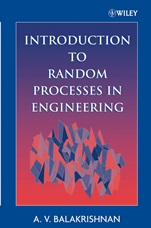
Introduction to Random Processes in Engineering
ISBN 9780471745020
Autor: A. V. Balakrishnan
Wydawca: Wiley
Dostępność: 3-6 tygodni
Cena: 432,60 zł
Przed złożeniem zamówienia prosimy o kontakt mailowy celem potwierdzenia ceny.
ISBN13: |
9780471745020 |
ISBN10: |
0471745022 |
Autor: |
A. V. Balakrishnan |
Oprawa: |
Paperback |
Rok Wydania: |
2005-07-01 |
Ilość stron: |
402 |
Wymiary: |
230x153 |
Tematy: |
TJ |
Breaking with the traditional treatment of random processes in engineering
On the surface, Introduction to Random Processes in Engineering is simply a first–rate textbook for senior or first–year graduate engineering courses in stochastic processes. A closer look, however, reveals an innovative book—rich with examples and commonsense explanations—that demystifies theories, eliminates ambiguities, and provides a solid, up–to–date introduction to this important subject.
Departing from the classical texts of the sixties and seventies in its coverage of random signals and data processing, Introduction to Random Processes in Engineering addresses the latest advances in communication, control engineering, and signal processing by allowing all processes to be multidimensional with an emphasis on discrete–time processes and systems.
Unlike current texts, this volume provides a strong mathematical perspective for its engineering topics without getting bogged down in technicalities. It employs mathematics to achieve clarity and precision, and at times even uses the theorem/proof style to emphasize mathematical fine points. This approach is particularly advantageous when dealing with random data, and when building an understanding of the many computer programs routinely used, its theoretical principles, and the results it generates.
Assuming a senior–level background in probability theory and some acquaintance with linear systems and signals, the book provides:A review chapter of the formulas used later in the bookIllustrative examplesEmphasis in simulation techniquesProblems accompanying each chapter that often introduce the student to other relevant materialNotes and comments following each chapter that encourage additional reading as well as historical explorations in the fieldTips for using the material at various levels of instruction
With its logic
al and systematically ordered presentation of the material, as well as its fresh approach, Introduction to Random Processes in Engineering is both a superior textbook and a valuable reference for practicing engineers and researchers in the field.
Spis treści:
Preface.
Review.
1. Random Processes: Basic Concepts, Properties.
2. Stationary Random Processes: Covariance and Spectrum.
3. Response of Linear Systems to Random Inputs: Discrete–Time Models.
4. Response of Linear Systems to Random Inputs: Continuous–Time Models.
5. Time Averages and the Ergodic Principle.
6. Sampling Principle and Interpolation.
7. Simulation of Random Processes.
8. Random Fields.
9. Linear Filtering Theory.
Index.
Nota biograficzna:
Dr. A. V. BALAKRISHNAN is Professor of Electrical Engineering at the University of California, Los Angeles.
Okładka tylna:
Breaking with the traditional treatment of random processes in engineering
On the surface, Introduction to Random Processes in Engineering is simply a first–rate textbook for senior or first–year graduate engineering courses in stochastic processes. A closer look, however, reveals an innovative book—rich with examples and commonsense explanations—that demystifies theories, eliminates ambiguities, and provides a solid, up–to–date introduction to this important subject.
Departing from the classical texts of the sixties and seventies in its coverage of random signals and data processing, Introduction to Random Processes in Engineering addresses the latest advances in communication, control engineering, and signal processing by allowing all processes to be multidimensional with an emphasis on discrete–time processes and systems.
Unlike current texts, this volume provides a strong mathematical perspective for its engineering topics without getting bogged down in technicalities. It employs mathe
matics to achieve clarity and precision, and at times even uses the theorem/proof style to emphasize mathematical fine points. This approach is particularly advantageous when dealing with random data, and when building an understanding of the many computer programs routinely used, its theoretical principles, and the results it generates.
Assuming a senior–level background in probability theory and some acquaintance with linear systems and signals, the book provides:A review chapter of the formulas used later in the bookIllustrative examplesEmphasis in simulation techniquesProblems accompanying each chapter that often introduce the student to other relevant materialNotes and comments following each chapter that encourage additional reading as well as historical explorations in the fieldTips for using the material at various levels of instruction
With its logical and systematically ordered presentation of the material, as well as its fresh approach, Introduction to Random Processes in Engineering is both a superior textbook and a valuable reference for practicing engineers and researchers in the field.
Koszyk
Książek w koszyku: 0 szt.
Wartość zakupów: 0,00 zł
Informacje


Kontakt
Gambit
Centrum Oprogramowania
i Szkoleń Sp. z o.o.
Al. Pokoju 29b/22-24
31-564 Kraków
Siedziba Księgarni
ul. Kordylewskiego 1
31-542 Kraków
+48 12 410 5991
+48 12 410 5987
+48 12 410 5989
Subskrypcje
Administratorem danych osobowych jest firma Gambit COiS Sp. z o.o. Na podany adres będzie wysyłany wyłącznie biuletyn informacyjny.
Autoryzacja płatności

Informacje na temat autoryzacji płatności poprzez PayU.

© Copyright 2012: GAMBIT COiS Sp. z o.o. Wszelkie prawa zastrzeżone.
Projekt i wykonanie: Alchemia Studio Reklamy