


Wydawcy
Katalog tematyczny
- Archeologia (109)
- Ekonomia, finanse, business (13704)
- Filozofia (1445)
- Historia (3040)
- Języki i językoznawstwo (2356)
- Lifestyle, hobby i rozrywka (475)
- Medycyna (9704)
- Nauki humanistyczne (4)
- Nauki o Ziemi i środowisku (2638)
- Nauki ścisłe (20412)
- Astronomia (294)
- Biologia (5119)
- Chemia (6540)
- Chemia analityczna (361)
- Chemia fizyczna (346)
- Chemia nieorganiczna (137)
- Chemia organiczna (535)
- Krystalografia (27)
- Minerologia (46)
- Fizyka (3309)
- Matematyka (4574)
- Nauki ścisłe, ogólnie (503)
- Nauki społeczne (8486)
- Nauki techniczne (13450)
- Prawo (1696)
- Publikacje informacyjne i interdyscyplinarne (1288)
- Religia i wierzenia (917)
- Technika komputerowa (4067)
- Zdrowie, relacje międzyludzkie i rozwój osobisty (657)





Informacje szczegółowe o książce
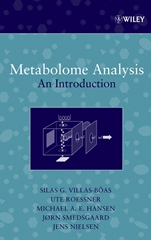
Metabolome Analysis: An Introduction
ISBN 9780471743446
Autor: Silas G. Villas–Boas, Jens Nielsen, Jorn Smedsgaard, Michael A. E. Hansen, Ute Roessner–Tunali
Wydawca: Wiley
Dostępność: 3-6 tygodni
Cena: 538,65 zł
Przed złożeniem zamówienia prosimy o kontakt mailowy celem potwierdzenia ceny.
ISBN13: |
9780471743446 |
ISBN10: |
0471743445 |
Autor: |
Silas G. Villas–Boas, Jens Nielsen, Jorn Smedsgaard, Michael A. E. Hansen, Ute Roessner–Tunali |
Oprawa: |
Hardback |
Rok Wydania: |
2007-03-06 |
Ilość stron: |
330 |
Wymiary: |
239x163 |
Tematy: |
PN |
A concise, interdisciplinary introduction to metabolome analysis
This practical reference focuses on the principles of metabolome analysis and treats metabolomics as a field of its own, rather than as just an additional analytical tool in science. Part I guides readers through the primary steps in metabolite analysis, beginning with an overview of the terminology and the basic concepts of cell metabolism, and the dynamics of biochemical reactions and metabolite turnover. It then discusses the most common methodologies for sample preparation, sample techniques, detection and identification methods, analytical tools (including liquid and gas chromatography as well as mass spectrometry), and data analysis.
Part II illustrates the applicability of metabolomics and discusses specific peculiarities and requirements of metabolomics in certain groups of organisms. It reviews successful cases of metabolome analysis with chapters on: Yeast metabolomicsSpecialized sampling devices for microbial metabolomicsMajor achievements in plant metabolomicsMetabolomics in the classification of filamentous fungiMetabolomics applied to humans and other mammals
This is the definitive, core reference on metabolome analysis for research scientists in biochemistry and analytical chemistry, as well as academics, researchers, and technicians in the fields of functional genomics and metabolic engineering. It is also a practical text for scientists working to discover metabolites from natural sources and for graduate students in a variety of courses.
Spis treści:
PREFACE.
LIST OF CONTRIBUTORS.
PART I: CONCEPTS AND METHODOLOGY.
1 Metabolomics in Functional Genomics and Systems Biology.
1.1 From genomic sequencing to functional genomics.
1.2 Systems biology and metabolic models.
1.3 Metabolomics.
1.4 Future perspectives.
2 The Chemical Challenge of the Metab
olome.
2.1 Metabolites and metabolism.
2.2 The structural diversity of metabolites.
2.2.1 The chemical and physical properties.
2.2.2 Metabolite abundance.
2.2.3 Primary and secondary metabolism.
2.3 The number of metabolites in a biological system.
2.4 Controlling rates and levels.
2.4.1 Control by substrate level.
2.4.2 Feedback and feedforward control.
2.4.3 Control by “pathway independent” regulatory molecules.
2.4.4 Allosteric control.
2.4.5 Control by compartmentalization.
2.4.6 The dynamics of the metabolism—the mass fl ow.
2.4.7 Control by hormones.
2.5 Metabolic channeling or metabolons.
2.6 Metabolites are arranged in networks that are part of a cellular interactome.
3 Sampling and Sample Preparation.
3.1 Introduction.
3.2 Quenching—the fi rst step.
3.2.1 Overview on metabolite turnover.
3.2.2 Different methods for quenching.
3.2.3 Quenching microbial and cell cultures.
3.2.4 Quenching plant and animal tissues.
3.3 Obtaining metabolites from biological samples.
3.3.1 Release of intracellular metabolites.
3.3.2 Structure of the cell envelopes—the main barrier to be broken.
3.3.3 Cell disruption methods.
3.3.4 Nonmechanical disruption of cell envelopes.
3.3.5 Mechanical disruption of cell envelopes.
3.4 Metabolites in the extracellular medium.
3.4.1 Metabolites in solution.
3.4.2 Metabolites in the gas phase.
3.5 Improving detection via sample concentration.
4 Analytical Tools.
4.1 Introduction.
4.2 Choosing a methodology.
4.3 Starting point—samples.
4.4 Principles of chromatography.
4.4.1 Basics of chromatography.
4.4.2 The chromatogram and terms in chromatography.
4.5 Chromatographic systems.
4.5.1 Gas chromatography.
4.5.2 HPLC systems.
4.6 Mass spectrometry.
4.6.1 The mass spectrometer—an overview.
4.6.2 GC–MS—the EI ion source.
4.6.3 LC–
MS—the ESI ion source.
4.6.4 Mass analyzer—the quadrupole.
4.6.5 Mass analyzer—the ion–trap.
4.6.6 Mass analyzer—the time–of–fl ight.
4.6.7 Detection and computing in MS.
4.7 The analytical work–fl ow.
4.7.1 Separation by chromatography.
4.7.2 Mass spectrometry.
4.7.3 General analytical considerations.
4.8 Data evaluation.
4.8.1 Structure of data.
4.8.2 The chromatographic separation.
4.8.3 Mass spectral data.
4.8.4 Exporting data for processing.
4.9 Beyond the core methods.
4.9.1 Developments in chromatography.
4.9.2 Capillary electrophoresis.
4.9.3 Tandem MS and advanced scanning techniques.
4.9.4 NMR spectrometry.
4.10 Further reading.
5 Data Analysis.
5.1 Organizing the data.
5.2 Scales of measurement.
5.2.1 Qualitative data.
5.2.2 Quantitative data.
5.3 Data structures.
5.4 Preprocessing of data.
5.4.1 Calibration of data.
5.4.2 Combining profi le scans.
5.4.3 Filtering.
5.4.4 Centroid calculation.
5.4.5 Internal mass scale correction.
5.4.6 Binning.
5.4.7 Baseline correction.
5.4.8 Chromatographic profi le matching.
5.5 Deconvolution of spectroscopic data.
5.6 Data standardization (normalization).
5.7 Data transformations.
5.7.1 Principal component analysis.
5.7.2 Fisher discriminant analysis.
5.8 Similarities and distances between data.
5.8.1 Continuous functions.
5.8.2 Binary functions.
5.9 Clustering techniques.
5.9.1 Hierarchical clustering.
5.9.2 k–means clustering.
5.10 Classifi cation techniques.
5.10.1 Decision theory.
5.10.2 k–nearest neighbor.
5.10.3 Tree–based classifi cation.
5.11 Integrated tools for automation, libraries, and data evaluation.
PART II: CASE STUDIES AND REVIEWS.
6 Yeast Metabolomics: The Discovery of New Metabolic Pathways in Saccharomyces cerevisiae.
6.1 Introduction.
6.2 Brief description of the methodology used.
6.2.1 Sample preparation.
6.2.2 The analysis.
6.3 Early discoveries.
6.4 Yeast stress response gives evidence of alternative pathway for glyoxylate biosynthesis in S. cerevisiae.
6.5 Biosynthesis of glyoxylate from glycine in S. cerevisiae.
6.5.1 Stable isotope labeling experiment to investigate glycine catabolism in S. cerevisiae.
6.5.2 Data leveraged for speculation.
7 Microbial Metabolomics: Rapid Sampling Techniques to Investigate Intracellular Metabolite Dynamics—An Overview.
7.1 Introduction.
7.2 Starting with a simple sampling device proposed by Theobald et al. (1993).
7.3 An improved device reported by Lange et al. (2001).
7.4 Sampling tube device by Weuster–Botz (1997).
7.5 Fully automated device by Schaefer et al. (1999).
7.6 The stopped–fl ow technique by Buziol et al. (2002).
7.7 The BioScope: a system for continuous–pulse experiments.
7.8 Conclusions and perspectives.
8 Plant Metabolomics.
8.1 Introduction.
8.2 History of plant metabolomics.
8.3 Plants, their metabolism and metabolomics.
8.3.1 Plant structures.
8.3.2 Plant metabolism.
8.4 Specifi c challenges in plant metabolomics.
8.4.1 Light dependency of plant metabolism.
8.4.2 Extraction of plant metabolites.
8.4.3 Many cell types in one tissue.
8.4.4 The dynamical range of plant metabolites.
8.4.5 Complexity of the plant metabolome.
8.4.6 Development of databases for metabolomics–derived data in plant science.
8.5 Applications of metabolomics approaches in plant research.
8.5.1 Phenotyping.
8.5.2 Functional genomics.
8.5.3 Fluxomics.
8.5.4 Metabolic trait analysis.
8.5.5 Systems biology.
8.6 Future perspectives.
9 Mass Profi ling of Fungal Extract from Penicillium Species.
9.1 Introduction.
9.2 Methodology for screening of fungi by DiMS.
9.2.1 Cultures
Koszyk
Książek w koszyku: 0 szt.
Wartość zakupów: 0,00 zł
Informacje


Kontakt
Gambit
Centrum Oprogramowania
i Szkoleń Sp. z o.o.
Al. Pokoju 29b/22-24
31-564 Kraków
Siedziba Księgarni
ul. Kordylewskiego 1
31-542 Kraków
+48 12 410 5991
+48 12 410 5987
+48 12 410 5989
Subskrypcje
Administratorem danych osobowych jest firma Gambit COiS Sp. z o.o. Na podany adres będzie wysyłany wyłącznie biuletyn informacyjny.
Autoryzacja płatności

Informacje na temat autoryzacji płatności poprzez PayU.

© Copyright 2012: GAMBIT COiS Sp. z o.o. Wszelkie prawa zastrzeżone.
Projekt i wykonanie: Alchemia Studio Reklamy