


Wydawcy
Katalog tematyczny
- Archeologia (109)
- Ekonomia, finanse, business (13704)
- Filozofia (1445)
- Historia (3040)
- Języki i językoznawstwo (2356)
- Lifestyle, hobby i rozrywka (475)
- Medycyna (9704)
- Nauki humanistyczne (4)
- Nauki o Ziemi i środowisku (2638)
- Nauki ścisłe (20412)
- Nauki społeczne (8486)
- Nauki techniczne (13450)
- Prawo (1696)
- Publikacje informacyjne i interdyscyplinarne (1288)
- Religia i wierzenia (917)
- Technika komputerowa (4067)
- Zdrowie, relacje międzyludzkie i rozwój osobisty (657)





Informacje szczegółowe o książce
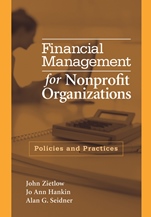
Financial Management for Nonprofit Organizations: Policies and Practices
ISBN 9780471741664
Autor: John Zietlow, Jo Ann Hankin, Alan Seidner
Wydawca: Wiley
Dostępność: 3-6 tygodni
Cena: 611,10 zł
Przed złożeniem zamówienia prosimy o kontakt mailowy celem potwierdzenia ceny.
ISBN13: |
9780471741664 |
ISBN10: |
0471741663 |
Autor: |
John Zietlow, Jo Ann Hankin, Alan Seidner |
Oprawa: |
Hardback |
Rok Wydania: |
2007-01-12 |
Ilość stron: |
624 |
Wymiary: |
260x186 |
Tematy: |
KM |
Maximize Your Organization′s Financial Independence and Your Financial Acumen as a Manager
Hundreds of thousands of nonprofit organizations of all sizes exist today, each with a responsibility to its mission, its constituents, its employees, and its volunteers.
It is no wonder, between competition from other organizations for contributions, retaining supporters and employees, and maintaining strong internal control systems in light of the present Sarbanes–Oxley environment—all while accomplishing a stated mission—that the financial management of a nonprofit organization is just as daunting as that of a for–profit corporation.
Written by respected financial professionals from a managerial decision–making perspective for those on nonprofit boards or in day–to–day management positions with oversight responsibility for financial functions, Financial Management for Nonprofit Organizations expertly offers helpful advice on everything financial officers need to know, including:Managing an organization′s financial resourcesEstablishing and revising financial policiesAccounting, budgets, and financial reportsInvesting for the short and long termControlling and managing risk
With many real–world case studies, checklists, tables, and sample policies simplifying and illustrating financial concepts, Financial Management for Nonprofit Organizations: Policies and Practices supplies balanced and up–to–date guidelines in this readable and comprehensive guide.
Spis treści:
About the Authors.
Acknowledgments.
Preface.
1 Understanding Nonprofit Organization Finances.
1.1 Definition of Nonprofit Organizations.
1.2 Characteristics of Nonprofit Organizations.
1.3 Understanding the Language of the Nonprofit Organization.
1.4 Financial Policies.
1.5 Financial Practices.
1.6 Primary Financial Objectiv
e.
1.7 Conclusion.
2 Liquidity Management.
2.1 Introduction.
2.2 Donative Nonprofit Organizations.
2.3 Evidence on Liquidity Management in the Nonprofit Sector.
2.4 Facets of Liquidity Management.
2.5 Importance of Liquidity Management.
2.6 What Is the Appropriate Level of Liquidity?
2.7 Conclusion.
3 Managing Mission and Strategy.
3.1 Value of Strategic Planning.
3.2 What Is Strategic Planning?
3.3 What Are theOrganization’sMission, Vision, andGoals/Objectives?
3.4 Strategic Management Process.
3.5 Implementing the Strategic Plan.
3.6 Performance Management Systems.
3.7 Strategic Planning Practices: What Does the Evidence Show?
3.8 Conclusion.
4 Managing Structure, Accountability, and Ethics.
4.1 Financial Tools and Support Structure.
4.2 Organizational Structure and Governance.
4.3 Accountability Structure.
4.4 Ethics.
4.5 Structure, Accountability, and Ethics in Practice.
4.6 Conclusion.
5 Developing Financial Policies.
5.1 Introduction.
5.2 Financial Policies.
5.3 Putting Policies into Place.
5.4 Establishing Procedures.
5.5 Financial Policies and Procedures in Practice.
5.6 Additional Resources.
6 Understanding Accounting Basics and Financial Statements.
6.1 Introduction.
6.2 Accounting Basics.
6.3 Three Financial Statements.
6.4 The Audit and the Audit Committee.
6.5 Financial Statement Users and Uses in Practice.
6.6 Social Accounting.
6.7 Additional Resources.
7 Developing Financial Reports and Ratios.
7.1 Introduction.
7.2 Major Differences from For–Profit Business Reports.
7.3 Objectives of Financial Reports.
7.4 Reporting System Design.
7.5 Major Reports.
7.6 Internal Reports.
7.7 External Reports.
7.8 Conclusion.
8 Developing Operating and Cash Budgets.
8.1 Introduction.
8.2 Overview of the Budgeting Process.
8.3 Are Nonprofit Organizati
ons Doing Their Budgeting Properly?
8.4 Developing and Improving Your Budgeting Process.
8.5 Setting the Budgetary Amounts.
8.6 Budget Technique Refinements.
8.7 Cash Budget.
8.8 Managing Off the Budget.
8.9 Conclusion.
9 Long–Range Financial Planning and Capital Budgeting.
9.1 Introduction.
9.2 Planning for the Future.
9.3 Financial Evaluation of New and Existing Programs.
9.4 Capital Budgeting: Financial Evaluation of Projects that Arise from Existing Programs.
9.5 Financial Evaluation of Mergers, Joint Ventures, and Strategic Alliances.
9.6 Financial Planning and Capital Budgeting in Practice.
9.7 Conclusion.
10 Managing Your Organization’s Liabilities.
10.1 Managing the Balance Sheet.
10.2 Payables.
10.3 Short–Term Borrowing.
10.4 Strategic Financing Plan.
10.5 Steps to Successful Borrowing.
10.6 Matching Financial Sources to Strategic Objectives.
10.7 Preparing the Financing Proposal.
10.8 Making the Presentation.
10.9 Other Factors in Borrowing/Lending Decisions.
10.10 Municipal and Taxable Bonds.
10.11 Leasing and Nontraditional Financing Sources.
10.12 Developing a Debt and Hedging Policy.
10.13 Liability Management in Practice.
10.14 Conclusion.
11 Cash Management and Banking Relations.
11.1 Introduction.
11.2 What Is Cash Management?
11.3 Collection Systems: Managing and Accelerating Receipt of Funds.
11.4 Disbursements.
11.5 Structuring a Funds Management System.
11.6 Monitoring Bank Balances and Transactions.
11.7 Cash Forecasting.
11.8 Short–Term Borrowing.
11.9 Short–Term Investing.
11.10 Benchmarking Treasury Functions.
11.11 Upgrading the Caliber of Treasury Professionals.
11.12 Security and Risk Management Issues.
11.13 Trends in Treasury Management.
12 Investment Policy and Guidelines.
12.1 Investment Policy.
12.2 Investment Guidelines.
12.3
Checklist of Elements for Long–Term Endowment Investment Policy and Guidelines.
12.4 Investment Policy Summary.
13 Information Technology and Knowledge Management.
13.1 Introduction.
13.2 How Much Technology and Which to Choose?
13.3 Knowledge Management and Information Technology.
13.4 Information Technology in Today’s Nonprofits.
13.5 What Should I Know/Do before Investing in Technology Tools?
13.6 Software: Design Internally or Purchase?
13.7 Disclosure, the Law, and Security.
13.8 Needs Assessment and Analysis.
13.9 Policies and Practices in Knowledge Management and Information Technology.
14 Managing Risk, Legal Issues, and Human Resources.
14.1 What Is Risk Management?
14.2 Identifying Risk.
14.3 Primary Financial Risk: Illiquidity.
14.4 Legal Environment.
14.5 Safeguarding People.
14.6 Directors’ and Officers’ Liability.
14.7 Safeguarding Your Financial and Physical Assets.
14.8 Risk Management and Human Resource Management Practices.
15 Evaluating Your Policies and Progress.
15.1 Introduction.
15.2 Evaluation.
15.3 Evaluating Your Decisions and Ethics.
15.4 Evaluating Your Communications.
15.5 Evaluating Your Mentoring and Supervisory Skills.
15.6 Testing Your Supervisory and Managerial Skills.
15.7 Evaluating the Strategic Nature of Your Role.
15.8 Evaluating the Financial Health of Your Organization.
15.9 Evaluating Your Financial Policies in Five Key Areas.
15.10 Evaluating Quality and Outcomes.
15.11 Using External Consultants and Data Sources.
15.12 Conclusion.
Index.
Nota biograficzna:
John T. Zietlow, D.B.A., CTP, is a professor of finance at Malone College in Canton, Ohio, where he teaches corporate finance, investments, short–term financial management, personal finance, and macroeconomics. He previously taught at Lee University (Cleveland, TN) and Mou
Koszyk
Książek w koszyku: 0 szt.
Wartość zakupów: 0,00 zł
Informacje


Kontakt
Gambit
Centrum Oprogramowania
i Szkoleń Sp. z o.o.
Al. Pokoju 29b/22-24
31-564 Kraków
Siedziba Księgarni
ul. Kordylewskiego 1
31-542 Kraków
+48 12 410 5991
+48 12 410 5987
+48 12 410 5989
Subskrypcje
Administratorem danych osobowych jest firma Gambit COiS Sp. z o.o. Na podany adres będzie wysyłany wyłącznie biuletyn informacyjny.
Autoryzacja płatności

Informacje na temat autoryzacji płatności poprzez PayU.

© Copyright 2012: GAMBIT COiS Sp. z o.o. Wszelkie prawa zastrzeżone.
Projekt i wykonanie: Alchemia Studio Reklamy