


Wydawcy
Katalog tematyczny
- Archeologia (109)
- Ekonomia, finanse, business (13704)
- Filozofia (1445)
- Historia (3040)
- Języki i językoznawstwo (2356)
- Lifestyle, hobby i rozrywka (475)
- Medycyna (9704)
- Nauki humanistyczne (4)
- Nauki o Ziemi i środowisku (2638)
- Nauki ścisłe (20412)
- Nauki społeczne (8486)
- Edukacja (229)
- Kryminologia, opieka spełeczna (284)
- Obronność (10)
- Polityka (1389)
- Psychologia (777)
- Socjologia (410)
- Społeczeństwo i kultura (187)
- Nauki techniczne (13450)
- Prawo (1696)
- Publikacje informacyjne i interdyscyplinarne (1288)
- Religia i wierzenia (917)
- Technika komputerowa (4067)
- Zdrowie, relacje międzyludzkie i rozwój osobisty (657)





Informacje szczegółowe o książce
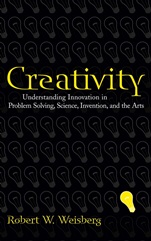
Creativity: Understanding Innovation in Problem Solving, Science, Invention, and the Arts
ISBN 9780471739999
Autor: Robert W. Weisberg
Wydawca: Wiley
Dostępność: 3-6 tygodni
Cena: 537,60 zł
Przed złożeniem zamówienia prosimy o kontakt mailowy celem potwierdzenia ceny.
ISBN13: |
9780471739999 |
ISBN10: |
0471739995 |
Autor: |
Robert W. Weisberg |
Oprawa: |
Hardback |
Rok Wydania: |
2006-06-09 |
Ilość stron: |
640 |
Wymiary: |
241x165 |
Tematy: |
JC |
How cognitive psychology explains human creativity
Conventional wisdom holds that creativity is a mysterious quality present in a select few individuals. The rest of us, the common view goes, can only stand in awe of great creative achievements: we could never paint Guernica or devise the structure of the DNA molecule because we lack access to the rarified thoughts and inspirations that bless geniuses like Picasso or Watson and Crick. Presented with this view, today′s cognitive psychologists largely differ finding instead that "ordinary" people employ the same creative thought processes as the greats. Though used and developed differently by different people, creativity can and should be studied as a positive psychological feature shared by all humans.
Creativity: Understanding Innovation in Problem Solving, Science, Invention, and the Arts presents the major psychological theories of creativity and illustrates important concepts with vibrant and detailed case studies that exemplify how to study creative acts with scientific rigor.
Creativity includes:Two in–depth case studies—Watson and Crick′s modeling of the DNA structure and Picasso′s painting of Guernica— serve as examples throughout the textMethods used by psychologists to study the multiple facets of creativityThe "ordinary thinking" or cognitive view of creativity and its challengersHow problem–solving and experience relate to creative thinkingGenius and madness and the relationship between creativity and psychopathologyThe possible role of the unconscious in creativityPsychometrics—testing for creativity and how personality factors affect creativityConfluence theories that use cognitive, personality, environmental, and other components to describe creativity
Clearly and engagingly written by noted creativity expert Robert Weisberg, Creativity: Understanding Innovation in Problem Solving, Sc
ience, Invention, and the Arts takes both students and lay readers on an in–depth journey through contemporary cognitive psychology, showing how the discipline understands one of the most fundamental and fascinating human abilities.
"This book will be a hit. It fills a large gap in the literature. It is a well–written, scholarly, balanced, and engaging book that will be enjoyed by students and faculty alike."
—David Goldstein, University of Toronto
Spis treści:
Preface.
Acknowledgments.
Credits.
CHAPTER 1: Two Case Studies in Creativity.
Beliefs about Creativity.
Two Case Studies in Creativity.
Creativity in Science: Discovery of the Double Helix.
Conclusions: Watson and Crick’s Discovery of the Double Helix.
Artistic Creativity: Development of Picasso’s Guernica.
Structure in Creative Thinking: Conclusions from the Case Studies.
Revisiting the Question of Artistic Creativity versus Scientifi c Discovery.
Beyond Case Studies: Outline of the Book.
CHAPTER 2: The Study of Creativity.
Outline of the Chapter.
Creative Product, Creative Process, and Creative Person: Questions of Defi nition.
Method versus Theory in the Study of Creativity.
Methods of Studying Creativity.
An Introduction to Theories of Creativity.
CHAPTER 3: The Cognitive Perspective on Creativity, Part I: Ordinary Thinking, Creative Thinking, and Problem Solving.
Outline of the Chapter.
Basic Cognitive Components of Ordinary Thinking.
General Characteristics of Ordinary Thinking.
Creative Thinking and Ordinary Thinking: Conclusions.
The Cognitive Analysis of Problem Solving.
An Example of Problem Solving.
Solving a Problem: Questions of Defi nition.
A Brief History of the Cognitive Perspective on Problem Solving.
Problem Solving: Processes of Understanding and Search.
Strategies for Searching Problem Spaces.
Weak Heuristic Method
s of Problem Solving and Creative Thinking: Conclusions.
CHAPTER 4: The Cognitive Perspective on Creativity, Part II: Knowledge and Expertise in Problem Solving.
Outline of the Chapter.
Use of Knowledge in Problem Solving: Studies of Analogical Transfer.
Strong Methods in Problem Solving: Studies of Expertise.
Outline of a Cognitive– Analytic Model of Problem Solving: Strong and Weak Methods in Problem Solving.
The Cognitive Perspective on Problem Solving and Creativity: Conclusions and Implications.
The Creative Cognition Approach: A Bottom– Up Analysis of Creative Thinking.
Skepticism about Expertise and Creativity.
Practice or Talent?
Expertise and Achievement: Reproductive or Productive?
Expertise, Knowledge, and Experience versus Creativity: The Tension View.
The Cognitive Perspective on Problem Solving and Creativity: Conclusions.
CHAPTER 5: Case Studies of Creativity: Ordinary Thinking in the Arts, Science, and Invention.
Outline of the Chapter.
Basic Components of Ordinary Thinking.
The 10– Year Rule in Creative Development.
Case Studies of Creativity in the Visual Arts.
Case Studies of Creativity in Science.
Scientifi c Creativity: Scientifi c Discovery as Problem Solving.
The Wright Brothers’ Invention of the Airplane.
Thomas Edison as a Creative Thinker: Themes and Variations Based on Analogy.
James Watt’s Invention of the Steam Engine.
Eli Whitney’s Cotton Gin.
Ordinary Thinking in Invention: Summary.
Case Studies of Creativity: Conclusions.
CHAPTER 6: The Question of Insight in Problem Solving.
Outline of the Chapter.
The Gestalt Analysis of Insight: Problem Solving and Perception.
Evidence to Support the Gestalt View.
The Neo– Gestalt View: Heuristic– Based Restructuring in Response to Impasse.
Challenges to the Gestalt View.
An Elaboration of the Cognitive– Analytic Model to Deal wi
th Restructuring and Insight.
A Critical Reexamination of Evidence in Support of the Gestalt View.
Insight in Problem Solving: Conclusions and Implications.
CHAPTER 7: Out of One’s Mind, Part I: Muses, Primary Process, and Madness.
Outline of the Chapter.
Messengers of the Gods.
Primary Process and Creativity.
Genius and Madness: Bipolarity and Creativity.
Mood Disorders and Creativity: The Question of Causality.
The Role of Affect in Creativity.
Genius and Madness: Schizophrenia and Creativity.
Social Factors and Genius and Madness.
A Reconsideration of Some Basic Data.
Genius and Madness: Conclusions.
CHAPTER 8: Out of One’s Mind, Part II: Unconscious Processing, Incubation, and Illumination.
Outline of the Chapter.
Unconscious Associations and Unconscious Processing.
Poincaré’s Theory of Unconscious Creative Processes.
Wallas’s Stages of the Creative Process.
Hadamard’s Studies of Unconscious Thinking in Incubation.
Koestler’s Bisociation Theory.
Campbell’s Evolutionary Theory of Creativity: Blind Variation and Selective Retention.
Simonton’s Chance Confi guration Theory.
Csikszentmihalyi’s Theory of the Unconscious in Creative Thinking.
Unconscious Thinking in Creativity: Conclusions.
Laboratory Investigations of Incubation and Illumination.
Evidence for Incubation and Illumination: A Critique.
Illumination without Unconscious Processing?
Incubation, Illumination, and the Unconscious: Conclusions.
CHAPTER 9: The Psychometric Perspective, Part I: Measuring the Capacity to Think Creatively.
Outline of the Chapter.
Guilford and the Modern Psychometric Perspective on Creativity.
Methods of Measuring Creativity.
Cognitive Components of the Creative Process: Testing for Creative– Thinking Ability.
Testing the Tests: The Reliability and Validity of Tests of Creative–Thinking Ca
Koszyk
Książek w koszyku: 0 szt.
Wartość zakupów: 0,00 zł
Informacje


Kontakt
Gambit
Centrum Oprogramowania
i Szkoleń Sp. z o.o.
Al. Pokoju 29b/22-24
31-564 Kraków
Siedziba Księgarni
ul. Kordylewskiego 1
31-542 Kraków
+48 12 410 5991
+48 12 410 5987
+48 12 410 5989
Subskrypcje
Administratorem danych osobowych jest firma Gambit COiS Sp. z o.o. Na podany adres będzie wysyłany wyłącznie biuletyn informacyjny.
Autoryzacja płatności

Informacje na temat autoryzacji płatności poprzez PayU.

© Copyright 2012: GAMBIT COiS Sp. z o.o. Wszelkie prawa zastrzeżone.
Projekt i wykonanie: Alchemia Studio Reklamy