


Wydawcy
Katalog tematyczny
- Archeologia (109)
- Ekonomia, finanse, business (13704)
- Filozofia (1445)
- Historia (3040)
- Języki i językoznawstwo (2356)
- Lifestyle, hobby i rozrywka (475)
- Medycyna (9704)
- Nauki humanistyczne (4)
- Nauki o Ziemi i środowisku (2638)
- Nauki ścisłe (20412)
- Nauki społeczne (8486)
- Nauki techniczne (13450)
- Prawo (1696)
- Publikacje informacyjne i interdyscyplinarne (1288)
- Religia i wierzenia (917)
- Technika komputerowa (4067)
- Zdrowie, relacje międzyludzkie i rozwój osobisty (657)





Informacje szczegółowe o książce
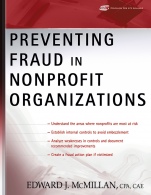
Preventing Fraud in Nonprofit Organizations
ISBN 9780471733430
Autor: Edward J. McMillan
Wydawca: Wiley
Dostępność: 3-6 tygodni
Cena: 394,80 zł
Przed złożeniem zamówienia prosimy o kontakt mailowy celem potwierdzenia ceny.
ISBN13: |
9780471733430 |
ISBN10: |
0471733431 |
Autor: |
Edward J. McMillan |
Oprawa: |
Paperback |
Rok Wydania: |
2006-05-30 |
Ilość stron: |
240 |
Wymiary: |
279x215 |
Tematy: |
KM |
IS YOUR NONPROFIT VULNERABLE TO FRAUD?
Fraud or embezzlement discovered within a major corporation ultimately leads to front–page scandals and a few raised eyebrows. But the mere suggestion or evidence of fraud within a nonprofit can cause irreversible damage to its reputation, its support base, and, eventually, its very existence. Preventing Fraud in Nonprofit Organizations is the proactive manual your organization needs to detect fraud and prevent it from affecting your organization′s bottom line and name. Brimming with details of hundreds of actual fraud and embezzlement schemes, it provides specific, practical advice on strengthening the areas in which your nonprofit may be most vulnerable.
This hands–on guide shows nonprofit accountants, CFOs, financial consultants, board members, and managers how to:Know the four consistent areas of high riskThoroughly evaluate their organization′s system of internal controlsAssemble a fraud examination teamDocument a fraud action planExpose weaknesses that could lead to fraudTake corrective action to reduce the possibility of victimization
Fraud deterrence is not exclusive to large corporations. Recommended reading for nonprofit professionals, Preventing Fraud in Nonprofit Organizations will motivate executives to take a fresh and intensive look at their organization′s practices and act to protect from financial dishonesty.
Spis treści:
About the Author.
Acknowledgments.
Preface.
Disclaimer.
About the Companion Website.
Section 1: Not–For–Profit Organizations: Four Consistent Areas of High Risk.
Embezzlement: Who Does It and When.
Not–For–Profit Specific Issues.
Summary.
The Perpetrators: Who They Are, Why They Do It, and How They Are Caught.
The Embezzler’s “Window of Opportunity”.
Section 2:
Statement of Auditing Standard No. 99.
“Consideration of Fraud in a Financial Statement Audit”.
Statement of Auditing Standard No. 99.
“Consideration of Fraud in a Financial Statement Audit”.
Section 3: Essential Internal Control and Administrative Procedures to Avoid Embezzlement.
The Background Check.
Conditions of Employment Agreement.
Conflicts of Interest.
Nepotism.
Whistleblowers.
Noncompete Agreements.
Confidentiality of Information.
Bonding Issues.
Signers on Bank Accounts.
Two–Signature Checks.
Lockbox.
Positive Pay.
Deposit Security and Restrictive Endorsements.
Check Stock.
Cash Transactions.
Cash Register Issues.
Insurance Committees.
Computer File Backups.
Check and Wire Transfer Signatures.
Inventory Issues.
Company Credit Cards.
Lines of Credit.
Bad Debt Policy.
Internal Audits.
Stop Payment Orders.
Voiding Checks.
Numbered Check Request Forms.
Expense Accounts.
CPA Management Letters.
Random Disbursement Checks.
CHECK 21.
Section 4: Clever Examples of Embezzlement.
Payroll Tax Deposits.
Check Switching.
Ghosts on the Payroll and Ghost Vendors.
The Danger of Acronyms.
Bank Account Reconciliations.
Wire Transfers.
Postage Issues.
Kiting.
Manual Checks (Handwritten and Typed).
Auditing Receipts.
Section 5: Steps to Take If You Have Been Victimized by Fraud.
Documenting a Fraud Action Plan.
Fraud Examinations and Assembling the Fraud Team.
The Basics of Forensic Accounting.
Section 6: Internal Control Analysis, Documentation, and Recommendations for Improvement.
Internal Control Analysis, Documentation, and Recommendations for Improvement.
Fraud Glossary.
Index.
Nota biograficzna:
Edward J. McMillan, CPA, CAE, is an experienced fraud examiner and teaches fraud prevention courses to organizations
such as the American Institute of CPAs, the Maryland Association of CPAs, other state societies of CPAs, the U.S. Chamber of Commerce, and the American Bar Association, among others. Ed also speaks regularly on the subject of fraud prevention at business conventions of all types and can be reached at (410)893–2308 or contacted via email at emcmillan@sprintmail.com.
Okładka tylna:
IS YOUR NONPROFIT VULNERABLE TO FRAUD?
Fraud or embezzlement discovered within a major corporation ultimately leads to front–page scandals and a few raised eyebrows. But the mere suggestion or evidence of fraud within a nonprofit can cause irreversible damage to its reputation, its support base, and, eventually, its very existence. Preventing Fraud in Nonprofit Organizations is the proactive manual your organization needs to detect fraud and prevent it from affecting your organization′s bottom line and name. Brimming with details of hundreds of actual fraud and embezzlement schemes, it provides specific, practical advice on strengthening the areas in which your nonprofit may be most vulnerable.
This hands–on guide shows nonprofit accountants, CFOs, financial consultants, board members, and managers how to:Know the four consistent areas of high riskThoroughly evaluate their organization′s system of internal controlsAssemble a fraud examination teamDocument a fraud action planExpose weaknesses that could lead to fraudTake corrective action to reduce the possibility of victimization
Fraud deterrence is not exclusive to large corporations. Recommended reading for nonprofit professionals, Preventing Fraud in Nonprofit Organizations will motivate executives to take a fresh and intensive look at their organization′s practices and act to protect from financial dishonesty.
Koszyk
Książek w koszyku: 0 szt.
Wartość zakupów: 0,00 zł
Informacje


Kontakt
Gambit
Centrum Oprogramowania
i Szkoleń Sp. z o.o.
Al. Pokoju 29b/22-24
31-564 Kraków
Siedziba Księgarni
ul. Kordylewskiego 1
31-542 Kraków
+48 12 410 5991
+48 12 410 5987
+48 12 410 5989
Subskrypcje
Administratorem danych osobowych jest firma Gambit COiS Sp. z o.o. Na podany adres będzie wysyłany wyłącznie biuletyn informacyjny.
Autoryzacja płatności

Informacje na temat autoryzacji płatności poprzez PayU.

© Copyright 2012: GAMBIT COiS Sp. z o.o. Wszelkie prawa zastrzeżone.
Projekt i wykonanie: Alchemia Studio Reklamy