


Wydawcy
Katalog tematyczny
- Archeologia (109)
- Ekonomia, finanse, business (13704)
- Filozofia (1445)
- Historia (3040)
- Języki i językoznawstwo (2356)
- Lifestyle, hobby i rozrywka (475)
- Medycyna (9704)
- Nauki humanistyczne (4)
- Nauki o Ziemi i środowisku (2638)
- Nauki ścisłe (20412)
- Nauki społeczne (8486)
- Edukacja (229)
- Kryminologia, opieka spełeczna (284)
- Obronność (10)
- Polityka (1389)
- Psychologia (777)
- Socjologia (410)
- Społeczeństwo i kultura (187)
- Nauki techniczne (13450)
- Prawo (1696)
- Publikacje informacyjne i interdyscyplinarne (1288)
- Religia i wierzenia (917)
- Technika komputerowa (4067)
- Zdrowie, relacje międzyludzkie i rozwój osobisty (657)





Informacje szczegółowe o książce
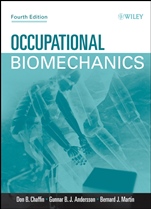
Occupational Biomechanics
ISBN 9780471723431
Autor: Don B. Chaffin, Gunnar B. J. Andersson, Bernard J. Martin
Wydawca: Wiley
Dostępność: 3-6 tygodni
Cena: 730,80 zł
Przed złożeniem zamówienia prosimy o kontakt mailowy celem potwierdzenia ceny.
ISBN13: |
9780471723431 |
ISBN10: |
0471723436 |
Autor: |
Don B. Chaffin, Gunnar B. J. Andersson, Bernard J. Martin |
Oprawa: |
Hardback |
Rok Wydania: |
2006-05-23 |
Numer Wydania: |
4th Edition |
Ilość stron: |
376 |
Wymiary: |
293x216 |
Tematy: |
JC |
Praise for previous editions of Occupational Biomechanics
"This book is a valuable resource for any advanced ergonomist interested in physical ergonomics . . . provides valuable research information."
—Ergonomics in Design
"[This book] represents a distillation of the authors′ combined years of experience in applying biomechanicsin various industries and work situations . . . I recommend this book to anyone, regardless of discipline, who is interested in understanding the many biomechanical factors which must be considered when trying to effectthe prevention and reduction of musculoskeletal injuries in the workplace."
—Journal of Biomechanics
"Impressive descriptions of biomechanical concepts and worksite considerations . . . based not only on mechanical and mathematical principles, but on solid anatomical and physiologic constructs . . . a very valuablereference source."
—Research Communications in Chemical Pathology and Pharmacology
THE DEFINITIVE TEXT ON DESIGNING FOR THE DEMANDS OF TODAY′S WORKPLACE
With critical applications in manufacturing, transportation, defense, security, environmental safety and occupational health, and other industries, the field of occupational biomechanics is more central to industrial design than ever before.
This latest edition of the popular and widely adopted Occupational Biomechanics provides the foundations and tools to assemble and evaluate biomechanical processes as they apply to today′s changing industries, with emphasis on improving overall work efficiency and preventing work–related injuries. The book expertly weaves engineering and medical information from diverse sources and provides a coherent treatment of the biomechanical principles underlying the well–designed and ergonomically sound workplace.
NEW TO THIS THOROUGHLY REVISED AND UPDATED FOURTH EDITION:150 new references and many new illustrationsMajor changes within each ch
apter that reflect recent and significant findingsRecent research in musculoskeletal disordersNew measurement techniques for biomechanical parameters and numerous international initiatives on the subject
Presented in an easy–to–understand manner and supported by over 200 illustrations and numerous examples, Occupational Biomechanics, Fourth Edition remains the premier one–stop reference for students and professionals in the areas of industrial engineering, product and process design, medicine, and occupational health and safety.
Spis treści:
Foreword.
Preface.
Acknowledgments.
1. Occupational Biomechanics as a Specialty.
1.1 Definition of Occupational Biomechanics.
1.2 Historical Development of Occupational Biomechanics.
1.2.1 Kinesiological Developments.
1.2.2 Developments in Biomechanical Modelling.
. 1.2.3 Developments in Anthropometry.
1.2.4 Methods for Evaluating Mechanical Work Capacity.
1.2.5 Developments in Bioinstrumentation.
1.2.6 Developments in Motion Classification and Time Prediction Systems.
1.3 The Need for an Occupational Biomechanics Specialty.
1.3.1 Epidemiological Support for Occupational Biomechanics.
1.3.2 Social and Legal Support for Occupational Biomechanics.
1.3.3 Ergonomic Support for Occupational Biomechanics.
1.4 Who Uses Occupational Biomechanics?.
1.5 Organization of The Book.
Review Questions.
References.
2. The Structure and Function of the Musculoskeletal System.
2.1 Introduction.
2.2 Connective Tissue.
2.2.1 Ligaments, Tendons, and Fascia.
2.2.2 Cartilage.
2.2.3 Bone.
2.3 Skeletal Muscle.
2.3.1 The Structure of Muscles.
2.3.2 The Molecular Basis of Muscle Contraction.
2.3.3 The Energy Metabolism of Muscle.
2.3.4 The Nerve Impulse Causing Muscle Contraction.
2.3.5 Mechanical Aspects of Muscle Contraction.
2.3.6 Muscle Fatigue.
2.3.7 Quantification and
Prediction of Fatigue.
2.4 Joints.
2.4.1 The Synovial Joint.
2.4.2 Joint Lubrication.
2.4.3 Osteoarthritis.
2.4.4 Intervertebral Discs.
Review Questions.
References.
3. Anthropometry in Occupational Biomechanics.
3.1 Measurement of Physical Properties of Body Segments.
3.1.1 Body–Segment Link Length Measurement Methods.
3.1.2 Body–Segment Volume and Weight.
3.1.3 Body–Segment Locations of Center of Mass.
3.1.4 Body–Segment Inertial Property Measurement Methods.
3.2 Anthropometric Data for Biomechanical Studies in Industry.
3.2.1 Segment Link Length Data.
3.2.2 Segment Weight Data.
3.2.3 Segment Mass–Center Location Data.
3.2.4 Segment Moment–of–inertia and Radius–of–Gyration Data.
3.3 Summary Of Anthropometry in Occupational Biomechanics.
Review Questions.
References.
4. Mechanical Work Capacity Evaluation.
4.1 Introduction.
4.2 Joint Motion: Methods and Data.
4.2.1 Methods of Measuring Joint Motion.
4.2.2 Normal Ranges of Joint Motion.
4.2.3 Factors Affecting Range–of–Motion Data.
4.3 Muscle Strength Evaluation.
4.3.1 Definition of Muscular Strength.
4.3.2 Static and Dynamic Strength–Testing Methods.
4.3.3 Population Muscle Strength Values.
4.3.4. Personal Factors Affecting Strength.
4.4. Summary and Limitations of Mechanical Work–Capacity Data.
Review Questions.
References.
5. Bioinstrumentation for Occupational Biomechanics.
5.1 Introduction.
5.2 Human Motion Analysis Systems.
5.2.1 Basis for Measuring Human Motion.
5.3 Muscle Activity Measurement.
5.3 .1 Applied Electromyography.
5.3.2 Mechanomyography.
5.3.3 Intra Muscular Pressure.
5.4 Muscle Strength Measurement Systems.
5.4.1 Localized Static Strength Measurement Systems.
5.4.2 Whole–body Static Strength Measurement System.
5.4.3 Whole–body Dynamic Strength M
easurement System.
5.5 Intradiscal Pressure Measurement.
5.5.1 Measurement Concept.
5.5.2 Intradiscal Pressure Measurement System.
5.5.3 Applications and Limitations in Occupational Biomechanics.
5.6 Intra–abdominal (Intragastric) Measurements.
5.6.1 Measurement Development.
5.6.2 Measurement System.
5.6.3 Applications and Limitations in Occupational Biomechanics.
5.7 Seat Pressure Measurement Systems.
5.8 Stature Measurement System.
5.9 Force Platform System.
5.10 Foot and Hand Force Measurement Systems.
5.11 Measurement of Vibration in Humans.
Review Questions.
References.
6. Occupational Biomechanical Models.
6.1 Why Model?.
6.2 Planar Static Biomechanical Models.
6.2.1 Single–Body–Segment Static Model.
6.2.2 Two–Body–Segment Static Model.
6.2.3 Static Planar Model of Nonparallel Forces.
6.2.4 Planar Static Analysis of Internal Forces.
6.2.5 Multiple–link Coplanar Static Modeling.
6.3 Three–dimensional Modeling of Static Strength.
6.4 Dynamic Biomechanical Models.
6.4.1 Single–Segment Dynamic Biomechanical Model.
6.4.2 Multiple–Segment Biodynamic Model of Load Lifting.
6.4.3 Coplanar Biomechanical Models of Foot Slip Potential While Pushing a Cart.
6.5. Special–purpose Biomechanical Models of Occupational Tasks.
6.5.1 Low–Back Biomechanical Models.
6.5.2 Biomechanical Models of the Wrist and Hand.
6.5.3 Modeling Muscle Strength.
6.6 Future Developments in Occupational Biomechanical Models.
Review Questions.
References.
7. Methods Of Classifying And Evaluating Manual Work.
7.1 Traditional Methods.
7.1.1 Historical Perspective.
7.2 Traditional Work Analysis System.
7.2.1 MTM: An Example of a Predetermined Motion?Time System.
7.2.2 Benefits and Limitations in Contemporary Work Analysis Systems.
7.3 Contemporary Biomechanical Job Analysis.
7.3.1 Identification
Koszyk
Książek w koszyku: 0 szt.
Wartość zakupów: 0,00 zł
Informacje


Kontakt
Gambit
Centrum Oprogramowania
i Szkoleń Sp. z o.o.
Al. Pokoju 29b/22-24
31-564 Kraków
Siedziba Księgarni
ul. Kordylewskiego 1
31-542 Kraków
+48 12 410 5991
+48 12 410 5987
+48 12 410 5989
Subskrypcje
Administratorem danych osobowych jest firma Gambit COiS Sp. z o.o. Na podany adres będzie wysyłany wyłącznie biuletyn informacyjny.
Autoryzacja płatności

Informacje na temat autoryzacji płatności poprzez PayU.

© Copyright 2012: GAMBIT COiS Sp. z o.o. Wszelkie prawa zastrzeżone.
Projekt i wykonanie: Alchemia Studio Reklamy