


Wydawcy
Katalog tematyczny
- Archeologia (109)
- Ekonomia, finanse, business (13704)
- Filozofia (1445)
- Historia (3040)
- Języki i językoznawstwo (2356)
- Lifestyle, hobby i rozrywka (475)
- Medycyna (9704)
- Nauki humanistyczne (4)
- Nauki o Ziemi i środowisku (2638)
- Nauki ścisłe (20412)
- Nauki społeczne (8486)
- Nauki techniczne (13450)
- Prawo (1696)
- Publikacje informacyjne i interdyscyplinarne (1288)
- Religia i wierzenia (917)
- Technika komputerowa (4067)
- Zdrowie, relacje międzyludzkie i rozwój osobisty (657)





Informacje szczegółowe o książce
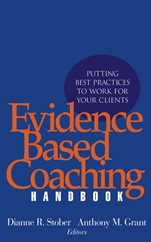
Evidence Based Coaching Handbook: Putting Best Practices to Work for Your Clients
ISBN 9780471720867
Autor: Dianne R. Stober, Anthony M. Grant
Wydawca: Wiley
Dostępność: 3-6 tygodni
Cena: 341,25 zł
Przed złożeniem zamówienia prosimy o kontakt mailowy celem potwierdzenia ceny.
ISBN13: |
9780471720867 |
ISBN10: |
0471720860 |
Autor: |
Dianne R. Stober, Anthony M. Grant |
Oprawa: |
Hardback |
Rok Wydania: |
2006-05-26 |
Ilość stron: |
416 |
Wymiary: |
242x159 |
Tematy: |
KM |
The first reference to bring scientifically proven approaches to the practice of personal and executive coaching
The Evidence Based Coaching Handbook applies recent behavioral science research to executive and personal coaching, bringing multiple disciplines to bear on why and how coaching works. A groundbreaking resource for this burgeoning profession, this text presents several different coaching approaches along with the empirical and theoretical knowledge base supporting each.
Recognizing the special character of coaching—that the coaching process is non–medical, collaborative, and highly contextual—the authors lay out an evidence–based coaching model that allows practitioners to integrate their own expertise and the needs of their individual clients with the best current knowledge. This gives coaches the ability to better understand and optimize their own coaching interventions, while not having to conform to a single, rigidly defined practice standard.
The Evidence Based Coaching Handbook looks at various approaches and applies each to the same two case studies, demonstrating through this practical comparison the methods, assumptions, and concepts at work in the different approaches. The coverage includes:An overview: a contextual model of coaching approachesSystems and complexity theoryThe behavioral perspectiveThe humanistic perspectiveCognitive coachingAdult development theoryAn integrative, goal–focused approachPsychoanalytically informed coachingPositive psychologyAn adult learning approachAn adventure–based frameworkCulture and coaching
Spis treści:
Preface.
Acknowledgments.
Contributors.
Introduction (Anthony M. Grant and Dianne R. Stober).
Part I: Single–Theory Perspectives.
Chapter 1: Coaching from the Humanistic Perspective (Dianne R
. Stober).
Chapter 2: People Are Complex and the World Is Messy: A Behavior–Based Approach to Executive Coaching (David B. Peterson).
Chapter 3: Adult Development Theory and Executive Coaching Practice (Jennifer Garvey Berger).
Chapter 4: Cognitive Coaching (Jeffrey E. Auerbach).
Chapter 5: Psychoanalytically Informed Executive Coaching (Seth Allcorn).
Part II: Integrative and Cross–Theory Approaches.
Chapter 6: An Integrative Goal–Focused Approach to Executive Coaching (Anthony M. Grant).
Chapter 7: An Adult Learning Approach to Coaching (Elaine Cox).
Chapter 8: Positive Psychology: The Science at the Heart of Coaching (Carol Kauffman).
Chapter 9: Coaching from a Cultural Perspective (Philippe Rosinski and Geoffrey N. Abbott).
Chapter 10: An Adventure–Based Framework for Coaching (Travis Kemp).
Chapter 11: Coaching from a Systemic Perspective: A Complex Adaptive Conversation (Michael Cavanagh).
Chapter 12: Toward a Contextual Approach to Coaching Models (Dianne R. Stober and Anthony M. Grant).
Appendix: Workplace and Executive Coaching: A Bibliography from the Scholarly Business Literature (Anthony M. Grant).
Author Index.
Subject Index.
Nota biograficzna:
DIANNE STOBER, PHD, consults, teaches, and conducts research in the areas of coaching and adult learning. She is on the faculty of the Organizational Management/Organizational Development Master′s Program at Fielding Graduate University in Santa Barbara, California. Trained as a clinical psychologist, she maintains an active coaching practice with individuals and organizations, while also consulting on designing and providing executive and managerial development programs. She can be reached at dstober@fielding.edu.
ANTHONY M. GRANT, PHD, is the founder and Director of the world′s first university–bas
ed Coaching Psychology Unit at the School of Psychology, in the University of Sydney, Australia. His PhD is in coaching psychology and he is a registered psychologist. He is both an academic and a practitioner and his coaching research and practice have been frequently featured in the national and international media.
Okładka tylna:
The first reference to bring scientifically proven approaches to the practice of personal and executive coaching
The Evidence Based Coaching Handbook applies recent behavioral science research to executive and personal coaching, bringing multiple disciplines to bear on why and how coaching works. A groundbreaking resource for this burgeoning profession, this text presents several different coaching approaches along with the empirical and theoretical knowledge base supporting each.
Recognizing the special character of coaching—that the coaching process is non–medical, collaborative, and highly contextual—the authors lay out an evidence–based coaching model that allows practitioners to integrate their own expertise and the needs of their individual clients with the best current knowledge. This gives coaches the ability to better understand and optimize their own coaching interventions, while not having to conform to a single, rigidly defined practice standard.
The Evidence Based Coaching Handbook looks at various approaches and applies each to the same two case studies, demonstrating through this practical comparison the methods, assumptions, and concepts at work in the different approaches. The coverage includes:An overview: a contextual model of coaching approachesSystems and complexity theoryThe behavioral perspectiveThe humanistic perspectiveCognitive coachingAdult development theoryAn integrative, goal–focused approachPsychoanalytically informed coachingPositive psychologyAn adult learnin
g approachAn adventure–based frameworkCulture and coaching
Koszyk
Książek w koszyku: 0 szt.
Wartość zakupów: 0,00 zł
Informacje


Kontakt
Gambit
Centrum Oprogramowania
i Szkoleń Sp. z o.o.
Al. Pokoju 29b/22-24
31-564 Kraków
Siedziba Księgarni
ul. Kordylewskiego 1
31-542 Kraków
+48 12 410 5991
+48 12 410 5987
+48 12 410 5989
Subskrypcje
Administratorem danych osobowych jest firma Gambit COiS Sp. z o.o. Na podany adres będzie wysyłany wyłącznie biuletyn informacyjny.
Autoryzacja płatności

Informacje na temat autoryzacji płatności poprzez PayU.

© Copyright 2012: GAMBIT COiS Sp. z o.o. Wszelkie prawa zastrzeżone.
Projekt i wykonanie: Alchemia Studio Reklamy