


Wydawcy
Katalog tematyczny
- Archeologia (109)
- Ekonomia, finanse, business (13704)
- Filozofia (1445)
- Historia (3040)
- Języki i językoznawstwo (2356)
- Lifestyle, hobby i rozrywka (475)
- Medycyna (9704)
- Nauki humanistyczne (4)
- Nauki o Ziemi i środowisku (2638)
- Nauki ścisłe (20412)
- Astronomia (294)
- Biologia (5119)
- Chemia (6540)
- Chemia analityczna (361)
- Chemia fizyczna (346)
- Chemia nieorganiczna (137)
- Chemia organiczna (535)
- Krystalografia (27)
- Minerologia (46)
- Fizyka (3309)
- Matematyka (4574)
- Nauki ścisłe, ogólnie (503)
- Nauki społeczne (8486)
- Nauki techniczne (13450)
- Prawo (1696)
- Publikacje informacyjne i interdyscyplinarne (1288)
- Religia i wierzenia (917)
- Technika komputerowa (4067)
- Zdrowie, relacje międzyludzkie i rozwój osobisty (657)





Informacje szczegółowe o książce
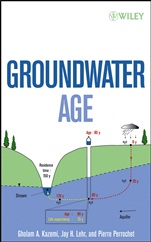
Groundwater Age
ISBN 9780471718192
Autor: Gholam A. Kazemi, Jay H. Lehr, Pierre Perrochet
Wydawca: Wiley
Dostępność: 3-6 tygodni
Cena: 784,35 zł
Przed złożeniem zamówienia prosimy o kontakt mailowy celem potwierdzenia ceny.
ISBN13: |
9780471718192 |
ISBN10: |
047171819X |
Autor: |
Gholam A. Kazemi, Jay H. Lehr, Pierre Perrochet |
Oprawa: |
Hardback |
Rok Wydania: |
2006-07-25 |
Ilość stron: |
346 |
Wymiary: |
243x166 |
Tematy: |
PN |
The art and science of groundwater age dating
Traditionally concerned with the flow rate calculation, recharge estimation, and renewability of groundwater resources, the application of groundwater age data has now expanded to include such issues as the calibration of groundwater flow and transport models, the management of dry land salinity, and the study of groundwater vulnerability and pollution. In short, thanks to both technical developments in the field and worldwide concerns about water resources, the study of groundwater age has coalesced into a potent and much respected field. In this comprehensive book, the field of groundwater age dating receives the major reference it needs and deserves.
Written by three leading experts in the field, Groundwater Age aggregates, in one volume, state–of–the–art knowledge concerning groundwater dating, including its historical development, principles, applications, various methods, and likely future progress in its concepts.
The book discusses such topics as:Essential definitions and the basics of groundwater dating scienceThe history of groundwater dating, including pioneers and key contributors to the fieldApplications and uses of age data for consulting companies and resource managersVarious methods for age dating young, old, and very old groundwatersNew mathematical approachesModeling of groundwater age and residence time distributionsThoughts on and suggestions for current practices and future progress
Presenting modern knowledge and cutting–edge research simply and clearly, Groundwater Age will satisfy and stimulate both seasoned professionals and student novices alike.
Spis treści:
Preface.
Acknowledgments.
Chapter 1. Introduction.
1.1 Age and lifetime.
1.2 Age determination in geology (Geochronology) and in other disciplines.
1.2.1 Absolute age and relative ag
e.
1.2.2 Determination of absolute age of rocks.
1.2.3 Geological time table.
1.3 Groundwater age and groundwater residence time.
1.3.1 Young, old and very old groundwaters.
1.3.2 Dead water and active water.
1.3.3 Age gradient.
1.3.4 Age mass.
1.3.5 Mixing, dispersion and transport of groundwater age, mean age and distribution of ages.
1.3.6 Average residence time of water in various compartments of the hydrologic cycle .
1.3.7 Hydrogeochronolgy, interdisciplinary groundwater age science and hydrologic time concept.
1.3.8 Event markers.
1.4 Life expectancy.
1.5 Isochrone and life expectancy maps.
1.6 Some groundwater age related terms.
1.6.1 Isotopic age, radiometric age and decay age.
1.6.2 Hydraulic age.
1.6.3 Piston–flow age, streamtube age and advective age .
1.6.4 Model age and apparent age.
1.6.5 Storage time, mean transit time, turn over time, flushing time and travel time.
1.6.6 Reservoir theory and its relation with groundwater residence time.
Chapter 2. History of groundwater age dating research.
2.1 Pioneer of Groundwater Age discipline–sequence of the earliest publications.
2.2 Laboratories worldwide for dating groundwater samples.
2.3 Major contributors to Groundwater Age dating discipline.
2.4 Names familiar in the Groundwater Dating business.
2.5 Important publications.
2.5.1 Book chapters.
2.5.2 PhD and MSc theses.
2.5.3 Journals.
2.5.4 Reports (mainly by the USGS) .
2.6 Aquifers subjected to extensive dating studies.
Chapter 3. The applications of groundwater age data.
3.1 Renewability of the groundwater reservoirs.
3.2 An effective communication tool for scientists and managers– and curiosity to laymen as well.
3.3 Age monitoring for the prevention of over exploitation and contamination of aquifers.
3.4 Estimation of the recharge rate.
3.5 Calculation of the groundwater flow velocity.
3.6 Identification
of the groundwater flow paths.
3.7 Assessing the rates of groundwater and contaminants transport through aquitards.
3.8 Constraining the parameters of groundwater flow and transports models (estimation of large scale flow and transport properties).
3.9 Identification of the mixing between different end members.
3.10 Study of the pre–Holocene (late Pleistocene) climate.
3.11 Evaluation of the groundwater pollution.
3.12 Calculation of the travel time of the groundwater plume to the points of interest.
3.13 Mapping vulnerability of the shallow aquifers.
3.14 Performance assessments for radioactive waste disposal facilities.
3.15 Site specific applications.
3.15.1 Identification of the seawater level fluctuations.
3.15.2 Calculating the timescale of seawater intrusion.
3.15.3 Disposal of wastes into the deep old saline groundwater systems.
3.15.4 Management of the dryland salinity in Australia.
3.15.5 Hydrograph separation.
Chapter 4. Age–dating young groundwaters.
4.1 Important points.
4.2 Tritium.
4.2.1 Production of tritium.
4.2.2 Sampling, analyzing and reporting the results.
4.2.3 Age dating groundwater by tritium.
4.2.4 Advantages and disadvantages.
4.2.5 Case studies.
4.3 3H/3He.
4.3.1 Sources of 3He.
4.3.2 Sampling, analysis and reporting the results.
4.3.3 Dating groundwater by 3H/3He.
4.3.4 Advantages and disadvantages.
4.3.5 Case studies.
4.4 Helium–4.
4.5 Krypton–85.
4.5.1 Production of 85Kr.
4.5.2 Sampling and analyzing groundwater for 85Kr.
4.5.3 Age dating groundwater with 85Kr.
4.5.4 Advantages and disadvantages.
4.5.5 Case studies.
4.6 CFCs.
4.6.1 Sampling and analyzing groundwater for CFCs.
4.6.2 Dating groundwater by CFCs.
4.6.3 Limitations and possible sources of error in CFCs dating technique.
4.6.4 Advantages and disadvantages.
4.6.5 Case studies.
4.7 SF6.
4.7.1 Sampling and analyzing gro
undwater for SF6.
4.7.2 Age dating groundwater with SF6.
4.7.3 Advantages and disadvantages.
4.7.4 Case studies.
4.8 36Cl/Cl.
4.8.1 Dating groundwater by 36Cl/Cl ratio and case studies.
4.9 Indirect methods.
4.9.1 Stable isotopes of water.
4.9.2 Case study.
Chapter 5. Age–dating old groundwaters.
5.1 Silicon–32.
5.1.1 Production of 32Si.
5.1.2 Sampling and analyzing groundwater for 32Si.
5.1.3 Dating groundwater with 32Si.
5.1.4 Advantages and disadvantages.
5.1.5 Case studies.
5.2 Argon–39.
5.2.1 Production and sources of 39Ar.
5.2.2 Sampling and analyzing groundwaters for 39Ar .
5.2.3 Age dating groundwater by 39Ar.
5.2.4 Advantages and disadvantages.
5.2.5 Case studies.
5.3 Carbon–14.
5.3.1 Production of 14C.
5.3.2 Sampling, analysis and reporting the results.
5.3.3 Groundwater dating by 14C.
5.3.4 Advantages and disadvantages.
5.3.5 Case study.
5.4 Indirect methods.
5.4.1 Deuterium and oxygen–18.
5.4.2 Conservative and reactive ions.
Chapter 6. Age–dating very old groundwaters.
6.1 Krypton–81.
6.1.1 Production of 81Kr.
6.1.2 Sampling, analysis and reporting the results.
6.1.3 Age–dating groundwater by 81Kr.
6.1.4 Advantages and disadvantages.
6.1.5 Case studies.
6.2 Chloride–36.
6.2.1 Production of 36Cl.
6.2.2 Sampling, analysis and reporting the results.
6.2.3 Groundwater dating by 36Cl.
6.2.4 Advantages and disadvantages.
6.2.5 Case studies.
6.3 Helium–4.
6.3.1 Production and sources of 4He.
6.3.2 Sampling, analysis and reporting the results.
6.3.3 Age–dating groundwater by 4He.
6.3.4 Advantages and disadvantages.
6.3.5 Case studies.
6.4 Argon–40.
6.4.1 Sampling, analysis and reporting the results.
6.4.2 Age–dating groundwater by 40Ar and obstacles.
6.4.3 Case studies.
6.5 Iodine–129.
6.5.1 Production
Koszyk
Książek w koszyku: 0 szt.
Wartość zakupów: 0,00 zł
Informacje


Kontakt
Gambit
Centrum Oprogramowania
i Szkoleń Sp. z o.o.
Al. Pokoju 29b/22-24
31-564 Kraków
Siedziba Księgarni
ul. Kordylewskiego 1
31-542 Kraków
+48 12 410 5991
+48 12 410 5987
+48 12 410 5989
Subskrypcje
Administratorem danych osobowych jest firma Gambit COiS Sp. z o.o. Na podany adres będzie wysyłany wyłącznie biuletyn informacyjny.
Autoryzacja płatności

Informacje na temat autoryzacji płatności poprzez PayU.

© Copyright 2012: GAMBIT COiS Sp. z o.o. Wszelkie prawa zastrzeżone.
Projekt i wykonanie: Alchemia Studio Reklamy