


Wydawcy
Katalog tematyczny
- Archeologia (109)
- Ekonomia, finanse, business (13704)
- Filozofia (1445)
- Historia (3040)
- Języki i językoznawstwo (2356)
- Lifestyle, hobby i rozrywka (475)
- Medycyna (9704)
- Nauki humanistyczne (4)
- Nauki o Ziemi i środowisku (2638)
- Nauki ścisłe (20412)
- Astronomia (294)
- Biologia (5119)
- Chemia (6540)
- Chemia analityczna (361)
- Chemia fizyczna (346)
- Chemia nieorganiczna (137)
- Chemia organiczna (535)
- Krystalografia (27)
- Minerologia (46)
- Fizyka (3309)
- Matematyka (4574)
- Nauki ścisłe, ogólnie (503)
- Nauki społeczne (8486)
- Nauki techniczne (13450)
- Prawo (1696)
- Publikacje informacyjne i interdyscyplinarne (1288)
- Religia i wierzenia (917)
- Technika komputerowa (4067)
- Zdrowie, relacje międzyludzkie i rozwój osobisty (657)








Informacje szczegółowe o książce
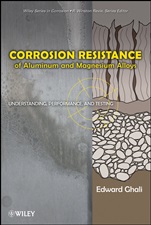
Corrosion Resistance of Aluminum and Magnesium Alloys: Understanding, Performance, and Testing
ISBN 9780471715764
Autor: Edward Ghali, R. Winston Revie
Wydawca: Wiley
Dostępność: 3-6 tygodni
Cena: 935,55 zł
Przed złożeniem zamówienia prosimy o kontakt mailowy celem potwierdzenia ceny.
ISBN13: |
9780471715764 |
ISBN10: |
047171576X |
Autor: |
Edward Ghali, R. Winston Revie |
Oprawa: |
Hardback |
Rok Wydania: |
2010-05-14 |
Ilość stron: |
752 |
Wymiary: |
272x175 |
Tematy: |
PN |
Valuable information on corrosion fundamentals and applications of aluminum and magnesium
Aluminum and magnesium alloys are receiving increased attention due to their light weight, abundance, and resistance to corrosion. In particular, when used in automobile manufacturing, these alloys promise reduced car weights, lower fuel consumption, and resulting environmental benefits.
Meeting the need for a single source on this subject, Corrosion Resistance of Aluminum and Magnesium Alloys gives scientists, engineers, and students a one–stop reference for understanding both the corrosion fundamentals and applications relevant to these important light metals. Written by a world leader in the field, the text considers corrosion phenomena for the two metals in a systematic and parallel fashion. The coverage includes:
The essentials of corrosion for aqueous, high temperature corrosion, and active–passive behavior of aluminum and magnesium alloys
The performance and corrosion forms of aluminum alloys
The performance and corrosion forms of magnesium alloys
Corrosion prevention methods such as coatings for aluminum and magnesium
Electrochemical methods of corrosion investigation and their application to aluminum and magnesium alloys
Offering case studies and detailed references, Corrosion Resistance of Aluminum and Magnesium Alloys provides an essential, up–to–date resource for graduate–level study, as well as a working reference for professionals using aluminum, magnesium, and their alloys.
Spis treści:
Preface.
Acknowledgements.
PART I: ELECTROCHEMICAL FUNDAMENTALS AND ACTIVE–PASSIVE CORROSION BEHAVIORS.
Chapter 1: Fundamentals of Electrochemical Corrosion.
A. Thermodynamic Considerations of Corrosion.
1. Electrolytic Conductance.
1.1. Faraday Laws.
2. Tendency to Corrosion.
3. The Electroche
mical Interface.
3.1. Electric Double Layer.
3.2. Equivalent Circuit of the Electric Double Layer.
4. Nernst Equation.
5. Standard Potentials of Electrodes.
5.1. Standard States in Solution.
5.2. Hydrogen Electrode.
5.3. Positive and Negative Signs of Potentials.
5.4. Graphical Presentation.
B. Activity and Conductance of the Electrolyte.
1. Activity of the Electrolyte.
1.1. Constant and Degree of Dissociation.
1.2. Activity and Concentration.
1.3. Theory of More Concentrated Solutions.
1.4. Electrolytic Conduction.
2. Mobility of Ions.
2.1. Law of Additivity of Kohlrausch.
2.2. Number of Ion Transport Number or Index.
3. Conductance.
4. Potential of Decomposition.
C. The Different Types of Electrodes.
1. Gas Electrodes.
2. Metal – Metal Ion Electrodes.
2.1. Alloyed Electrodes.
3. Metal–Insoluble Salt or Oxide Electrodes.
3.1. Metal–Insoluble Salt Electrodes.
3.2. Metal–Insoluble – Oxide Electrodes.
4. Electrodes of Oxidation – Reduction.
5. Selective Ion Electrodes.
5.1. Glass Electrode.
5.2. Copper Ion–Selective Electrodes.
D. Electrochemical and Corrosion Cells.
1. Chemical Cells.
1.1. Chemical Cell with Transport.
1.2. Chemical Cell without Transport.
1.2.1. The Weston Standard Cell.
2. Concentration Cells.
2.1. Concentration Cell with Difference of Activity at the Electrode.
3. Solvent Corrosion Cells.
3.1. Cathodic Oxydo–Reduction Reaction.
3.2. Displacement Cell.
3.3. Complexing Agent Cells.
3.4. Stray Current Corrosion Cell.
4. Temperature Differential Cells.
5. Overlapping of Different Corrosion Cells.
E. Chemical and Electrochemical Corrosion.
1. Definition and Description of Corrosion.
2. Electrochemical and Chemical Reactions.
2.1. Electrochemical Corrosion.
2.2. The Film–Free Chemical Interaction.
References.
Chapter 2
: Aqueous and High temperature Corrosion.
Overview.
1. Atmospheric Media.
1.1. Description.
1.2. Types of Corrosion.
1.3. Atmospheric Contaminants.
1.4. Corrosion Prevention and Protection.
2. Aqueous environments.
3. Organic Solvent Properties.
4. Underground Media.
5. Water Media Properties.
5.1. Water Composition.
5.2. The Oxidizing Power of Solution.
5.3. Scale Formation and Water Indices.
6. Corrosion at high temperatures.
6.1. Description.
6.2. The Pilling Bedworth relationship "PBR".
6.3. Kinetics of Formation.
6.4. Corrosion behaviors of some alloys at elevated temperatures.
References.
Chapter 3: Active and Passive Behaviors of Al and Mg and their alloys.
1. Potential –pH Diagrams of Al and Mg.
2. Active Behavior and Overpotentials.
2.1. Active Behavior and Polarisation.
2.2. Overpotentials.
3. The Passive Behavior.
3.1. The Phenomenon of Passivation.
3.2. The Passive Layers and their formation.
3.3. Breakdown of Passivity.
3.4. Electrochemical and Physical Techniques for passive film studies.
4. Active and passive Behaviors of Aluminum and its Alloys.
4.1. The E–pH diagram of Aluminum.
4.2. Active and Passive behaviors.
4.3. Pitting Corrosion of AA 5086 Aluminum Alloy.
5. Active and passive Behaviors of Magnesium and its Alloys.
5.1. E–pH Diagram of Mg.
5.2. The Passive Mg Layers (Films).
5.3. Passive properties and stability.
5.4. Temperature Influence in Aqueous Media.
5.5. Atmospheric and High Temperature oxidation.
References.
PART II: PERFORMANCE AND CORROSION FORMS OF ALUMINUM AND ITS ALLOYS.
Chapter 4: Properties, Use and Performance of Aluminum and Alloys.
A. Properties of Aluminum.
1. Physical and General Properties of Aluminum.
2. Cast Aluminum Alloys.
2.1. Designation of Aluminum Cast Alloys and Ingots.
2.2. Alloying elements.
2.3. Cast Alloys Series.
3. Aluminum Wrought alloys.
3.1. Designation of aluminum wrought alloys.
3.2. Alloying elements.
3.3. Aluminum Wrought Alloys Series.
3.4. Description of the Wrought Alloys Series.
4. Aluminum Powders and Aluminum Matrix Composites (AMCs).
4.1. Aluminum Powders.
4.2. Rapid Solidification Process "RSP".
4.3. Aluminum Matrix Composites (AMC) and PM– MMCs.
4.4. Al MMCs Particles and Formation.
B. Use of Aluminum and Aluminum Alloys.
1. Use of Aluminum Cast Alloys.
1.1. Standard General Purpose Aluminum alloys.
1.2. Some Specific Uses.
2. Use of Aluminum Wrought Alloys.
2.1. Aerospatial applications.
2.2. Automotive sheet and structural alloys.
2.3. Shipping.
2.4. Building and Construction.
2.5. Packaging.
2.6. Electrical conductor alloys.
C. Aluminum Performance.
1. Resistance of Al Alloys to Atmospheric corrosion.
2. Factors affecting atmospheric corrosion of Al alloys.
3. Waters Corrosion.
4. Seawater.
5. Soil Corrosion.
6. Some aggressive Media.
6.1. Acid and Alkaline Solutions.
7. Dry and Aqueous Organic Compounds.
8. Gases.
9. Mercury.
10. Corrosion Performance of Alloys.
10.1. Performance of the Cast Series.
10.2. Performance of the wrought series.
11. Aluminum High Temperature Corrosion.
References.
Chapter 5: General, Galvanic and Localized Corrosion of Aluminum and alloys.
A. General Corrosion.
1. General considerations.
2. Description.
3. Mechanisms.
4. Prevention.
4.1. Design considerations.
4.2 Surface Pretreatment.
4.3 Corrosion control.
4.4. Al Alloys and Resistance to General corrosion.
B. Galvanic Corrosion.
1. General considerations.
2. Galvanic Series of Al Alloys.
3. Mechanisms.
3.1. Cu–Al galvanic Cell.
3.2. Mg–Al Galvanic Cell.
3.3. Galvanic Effect of a coating.
4. Deposition corrosion.
5. Stray Current Corrosion.
6. Prevention.<
br>7. Basic Study of Al–Cu Galvanic Corrosion Cell.
C. Localized Corrosion.
1. Pitting Corrosion.
1.1. Occurrence and Morphology.
1.2. Kinetics.
1.3. The Pitting Potential.
1.4. Mechanisms.
1.5. Possible Stages of Pitting.
1.6. Prevention of Pitting Corrosion.
1.7. Corrosion Resistance of Aluminum Cathodes.
2. Crevice Corrosion.
2.1. General Considerations and Description.
2.2. Poultice corrosion.
2.3. Mechanisms.
2.4. Water Stains of AA 3xxx.
3. Filiform Corrosion.
3.1. General Considerations.
3.2. Aluminum Alloys and Filiform Corrosion.
3.3. Kinetics, Mechanism and Prevention.
3.4. Filiform Occurrence.
References.
Chapter 6: Metallurgically and Microbiologically Influenced Corrosion of Aluminum and Alloys.
A. Metallurgically Influenced Corrosion "METIC".
1. Fundamentals of "METIC".
2. Types of Metallurgically Influenced Corrosion.
2.1. Dealloying (Dealuminification).
2.2. Intergranular corrosion.
2.3. Exfoliation.
3. Joining and Welding.
3.1. Corrosion Resistance of Brazed, Soldered and Bonded Joints.
3.2. Welding Fundamentals.
3.3. Welding Influence on Behavior of Aluminum Alloys.
3.4. Frequent Corrosion Types of Welded Aluminum alloys.
3.5. Corrosion Resistance of Wrought and cast Al Alloys.
4. Metal Matrix Composites for nuclear dry waste storage "Al–MMC/B4C".
B. Microbiologically Influenced Corrosion, the basics.
1. The Microorganisms.
1.1. Bacteria (Prokaryotes).
1.2. Fungi and Yeast (Eucaryotes).
1.3. Algae (Eukaryotes).
1.4. Lichens.
2. Natural and Artificial Media.
2.1. Air Media.
2.2. Aqueous Media.
2.3. Soils.
3. Anaerobic and Aerobic Bacteria in Action.
3.1. Anaerobic Bacteria.
3.2. Aerobic bacteria.
3.3. Co–action of Anaerobic and Aerobic Bacteria.
4. MIC of Aluminum and Aluminum alloys.
4.1. Fungi and bacteria (Space).
4.2. Geotrichum (Tropical Atmosphere
).
4.3. Cyanobacteria and Algae (Polluted Freshwater).
4.4. Rod–Shaped Bacteria and Algae (Polluted seawater).
4.5. SRB (Industrial and sea waters).
4.6. Hormoconis resinae (Kerosene).
5. Mechanisms of MIC and Inhibition.
5.1. Corrosion Mechanisms.
5.2. Influence of Biofilms on Passive Behavior of Aluminum.
5.3. Corrosion Inhibition by Microorganisms.
6. MIC Prevention and control.
References.
Chapter 7: Mechanically Assisted Corrosion of Aluminum and Alloys.
A. Corrosion – Erosion.
1. Impingement with Liquid containing solid particles.
2. Corrosion by cavitation.
3. Water drop impingement Corrosion.
4. Fretting Corrosion.
5. Fretting Fatigue Corrosion.
6. Prevention of Erosion Corrosion.
B. Corrosion fatigue.
1. General Considerations and Morphology.
2. Parameters.
2.1. Environmental Considerations.
2.2. Cyclic Stresses.
2.3. Material Factors.
3. Mechanisms of Corrosion Fatigue.
4. CF of Al Alloys.
4.1. Corrosion Fatigue of the Alloy AA–7017–T651.
4.2. CF of AA 7075 Alloy–T6.
4.3. Corrosion Fatigue of Al–Mg–Si as compared to Al–Mg alloys.
4.4. Modeling of the propagation of fatigue cracks in aluminum alloys.
5. Prevention of Corrosion Fatigue.
References.
Chapter 8: Environmentally Induced Cracking of Aluminum and Alloys.
1. Introduction and Definition of SCC.
2. Key Parametres.
2.1. The stress.
2.2. The environment.
3. Parameters of SCC of Aluminum Alloys.
3.1. Influence of the Stress.
3.2. Role of the environment.
4. SCC Mechanisms.
4.1. Overlapping of Cracking Phenomena.
4.2. Signification of the Magnitude of Strain Rates.
4.3. Cracking Initiation and Propagation.
5. SCC of aluminum Alloys.
5.1. SCC resistance of aluminum alloys.
5.2. Influence of Heat Treatments on Corrosion forms.
6. SCC of Welded Aluminum Alloys.
6.1. Galvanic Corrosion an
d SCC of Welded Assemblies.
6.2. SCC "Knife–Line Attack".
6.3. Localized Corrosion and SCC of LBW AA6013.
6.4. Mechanically Influenced Corrosion and SCC of Welds.
6.5. Corrosion Fatigue of FSW White Zone.
6.6. SCC of Friction stir welded 7075 and 6056 Alloys.
6.7. SCC of FSW of 7075–T651 and 7050–T451 Alloys.
7. Prevention of SCC.
7.1. Design and Stresses.
7.2. Environmental Considerations.
7.3. Metallurgical considerations.
7.4. Surface Modification.
7.5. Prevention of Hydrogen Damage.
References.
PART III: PERFORMANCE AND CORROSION FORMS OF MAGNESIUM AND ITS ALLOYS.
Chapter 9: Properties, Use and Performance of Magnesium and Alloys.
A. Properties of Magnesium alloys.
1. Physical and General Properties of Magnesium.
2. Properties of Cast Magnesium Alloys.
2.1. Designation of Magnesium Cast Alloys.
2.2. Alloying elements.
2.3. Magnesium Cast Alloys Series.
3. Properties of Wrought Magnesium Alloys.
4. Magnesium Powder.
5. Magnesium Composites.
6. Particles reinforcing magnesium alloy matrix.
B. Use of Magnesium and Magnesium Alloys.
1. Applications of Magnesium Cast Alloys.
1.1. Automotive and Aerospace Applications.
1.2. Application as refractory material.
1.3. Other Uses.
2. Applications of Magnesium Wrought Alloys.
C. Magnesium Performance.
1. Resistance of Mg alloys to atmospheric corrosion.
2. Factors affecting atmospheric corrosion of Mg alloys.
3. Waters Corrosion.
4. Salt Solutions.
5. Acid and Alkaline Solutions.
6. Aqueous Organic Compounds.
7. Dry Organic Compounds.
8. Gases at ambient temperature up to ÷100oC.
9. Magnesium High Temperature Corrosion.
References.
Chapter 10: General, Galvanic and Localized Corrosion of Magnesium and Alloys.
A. General Corrosion.
1. Corrosion Resistance of Passive Magnesium.
1.1. Ecorr and Corrosion Rates in Natural
and Aqueous Media.
1.2. Corrosion Rate Methods of Mg–Al Alloys.
1.3. Critical Evaluation of the Passive Properties of Magnesium Alloys.
2. The Negative Difference Effect "NDE".
3. Kinetic studies of General and Pitting Corrosion of Mg alloys.
3.1. Electrochemical noise Studies.
4. Corrosion Prevention.
B. Galvanic Corrosion.
C. Localized Corrosion.
1. Pitting Corrosion.
1.1. The Pitting Potential Determination.
1.2. Polarization Curves and Pitting Potential of AXJ Alloy.
2. Crevice Corrosion.
3. Filiform Corrosion.
3.1. Initiation and Kinetics Parametres.
3.2. Mechanism of Propagation.
References.
Chapter 11: Metallurgically and Microbiologically influenced Corrosion of Magnesium and Alloys.
A. Metallurgically Influenced Corrosion of Mg Alloys.
1. Casting Alloys and Alloying Elements.
1.1. Casting Alloys.
1.2. Magnesium–Rare Earth, Thorium and Silver Alloys.
1.3. Alloying Elements and Tolerance Limit.
2. Corrosion influenced by metallurgical properties.
2.1. Galvanic Corrosion and Secondary Phases.
2.2. Intergranular Corrosion "IGC".
2.3. Exfoliation Corrosion.
2.4. High temperature Corrosion and Creep Deformation.
2.5. Microstructure and Corrosion Creep of Magnesium Die–cast alloys.
2.6. The OCP, icorr and Corrosion Creep (Schneider et al. 2007)36.
2.7. Corrosion Creep and Aging.
2.8 Corrosion Creep of High Strength AE42 and MEZ.
3. Influence of the Microstructure, Different Phases and Welding.
3.1. Influence of Heat Treatments.
3.2. Effect of Rapid Solidification.
3.3. Influence of the Microstructure of Some Mg Alloys.
3.4. Influence of Joining and Welding.
3.5. Cold–Chamber Processes.
3.6. Hot–Chamber Processes and Corrosion Resistance of Thin Plates.
B. MIC of Magnesium and Magnesium alloys.
1. Rational Degradation.
1.1. Behavior of Sacrficial Magnesium.
1.2. Rational Bioc
Koszyk
Książek w koszyku: 0 szt.
Wartość zakupów: 0,00 zł
Informacje


Kontakt
Gambit
Centrum Oprogramowania
i Szkoleń Sp. z o.o.
Al. Pokoju 29b/22-24
31-564 Kraków
Siedziba Księgarni
ul. Kordylewskiego 1
31-542 Kraków
+48 12 410 5991
+48 12 410 5987
+48 12 410 5989
Subskrypcje
Administratorem danych osobowych jest firma Gambit COiS Sp. z o.o. Na podany adres będzie wysyłany wyłącznie biuletyn informacyjny.
Autoryzacja płatności

Informacje na temat autoryzacji płatności poprzez PayU.

© Copyright 2012: GAMBIT COiS Sp. z o.o. Wszelkie prawa zastrzeżone.
Projekt i wykonanie: Alchemia Studio Reklamy