


Wydawcy
Katalog tematyczny
- Archeologia (109)
- Ekonomia, finanse, business (13704)
- Filozofia (1445)
- Historia (3040)
- Języki i językoznawstwo (2356)
- Lifestyle, hobby i rozrywka (475)
- Medycyna (9704)
- Nauki humanistyczne (4)
- Nauki o Ziemi i środowisku (2638)
- Nauki ścisłe (20412)
- Nauki społeczne (8486)
- Nauki techniczne (13450)
- Budownictwo lądowe (1045)
- Chemia przemysłowa (2258)
- Elektronika i telekomunikacja (3287)
- Energetyka (1122)
- Inne nauki stosowane (363)
- Inżynieria biochemiczna (507)
- Inżynieria transportu (232)
- Mechanika i materiały (3316)
- Nauka o środowisku (321)
- Rolnictwo (507)
- Technika, ogólnie (475)
- Prawo (1696)
- Publikacje informacyjne i interdyscyplinarne (1288)
- Religia i wierzenia (917)
- Technika komputerowa (4067)
- Zdrowie, relacje międzyludzkie i rozwój osobisty (657)





Informacje szczegółowe o książce
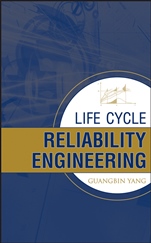
Life Cycle Reliability Engineering
ISBN 9780471715290
Autor: Guang Yang
Wydawca: Wiley
Dostępność: 3-6 tygodni
Cena: 757,05 zł
Przed złożeniem zamówienia prosimy o kontakt mailowy celem potwierdzenia ceny.
ISBN13: |
9780471715290 |
ISBN10: |
0471715298 |
Autor: |
Guang Yang |
Oprawa: |
Hardback |
Rok Wydania: |
2007-02-20 |
Ilość stron: |
544 |
Wymiary: |
244x163 |
Tematy: |
TG |
Product reliability engineering from concept to marketplace
In today′s global, competitive business environment, reliability professionals are continually challenged to improve reliability, shorten design cycles, reduce costs, and increase customer satisfaction. Life Cycle Reliability Engineering details practical, effective, and up–to–date techniques to assure reliability throughout the product life cycle, from planning and designing through testing and warranting performance. These techniques allow ongoing quality initiatives, including those based on Six Sigma and the Taguchi methods, to yield maximized output. Complete with real–world examples, case studies, and exercises, this resource covers:Reliability definition, metrics, and product life distributions (exponential, Weibull, normal, lognormal, and more)Methodologies, tools, and practical applications of system reliability modeling and allocationRobust reliability design techniquesPotential failure mode avoidance, including Failure Mode and Effects Analysis (FMEA) and Fault Tree Analysis (FTA)Accelerated life test methods, models, plans, and data analysis techniquesDegradation testing and data analysis methods, covering both destructive and nondestructive inspectionsPractical methodologies for reliability verification and screeningWarranty policies, data analysis, field failure monitoring, and warranty cost reduction
All reliability techniques described are immediately applicable to product planning, designing, testing, stress screening, and warranty analysis. This book is a must–have resource for engineers and others responsible for reliability and quality and for graduate students in quality and reliability engineering courses.
Spis treści:
Preface.
1. Reliability Engineering and Product Life Cycle.
1.1.Reliability Engineering.
1.2.Product Life Cycle.
1.3.Integration of
Reliability Engineering into Product Life Cycle.
1.4.Reliability in Concurrent Product Realization Process.
Problems.
2. Reliability Definition, Metrics and Product Life Distributions.
2.1.Introduction.
2.2.Reliability Definition.
2.3. Reliability Metrics.
2.4.Exponential Distribution.
2.5.Weibull Distribution.
2.6.Mixed Weibull Distribution.
2.7.Smallest Extreme Value Distribution.
2.8.Normal Distribution.
2.9.Lognormal distribution.
Problems.
3. Reliability Planning and Specification.
3.1.Introduction.
3.2.Understanding Customer Expectations and Satisfaction.
3.3.Setting Reliability Requirements.
3.4.Reliability Program Development.
3.5.Reliability Design and Design for Six Sigma.
Problems.
4. System Reliability Evaluation and Allocation.
4.1.Introduction.
4.2.Reliability Block Diagram.
4.3.Series Systems.
4.4.Parallel Systems.
4.5.Mixed Configurations.
4.6.k–out–of–n Systems.
4.7.Redundant Systems.
4.8.Reliability Evaluation of Complex Systems.
4.9.Confidence Intervals for System Reliability.
4.10. Measures of Component Importance.
4.11. Reliability Allocation.
Problems.
5. Reliability Improvement Through Robust Design.
5.1.Introduction.
5.2.Reliability and Robustness.
5.3.Reliability Degradation and Quality Loss.
5.4.Robust Design Process.
5.5.Boundary Definition and Interaction Analysis.
5.6.P–Diagram.
5.7.Noise Effects Management.
5.8.Design of Experiments.
5.9.Experimental Life Data Analysis.
5.10. Experimental Degradation Data Analysis.
5.11. Design Optimization.
5.12. Robust Reliability Design of Diagnostic Systems.
5.13. A Case Study.
5.14. Advanced Topics on Robust Design.
Appendix: Orthogonal Arrays, Linear Graphs and Interaction Tables.
Problems.
6. Potential Failure Mode Avoidance.
6.1.Introduction.
6.2.Failure Mode and Effects Analysis
.
6.3.Advanced Topics on FMEA.
6.4.Fault Tree Analysis.
6.5.Advanced Topics on FTA.
6.6.Computer–Aided Design Controls.
Problems.
7. Accelerated Life Tests.
7.1.Introduction.
7.2.Development of Test Plans.
7.3.Common Stresses and Their Effects.
7.4.Life–Stress Relationships.
7.5.Graphical Reliability Estimation at Individual Test Conditions.
7.6.Analytical Reliability Estimation at Individual Test Conditions.
7.7.Reliability Estimation at Use Condition.
7.8.Compromise Test Plans.
7.9.Highly Accelerated Life Tests.
Problems.
8. Degradation Testing and Analysis.
8.1.Introduction.
8.2.Determination of Critical Performance Characteristic.
8.3.Reliability Estimation from Pseudo Life.
8.4.Degradation Analysis with Random–Effect Models.
8.5.Degradation Analysis for Destructive Inspections.
8.6.Stress–Accelerated Degradation Tests.
8.7.Accelerated Degradation Tests with Tightened Thresholds.
8.8.Accelerated Degradation Test Planning.
Problems.
9. Reliability Verification Testing.
9.1.Introduction.
9.2.Planning Reliability Verification Tests.
9.3.Bogey Testing.
9.4.Sample Size Reduction by Tail–Testing.
9.5.Sequential Life Testing.
9.6.Reliability Verification Using Prior Information.
9.7.Reliability Verification Through Degradation Testing.
Problems.
10. Stress Screening.
10.1 .Introduction.
10.2 . Concept of Screening Techniques.
10.3 . Design of Screen Plans.
10.4 .Principle of Degradation Screening.
10.5 .Part–Level Degradation Screening.
10.6 .Module–Level Screening.
10.7 .Module Reliability Modeling.
10.8 .Cost Modeling.
10.9 .Optimal Screen Plans.
Problems.
11. Warranty Analysis.
11.1. Introduction.
11.2. Warranty Policies.
11.3. Warranty Data Mining.
11.4. Reliability Estimation from Warranty Claim Times.
11.5. Two–Dimensional Reli
ability Estimation.
11.6. Warranty Repair Modeling.
11.7. Warranty Cost Estimation.
11.8. Field Failure Monitoring.
11.9. Warranty Cost Reduction.
Problems.
Appendix: Orthogonal Arrays, Linear Graphs, and Interaction Tables.
References.
Index.
Nota biograficzna:
DR. GUANGBIN YANG is a Reliability Technical Expert at Ford Motor Company. He is Chair of the Automotive Systems Committee of the IEEE Reliability Society and was the recipient of the Society′s Engineer of the Year Award for 2002. A recognized leader in areas of reliability and quality, he has published numerous articles in technical journals.
Okładka tylna:
Product reliability engineering from concept to marketplace
In today′s global, competitive business environment, reliability professionals are continually challenged to improve reliability, shorten design cycles, reduce costs, and increase customer satisfaction. Life Cycle Reliability Engineering details practical, effective, and up–to–date techniques to assure reliability throughout the product life cycle, from planning and designing through testing and warranting performance. These techniques allow ongoing quality initiatives, including those based on Six Sigma and the Taguchi methods, to yield maximized output. Complete with real–world examples, case studies, and exercises, this resource covers:Reliability definition, metrics, and product life distributions (exponential, Weibull, normal, lognormal, and more)Methodologies, tools, and practical applications of system reliability modeling and allocationRobust reliability design techniquesPotential failure mode avoidance, including Failure Mode and Effects Analysis (FMEA) and Fault Tree Analysis (FTA)Accelerated life test methods, models, plans, and data analysis techniquesDegradation testing and data analysis methods, covering both destructive and nondestructiv
Koszyk
Książek w koszyku: 0 szt.
Wartość zakupów: 0,00 zł
Informacje


Kontakt
Gambit
Centrum Oprogramowania
i Szkoleń Sp. z o.o.
Al. Pokoju 29b/22-24
31-564 Kraków
Siedziba Księgarni
ul. Kordylewskiego 1
31-542 Kraków
+48 12 410 5991
+48 12 410 5987
+48 12 410 5989
Subskrypcje
Administratorem danych osobowych jest firma Gambit COiS Sp. z o.o. Na podany adres będzie wysyłany wyłącznie biuletyn informacyjny.
Autoryzacja płatności

Informacje na temat autoryzacji płatności poprzez PayU.

© Copyright 2012: GAMBIT COiS Sp. z o.o. Wszelkie prawa zastrzeżone.
Projekt i wykonanie: Alchemia Studio Reklamy