


Wydawcy
Katalog tematyczny
- Archeologia (109)
- Ekonomia, finanse, business (13704)
- Filozofia (1445)
- Historia (3040)
- Języki i językoznawstwo (2356)
- Lifestyle, hobby i rozrywka (475)
- Medycyna (9704)
- Nauki humanistyczne (4)
- Nauki o Ziemi i środowisku (2638)
- Nauki ścisłe (20412)
- Nauki społeczne (8486)
- Nauki techniczne (13450)
- Prawo (1696)
- Publikacje informacyjne i interdyscyplinarne (1288)
- Religia i wierzenia (917)
- Technika komputerowa (4067)
- Zdrowie, relacje międzyludzkie i rozwój osobisty (657)





Informacje szczegółowe o książce
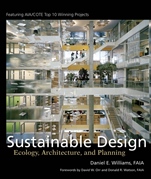
Sustainable Design: Ecology, Architecture, and Planning
ISBN 9780471709534
Autor: Daniel E. Williams, David W. Orr, Donald Watson
Wydawca: Wiley
Dostępność: 3-6 tygodni
Cena: 449,40 zł
Przed złożeniem zamówienia prosimy o kontakt mailowy celem potwierdzenia ceny.
ISBN13: |
9780471709534 |
ISBN10: |
0471709530 |
Autor: |
Daniel E. Williams, David W. Orr, Donald Watson |
Oprawa: |
Hardback |
Rok Wydania: |
2007-05-18 |
Ilość stron: |
304 |
Wymiary: |
236x207 |
Tematy: |
AM |
Meeting the Challenge of Sustainable Design "Daniel Williams′s Sustainable Design is . . . a thoroughly practical call for the design professions to take the next steps toward transformation of the human prospect toward a future that is sustainable and sustaining of the best in human life lived in partnership not domination." —From the Foreword by David W. Orr, the Paul Sears Distinguished Professor of Environmental Studies and Politics and Chair of the Environmental Studies Program at Oberlin College "In this pioneering book, Daniel Williams provides the sort of intelligent, thoughtful, experienced insights that—if followed—will ensure that we make the right choices. It should be on the desk of every architect in the world." —Denis Hayes, president and CEO of the Bullitt Foundation and coordinator of the first Earth Day in 1970 Architects identify "sustainability" as the most important change in the future of their profession. Sustainable Design: Ecology, Architecture, and Planning is a practical, comprehensive guide to design and plan a built environment compatible with the region′s economic, social, and ecological patterns. In this book, Daniel Williams challenges professionals to rethink architecture and to see their projects not as objects but as critical, connected pieces of the whole, essential to human health as well as to regional economy and ecology. Comprehensive in scope, Sustainable Design answers key questions such as: How do I begin thinking and designing ecologically? What is the difference between "green design" and "sustainable design"? What are some examples of effective change I can make that will have the most impact for the least cost? Written for architects, planners, landscape architects, engineers, public officials, and change agent professionals, this important resource defines the issues of sustainable design, illustrates conceptual and case studies, and provides support for continued learning in this increasingly central focus of architects′ and urban planners′ work. Williams′s book features winning projects from the first decade of the AIA′s Committee on the Environment (COTE) Top Ten award program.
Foreword by David W. Orr. Foreword by Donald Watson, FAIA. Preface. Acknowledgments. Introduction. Part 1. CHAPTER ONE: The Ecological Model. Ecology. Ecology as a Model. Waste Debts. The Value of Land. Paradigm Shift. Thinking as a System: Connectivity, Not Fragmentation. CHAPTER TWO: Sustainable Design. Where Do We Want to Go? Design Matters. Why Architects? Green Design versus Sustainable Design. Why Now? Approaching Sustainability. Place–Based Energy and Resources. Principles for Designing Sustainably. Where to Start? CHAPTER THREE: Regional Design. Evolving from Nonrenewables. Another Weak Link: The Power Grid. The Regional Design. Water: A Common Denominator. Make No Small Plans. The Regional Design Process. Regional Case Studies. Cache Valley, Utah. Farmington, Minnesota: Building within the Community Watershed. Smart Growth: Southeast Florida Coastal Communities. CHAPTER FOUR: Sustainable Urban and Community Design. A Matter of Place. Principles for Sustainable Communities. Regional Ecology and Biourbanism. Sustainable Urban and Community Case Studies. Lessons from Belle Glade: Can We Save the Everglades and Sustain Agriculture? Rio Nuevo Master Plan. Growing the Great River Park. CHAPTER FIVE: Architectural Design. The Site: Challenges and Opportunities. Site Design and Environmental Analysis. Sustainable Infrastructure. The Skin. Evolving a Sustainable Design Practice. Sustainable Design and Existing Buildings. Sustainable Interior Architecture. Part 2. CHAPTER SIX: The AIA/COTE Top Ten Green Projects Program. 1997 AIA/COTE Top Ten Green Projects. 1998 AIA/COTE Top Ten Green Projects. 1999 AIA/COTE Top Ten Green Projects. 2000 AIA/COTE Top Ten Green Projects. 2001 AIA/COTE Top Ten Green Projects. 2002 AIA/COTE Top Ten Green Projects. 2003 AIA/COTE Top Ten Green Projects. 2004 AIA/COTE Top Ten Green Projects. 2005 AIA/COTE Top Ten Green Projects. 2006 AIA/COTE Top Ten Green Projects. Afterword. Sustainability Terms. Bibliography. Index. Photo Credits.
Daniel E. Williams , FAIA, a Seattle–based architect and urban planner, is a nationally recognized expert in sustainable architecture and planning. Williams was the 2003 chair of the AIA′s Committee on the Environment (COTE), and he chaired the AIA Sustainable Task Group in 2006. His projects, which range from residences to regional plans, connect ecology, economic development, transportation, agriculture, education, and natural resource protection.
"In the case of the new book "Sustainable Design", the intended reader is likely an architect new to sustainability, looking to follow up the HOK book. Williams serves them well with an authoritative introduction to key defining sustainable versus green design." ( Architectural Record , November 2009) "Williams, a noted architect and planner, looks at the applicability of sustainable design at all scales – from the region to the community to the building. The major outcome of this book is a well–reasoned argument for a drastic renovation of the way design is taught, considered and performed." ( Planetizen.com ; 1/29/08) "…the intended reader is likely an architect, new to sustainability…in that respect, Williams serves them well with an authoritative introduction to key issues and terms, most notably a persuasive argument defining sustainable versus green design." ( Architectural Record ; 10/2007)
Koszyk
Książek w koszyku: 0 szt.
Wartość zakupów: 0,00 zł
Informacje


Kontakt
Gambit
Centrum Oprogramowania
i Szkoleń Sp. z o.o.
Al. Pokoju 29b/22-24
31-564 Kraków
Siedziba Księgarni
ul. Kordylewskiego 1
31-542 Kraków
+48 12 410 5991
+48 12 410 5987
+48 12 410 5989
Subskrypcje
Administratorem danych osobowych jest firma Gambit COiS Sp. z o.o. Na podany adres będzie wysyłany wyłącznie biuletyn informacyjny.
Autoryzacja płatności

Informacje na temat autoryzacji płatności poprzez PayU.

© Copyright 2012: GAMBIT COiS Sp. z o.o. Wszelkie prawa zastrzeżone.
Projekt i wykonanie: Alchemia Studio Reklamy