


Wydawcy
Katalog tematyczny
- Archeologia (109)
- Ekonomia, finanse, business (13704)
- Filozofia (1445)
- Historia (3040)
- Języki i językoznawstwo (2356)
- Lifestyle, hobby i rozrywka (475)
- Medycyna (9704)
- Nauki humanistyczne (4)
- Nauki o Ziemi i środowisku (2638)
- Nauki ścisłe (20412)
- Nauki społeczne (8486)
- Nauki techniczne (13450)
- Prawo (1696)
- Publikacje informacyjne i interdyscyplinarne (1288)
- Religia i wierzenia (917)
- Technika komputerowa (4067)
- Zdrowie, relacje międzyludzkie i rozwój osobisty (657)





Informacje szczegółowe o książce
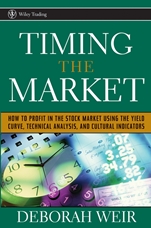
Timing the Market: How to Profit in the Stock Market Using the Yield Curve, Technical Analysis, and Cultural Indicators
ISBN 9780471708988
Autor: Deborah Weir
Wydawca: Wiley
Dostępność: 3-6 tygodni
Cena: 394,80 zł
Przed złożeniem zamówienia prosimy o kontakt mailowy celem potwierdzenia ceny.
ISBN13: |
9780471708988 |
ISBN10: |
0471708984 |
Autor: |
Deborah Weir |
Oprawa: |
Hardback |
Rok Wydania: |
2005-11-22 |
Ilość stron: |
412 |
Wymiary: |
236x159 |
Tematy: |
KF |
The first definitive guide to understanding and profiting from the relationship between the stock market and interest rates
It′s well established that interest rates significantly impact the stock market. This is the first book that definitively explores the interest rate/stock market relationship and describes a specific system for profiting from the relationship. Timing the Market provides an historically proven system, rooted in fundamental economics, that allows investors and traders to forecast the stock market using data from the interest rate markets–together with supporting market sentiment and cultural indicators–to pinpoint and profit from major turns in the stock market.
Deborah Weir (Greenwich, CT) is President of Wealth Strategies, a firm that does marketing for traditional money managers and hedge funds. She is a Chartered Financial Analyst and is the first woman president of the Stamford CFA Society.
Spis treści:
Acknowledgments.
Introduction.
PART I: Yield Curve Analysis.
Chapter 1: Demystifying the Investment World.
Chapter 2: Back of the Envelope Forecast Model.
Chapter 3: Money Markets Matter.
Chapter 4: Long–Term Bonds Give Advance Warning.
Chapter 5: Expected Returns for the Stock Market.
Chapter 6: Bond Quality Spreads.
Chapter 7: Federal Funds Rates.
Chapter 8: Summary of Yield Curve Analysis.
PART II: Technical Analysis.
Chapter 9: Market Breadth: Advancing Issues in the Dow.
Chapter 10: The Volatility Index.
Chapter 11: The Put/Call Ratio.
Chapter 12: Moving Averages.
Chapter 13: Using Moving Averages: The MACD Line.
Chapter 14: Leverage: Short Positions and Margin Debt.
Chapter 15: Summary of Technical Analysis.
PART III: Cultural Indicators.
Chapter 16: Changing Standards of Feminine Beauty.
Chapter 17: Demographics.
Chapter 18: Corporate Spending.
Chapter 19: War and Rumors of War.
Chapter 20: Summary of Cultural Indicators.
PART IV: Choosing Investments.
Chapter 21: Asset Classes.
Chapter 22: Mutual Funds.
Chapter 23: Exchange–Traded Funds.
Chapter 24: Security Selection.
Chapter 25: Final Summary.
PART V: Capitalism at Work.
Chapter 26: Outrageous Wall Street Stories.
Chapter 27: America! America! God Shed His Grace on Thee.
APPENDIXES.
2.1 Yield Curves and the S&P 500 Index, 1960–2004.
2.2 Chapter 2 Return Calculations.
3.1 U.S. Treasury Bill Spreads, 1960–2004.
3.2 Chapter 3 Return Calculations.
6.1 Speculative Bond Spreads (Ba1 and Lower Rated), 1991–2003.
7.1 Federal Funds Rates during 1987, 1998, 2001 Bear Markets.
7.2 Chapter 7 Return Calculations.
8.1 Ten–Year Note Total Return Index, 1960–2004.
9.1 All 30 Dow Industrial Stocks Fell on July 19, 2002.
9.2 Chapter 9 Return Calculations.
16.1 Playmate of the Year, S&P 500 Index, and the Russell 2000 Index, 1960–2000.
16.2 Monthly Playmates and the S&P 500 Index, 1982–2004.
19.1 Gross Domestic Product and War, 1800–2004.
19.2 S&P 500 Index and War, 1800–2004.
19.3 War in Iraq and the S&P 500 Index, 1990–1991.
19.4 War in Iraq and the S&P 500 Index, 2002–2003.
19.5 Chapter 19 Return Calculations, 1960–2002.
20.1 Part Three Return Calculations, 1960–2005.
21.1 Changes in Housing Prices, 1970–2004.
21.2 Returns Including Treasury Bills, 1960–2004.
21.3 Year–End Prices of Gold, 1800–2004.
21.4 Returns Including Gold, 1974–2004.
21.5 Euro Exchange Rates and U.S. Business Cycles, 1969–2004.
23.1 Gold and Nasdaq Return Calculations, 1974–2004.
23.2 Nasdaq Composite, 1984–2005.
24.1 Nasdaq and Centex Return Calculations, 1990–2005.
24.2 Nasdaq and Placer Dome Return Calculations, 19
90–2005.
Sources and Suggested Reading.
Index.
About the Author.
Koszyk
Książek w koszyku: 0 szt.
Wartość zakupów: 0,00 zł
Informacje


Kontakt
Gambit
Centrum Oprogramowania
i Szkoleń Sp. z o.o.
Al. Pokoju 29b/22-24
31-564 Kraków
Siedziba Księgarni
ul. Kordylewskiego 1
31-542 Kraków
+48 12 410 5991
+48 12 410 5987
+48 12 410 5989
Subskrypcje
Administratorem danych osobowych jest firma Gambit COiS Sp. z o.o. Na podany adres będzie wysyłany wyłącznie biuletyn informacyjny.
Autoryzacja płatności

Informacje na temat autoryzacji płatności poprzez PayU.

© Copyright 2012: GAMBIT COiS Sp. z o.o. Wszelkie prawa zastrzeżone.
Projekt i wykonanie: Alchemia Studio Reklamy