


Wydawcy
Katalog tematyczny
- Archeologia (109)
- Ekonomia, finanse, business (13704)
- Filozofia (1445)
- Historia (3040)
- Języki i językoznawstwo (2356)
- Lifestyle, hobby i rozrywka (475)
- Medycyna (9704)
- Nauki humanistyczne (4)
- Nauki o Ziemi i środowisku (2638)
- Nauki ścisłe (20412)
- Nauki społeczne (8486)
- Nauki techniczne (13450)
- Prawo (1696)
- Publikacje informacyjne i interdyscyplinarne (1288)
- Religia i wierzenia (917)
- Technika komputerowa (4067)
- Zdrowie, relacje międzyludzkie i rozwój osobisty (657)





Informacje szczegółowe o książce
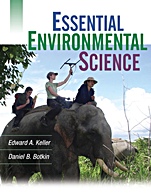
Essential Environmental Science
ISBN 9780471704119
Autor: Edward A. Keller, Daniel B. Botkin
Wydawca: Wiley
Dostępność: 3-6 tygodni
Cena: 1 126,65 zł
Przed złożeniem zamówienia prosimy o kontakt mailowy celem potwierdzenia ceny.
ISBN13: |
9780471704119 |
ISBN10: |
0471704113 |
Autor: |
Edward A. Keller, Daniel B. Botkin |
Oprawa: |
Paperback |
Rok Wydania: |
2007-10-30 |
Numer Wydania: |
1st Edition |
Ilość stron: |
480 |
Wymiary: |
274x216 |
Tematy: |
AT |
There are about 30,000 Asian elephants in the wild. What are the causes behind the decline? What can be done about saving the elephant population from extinction while also benefiting the growing human population?
Dr. Melissa Songer and Danielle Shanahan, scientists from teh Conservation GIS Lab at the Smithsonian National Zoological Park, Track wild Asian elephants in the Bago Yoma, Myanmar, with the help of a timber elephant and his mahout, a Hindi word for keeper of elephants. Satellite collars are deployed on 4 elephants in Myanmar, allowing scientists to remotely monitor elephant movements, even through dense forest and steep terrain. Data from the collars provides insight into the requirements of their habitat, dynamics, of their seasonal movements, and home range size. The land of Bago Yoma shown here is steadily being converted to agriculture to help feed the growing human population in the area. As people encroach on elephant habitat, there is an increase in human–elephant conflicts that are detrimental to both sides. Analysis of elephant movement data and community assessments will help to develop and implement new land–use strategies that will minimize conflict and benefit elephants and people.
This work is part of a larger research program led by Dr. Peter Leimgruber, assessing the ecology and conservation status of Asian elephants in Myanmar.
Spis treści:
Chapter 1. Fundamental Issues in Environmental Science.
Big Question: Why is Science Necessary to Solve Environmental Problems?
Case Study: Easter Island.
1.1 Fundamental Principles.
1.2 Human Population: The Basic Environmental Problem.
1.3 Sustainability.
Earth′s Carrying Capacity.
1.4 A Global Perspective.
1.5 Cities Affect the Environment.
1.6 People and Nature.
1.7 Science and Values.
1.8 Solving Many Environmental Problems Involves Systems and Rates of Change.
Environmental Unity.
Changes an
d Equilibriums in Systems.
Biota: Biosphere and Sustaining Life Characteristics of Environmental Systems That Make Solving Environmental Problems Harder.
1.9 The Precautionary Principle: When in Doubt, Play It Safe.
Return to the Big Question.
Summary.
Key Terms.
Getting It Straight.
What Do You Think?
Pulling It All Together.
Chapter 2. Human Population Growth.
Big Question: Why is it the Underlying Environmental Problem?
Case Study: How the Great Tsunami of 2004 Affected the Human Population.
2.1 How Populations Change Over Time: Basic Concepts of Population Dynamics.
The Prophecy of Malthus.
2.2 Population Growth.
How Many People Have Lived on Earth?
2.3 The Logistic Growth Curve.
2.4 Other Clues to How Our Population May Change.
Age Structure.
The Demographic Transition.
Human Death Rates and the Rise of Industrial Societies.
Longevity and Its Effect on Population Growth.
Life Expectancy.
2.5 Limiting Factors.
The Quality of Life and the Human Carrying Capacity of Earth.
2.6 How Can We Achieve Zero Population Growth?
2.7 How Many People Can Earth Support?
Return to the Big Question.
Summary.
Key Terms.
Getting It Straight.
What Do You Think?
Pulling It All Together.
Further Reading.
Chapter 3. Biogeochemical Cycles.
Big Question: Why Are Biogeochemical Cycles Essential to Long Term Life on Earth?
Case Study: Lake Washington.
3.1 How Chemicals Cycle.
Biogeochemical Cycles.
Chemical Reactions.
3.2 Environmental Questions and Biogeochemical Cycles.
Biological Questions.
Geologic Questions.
Atmospheric Questions.
Hydrologic Questions.
3.3 Biogeochemical Cycles and Life: Limiting Factors.
3.4 General Concepts Central to Biogeochemical Cycles.
3.5 The Geologic Cycle.
The Tectonic Cycle.
The Hydrologic Cycle.
The Rock Cycle.
3.6 Biogeochemical Cycling in Ecosystems.
E
cosystem Cycles of a Metal and a Nonmetal.
Chemical Cycling and the "Balance of Nature".
3.7 Some Major Global Chemical Cycles.
The Carbon Cycle.
The Missing Carbon Sink.
The Nitrogen Cycle.
The Phosphorus Cycle.
Return to the Big Question.
Summary.
Key Terms.
Getting It Straight.
What Do You Think?
Pulling It All Together.
Further Reading.
Chapter 4. Ecosystems.
Big Question: What is Necessary to Sustain Life on Earth?
Case Study: The Acorn Connection.
4.1 How Populations Change Over Time and Interact with Each Other.
4.2 Professions and Places: The Ecological Niche and the Habitat.
Measuring Niches.
4.3 The Competitive Exclusion Principle.
4.4 How Species Coexist.
4.5 Symbiosis.
4.6 The Community Effect.
4.7 The Ecosystem: Sustaining Life on Earth.
4.8 Basic Characteristics of Ecosystems.
4.9 Food Webs.
4.10 Ecosystem Energy Flow.
Life and the Laws of Thermodynamics.
Producing New Organic Matter.
Practical Implication I: Human Domination of Ecosystems.
Practical Implication II: Ecosystem Management.
Return to the Big Question.
Summary.
Key Terms.
Getting It Straight.
What Do You Think?
Pulling It All Together.
Further Reading.
Chapter 5. Biological Diversity.
Big Question: Can We Save Endangered Species and Keep Biological Diversity High?
Case Study: The Shrinking Mississippi Delta.
5.1 What is Biological Diversity?
5.2 Biological Evolution.
Mutation.
Natural Selection.
Migration.
Genetic Drift.
Biological Evolution in Action Today: Mosquitoes and the Malaria Parasite.
5.3 Ecology.
5.4 Basic Concepts of Biological Diversity.
5.5 The Number of Species on Earth.
5.6 Why Are There Many Species in Some Places and Not in Others?
5.7 What Can We Do to Save Endangered Species?
5.8 Why Save Endangered Species?
5.9 How a Species Becomes Endangered and Extinct.
5.10
Causes of Mass Extinction.
5.11 How People Cause Extinctions and Affect Biological Diversity.
5.12 The Good News: The Status of Some Species Has Improved.
5.13 Can a Species Be Too Abundant? If So, What Should We Do?
5.14 The Kirkland′s Warbler and Environmental Change.
5.15 Ecological Islands and Endangered Species.
Return to the Big Question.
Summary.
Key Terms.
Getting It Straight.
What Do You Think?
Pulling It All Together.
Further Reading.
Chapter 6. Restoration Ecology.
Big Question: Can We Restore Damaged Ecosystems?
Case Study: Restoring a Ponderosa Forest.
6.1 Restoration Ecology.
6.2 How Nature Restores Itself.
Patterns in Succession.
Dune Succession.
Bog Succession.
Old–Field Succession.
General Patterns of Succession.
6.3 During Succession, Does One Species Prepare the Way for Another?
Life–History Differences.
Chronic Patchiness.
Other Changes During Succession.
6.4 Can Nature Ever Be Constant?
6.5 Examples of Restoration.
Steps in Ecological Restoration: Planning.
Prairie Restoration.
Restoration of the Florida Everglades.
Restoration of California′s Channel Islands and Their Strange Island Foxes.
Restoring Land Damaged by Lead Mines in England.
Return to the Big Question.
Summary.
Key Terms.
Getting It Straight.
What Do You Think?
Pulling It All Together.
Further Reading.
Chapter 7. Forests and Wildlife.
Big Question: Can We Have Them and Use Them Too?
Case Study: Trying to Save a Small Owl From Extinction.
7.1 Keeping Our Living Resources Alive.
7.2 Modern Conflicts Over Forestland and Forest Resources.
7.3 A Modern Forester′s View of a Forest.
The Famous Hubbard Brook Experiment.
7.4 Clear–Cutting That Really Did Not Work: The Sad Story of Michigan′s Stump Barrens.
7.5 Are There Other Ways to Harvest Trees.
7.6 I
Koszyk
Książek w koszyku: 0 szt.
Wartość zakupów: 0,00 zł
Informacje


Kontakt
Gambit
Centrum Oprogramowania
i Szkoleń Sp. z o.o.
Al. Pokoju 29b/22-24
31-564 Kraków
Siedziba Księgarni
ul. Kordylewskiego 1
31-542 Kraków
+48 12 410 5991
+48 12 410 5987
+48 12 410 5989
Subskrypcje
Administratorem danych osobowych jest firma Gambit COiS Sp. z o.o. Na podany adres będzie wysyłany wyłącznie biuletyn informacyjny.
Autoryzacja płatności

Informacje na temat autoryzacji płatności poprzez PayU.

© Copyright 2012: GAMBIT COiS Sp. z o.o. Wszelkie prawa zastrzeżone.
Projekt i wykonanie: Alchemia Studio Reklamy