


Wydawcy
Katalog tematyczny
- Archeologia (109)
- Ekonomia, finanse, business (13704)
- Filozofia (1445)
- Historia (3040)
- Języki i językoznawstwo (2356)
- Lifestyle, hobby i rozrywka (475)
- Medycyna (9704)
- Nauki humanistyczne (4)
- Nauki o Ziemi i środowisku (2638)
- Nauki ścisłe (20412)
- Astronomia (294)
- Biologia (5119)
- Chemia (6540)
- Chemia analityczna (361)
- Chemia fizyczna (346)
- Chemia nieorganiczna (137)
- Chemia organiczna (535)
- Krystalografia (27)
- Minerologia (46)
- Fizyka (3309)
- Matematyka (4574)
- Nauki ścisłe, ogólnie (503)
- Nauki społeczne (8486)
- Nauki techniczne (13450)
- Prawo (1696)
- Publikacje informacyjne i interdyscyplinarne (1288)
- Religia i wierzenia (917)
- Technika komputerowa (4067)
- Zdrowie, relacje międzyludzkie i rozwój osobisty (657)





Informacje szczegółowe o książce
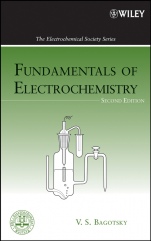
Fundamentals of Electrochemistry
ISBN 9780471700586
Autor: Vladimir S. Bagotsky
Wydawca: Wiley
Dostępność: 3-6 tygodni
Cena: 849,45 zł
Przed złożeniem zamówienia prosimy o kontakt mailowy celem potwierdzenia ceny.
ISBN13: |
9780471700586 |
ISBN10: |
0471700584 |
Autor: |
Vladimir S. Bagotsky |
Oprawa: |
Hardback |
Rok Wydania: |
2005-12-16 |
Numer Wydania: |
2nd Edition |
Ilość stron: |
752 |
Wymiary: |
245x159 |
Tematy: |
PN |
A cogent and useful introduction to thetheory and application of electrochemistry
A significantly revised and improved edition of a noted text, this Second Edition of Fundamentals of Electrochemistry is designed to serve both professionals and novices with the essential information they require to understand and apply electrochemical processes. For students not yet familiar with this field, the text offers a basic outline of the essential topics of theoretical and applied electrochemistry; for practicing researchers and engineers, the book serves as a key to recent and advanced developments in the field.
This new edition features:Improved organization that includes a rewritten and simplified introductory section that makes the basics more accessible to undergraduatesMore advanced topics of interest to postgraduate readers, discussed in later sectionsA new focus on experimental techniques, including a comprehensive chapter on physical methods for the investigation of electrode surfacesNew chapters dealing with recent trends in electrochemistry, including nanoelectrochemistry, solid–state electrochemistry, conducting polymers, electrocatalysis, computer simulation in electrochemistry, and electrochemistry and the environmentChapters on batteries, fuel cells, supercapacitors, and other electrochemical devices and phenomena
The thoughtfully revised Fundamentals of Electrochemistry, Second Edition is a cogent and comprehensive resource for anyone needing to master this highly relevant field.
Spis treści:
Contributors.
Preface to the Second Edition.
Preface to the First Edition.
List of Photographs.
Abbreviations.
Symbols.
PART I: BASIC CONCEPTS.
1. Electric Currents in Ionic Conductors.
1.1 Various Types of Conductors.
1.2 Ions in Electrolyte Solutions.
1.3 Conductivity of Electrolyte Solutions.
1.4 Circuits Involving Ionic Conductors. Electrodes.<
br>1.5 Passage of Current Through Electrodes. Electrode Reactions.
1.6 Classification of Electrodes and Electrode Reactions.
1.7 Faraday’s Laws.
1.8 Equations for Mass Balance.
1.9 Sign Convention for Currents and Fluxes.
2. Electrode Potentials.
2.1 Interfacial Potential Differences (Galvani Potentials).
2.2 Exchange Currents.
2.3 Open–Circuit Voltages.
2.4 Electrode Potentials.
2.5 Cell Voltage at Nonzero Current.
3. Thermodynamics of Electrochemical Systems.
3.1 Conventional and Undefined Parameters.
3.2 Thermodynamic Functions in Electrochemistry.
3.3 Thermodynamic Activity.
3.4 Equations for the EMF of Galvanic Cells.
3.5 Concentration Dependence of Electrode Potentials.
3.6 Special Thermodynamic Features of Electrode Potentials.
4. Mass Transfer in Electrolytes.
4.1 Basic Laws of Ionic Diffusion in Solutions.
4.2 Limiting Diffusion Currents in Electrolytes.
4.3 Ionic Transport by Migration and Diffusion.
4.4 Convective Transport.
5. Phase Boundaries (Interfaces) Between Miscible Electrolytes.
5.1 Types of Interfaces Between Electrolytes.
5.2 Potentials Between Similar Electrolytes (Diffusion Potentials).
5.3 Distribution of the Ions Between Dissimilar but Miscible Electrolytes.
5.4 Distribution of Ions in Cells with Membrane.
5.5 Galvanic Cells with Transference.
6. Polarization of Electrodes.
6.1 Basic Concepts.
6.2 Laws of Activation Polarization.
6.3 Diffusional Concentration Polarization.
6.4 Superposition of Concentration and Activation Polarization.
7. Aqueous Electrolyte Solutions.
7.1 Electrolytic Dissociation.
7.2 Ionic Solvation (Hydration) in Solutions.
7.3 Activity of Real Electrolyte Solutions.
7.4 Physical Theories of Ion–Ion Interactions.
8. Nonaqueous Electrolytes.
8.1 Different Types of Electrolytes and Their Practicalb Utilization.
8.2 Nonaqueous Electrolyte Solutions.
8.3 Ionically Conducting Melts.
8.4 Inorganic Solid Electrolytes.
9. Electron Work Functions and Volta Potentials. 10. Structure and Properties of Surface Layers.
9.1 Surface Potential of a Phase.
9.2 Work Functions.
9.3 Volta Potentials.
9.4 Two Problems in Electrochemistry.
10. Structure and Properties of Surface Layers.
10.1 Electrical Structure of Interphases.
10.2 Adsorption Phenomena.
10.3 Thermodynamics of Surface Phenomena.
10.4 Mercury Electrode Surface.
10.5 Platinum Electrode Surface.
10.6 Surfaces of Other Electrodes.
11. Transient Processes.
11.1 Evidence for Transient Conditions.
11.2 Transient Diffusion to Electrodes of Large Size.
11.3 Transient Diffusion to Electrodes of Finite Size.
12. Electrochemical research Techniques.
12.1 Reference Electrodes.
12.2 Voltage and Electrode Potential Measurements (Potentiometry).
12.3 Steady–State Polarization Measurements.
12.4 Transient (Pulse) Measurements.
12.5 Impedance Measurements.
PART II:KINETICS OF ELECTROCHEMICAL REACTIONS.
13. Multistep Electrode Reactions.
13.1 Intermediate Reaction Steps.
13.2 Rate–Determining Step.
13.3 Two–Step Electrochemical Reactions.
13.4 Complex Electrochemical Reactions..
13.5 Reactions with Homogeneous Chemical Steps.
13.6 Reactions with Mediators.
13.7 Parallel Electrode Reactions.
14. Some Aspects of Electrochemical Kinetics.
14.1 Energy of Activation.
14.2 Kinetic Influence of the Electric Double Layer.
14.3 Kinetic Influence of Adsorption.
14.4 Special Features of Reactions at Semiconductor Electrodes.
14.5 Reactions Producing a New Phase.
15. Reactions at Nonconsumable Electrodes.
15.1 Simple Electrochemical Reactions.
15.2 Hydrogen Evolution and Ionization.
15.3 Reactions Involving Oxygen.
15.4 Reactions Involving Chlorine and Other Halogens.
15.5 Reactions Involving Organic Substances.
15.6 Reactions at High Anodic Potentials.
15.7 Reaction of
Carbon Dioxide Reduction.
15.8 Reaction of Nitrogen Reduction.
16. Reactions Involving Metals.
16.1 Reacting Metal Electrodes.
16.2 Anodic Metal Dissolution.
16.3 Surface–Layer Formation.
16.4 Passivation of Electrodes.
16.5 Cathodic Metal Deposition.
16.6 Electrochemical Metal Treatments.
PART III: APPLIED ASPECTS OF ELECTROCHEMISTRY.
17. Industrial Electrolytic Processes.
17.1 Chlor–Alkali Electrolysis.
17.2 Water Electrolysis.
17.3 Electrometallurgy.
17.4 Electroplating.
18. Electrochemical Reactors.
18.1 Design Principles.
18.2 Separators.
18.3 Macrokinetics of Electrochemical Processes (Systems with Distributed Parameters).
18.4 Porous Electrodes.
18.5 Three–Dimensional Electrodes.
19. Batteries (Electrochemical Power Sources.
19.1 Chemical Current–Producing Reactions in Batteries.
19.2 Performance of Batteries.
19.3 Electrochemical Systems.
19.4 Primary Batteries.
19.5 Storage Batteries.
19.6 Lithium Batteries.
20. Fuel Cells.
20.1 Introduction.
20.2 Design Principles of Fuel Cells.
20.3 Proton–Exchange Membrane Fuel Cells.
20.4 Direct Methanol Fuel Cells.
21. Some Electrochemical Methods of Analysis.
21.1 Electrochemical Capacitors and Supercapacitors.
21.2 Electrochemical Transducers.
22. Corrosion of Metals.
22.1 Various Types of Corrosion.
22.2 Mechanisms of Corrosion Processes.
22.3 Corrosion Protection.
23. Electrochemical Methods of Analysis.
23.1 Conductometry.
23.2 Coulometry.
23.3 Amperometry.
23.4 Polarography.
23.5 Transient Voltammetric Techniques.
23.6 Potentiometry.
24. Electrochemistry and the Environment (Alexander Skundin (Sections 24.1 to 24.4) and Alvin J. Salkind (Section 24.5)).
24.1 Chemical and Electrochemical Processes.
24.2 Monitoring the Environment.
24.3 Purification Procedures (Elimination of Pollutants).
24.4 Medical Applications of Electroch
Koszyk
Książek w koszyku: 0 szt.
Wartość zakupów: 0,00 zł
Informacje


Kontakt
Gambit
Centrum Oprogramowania
i Szkoleń Sp. z o.o.
Al. Pokoju 29b/22-24
31-564 Kraków
Siedziba Księgarni
ul. Kordylewskiego 1
31-542 Kraków
+48 12 410 5991
+48 12 410 5987
+48 12 410 5989
Subskrypcje
Administratorem danych osobowych jest firma Gambit COiS Sp. z o.o. Na podany adres będzie wysyłany wyłącznie biuletyn informacyjny.
Autoryzacja płatności

Informacje na temat autoryzacji płatności poprzez PayU.

© Copyright 2012: GAMBIT COiS Sp. z o.o. Wszelkie prawa zastrzeżone.
Projekt i wykonanie: Alchemia Studio Reklamy