


Wydawcy
Katalog tematyczny
- Archeologia (109)
- Ekonomia, finanse, business (13704)
- Filozofia (1445)
- Historia (3040)
- Języki i językoznawstwo (2356)
- Lifestyle, hobby i rozrywka (475)
- Medycyna (9704)
- Nauki humanistyczne (4)
- Nauki o Ziemi i środowisku (2638)
- Nauki ścisłe (20412)
- Astronomia (294)
- Biologia (5119)
- Chemia (6540)
- Chemia analityczna (361)
- Chemia fizyczna (346)
- Chemia nieorganiczna (137)
- Chemia organiczna (535)
- Krystalografia (27)
- Minerologia (46)
- Fizyka (3309)
- Matematyka (4574)
- Nauki ścisłe, ogólnie (503)
- Nauki społeczne (8486)
- Nauki techniczne (13450)
- Prawo (1696)
- Publikacje informacyjne i interdyscyplinarne (1288)
- Religia i wierzenia (917)
- Technika komputerowa (4067)
- Zdrowie, relacje międzyludzkie i rozwój osobisty (657)





Informacje szczegółowe o książce
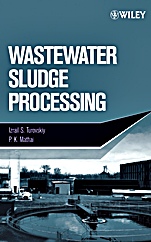
Wastewater Sludge Processing
ISBN 9780471700548
Autor: Izrail S. Turovskiy, P. K. Mathai
Wydawca: Wiley
Dostępność: 3-6 tygodni
Cena: 578,55 zł
Przed złożeniem zamówienia prosimy o kontakt mailowy celem potwierdzenia ceny.
ISBN13: |
9780471700548 |
ISBN10: |
0471700541 |
Autor: |
Izrail S. Turovskiy, P. K. Mathai |
Oprawa: |
Hardback |
Rok Wydania: |
2006-07-28 |
Ilość stron: |
354 |
Wymiary: |
245x165 |
Tematy: |
PN |
Reap the benefits of sludge
The processing of wastewater sludge for use or disposal has been a continuing challenge for municipal agencies. Yet, whensludge is properly processed, the resulting nutrient–rich product—biosolids—can be a valuable resource for agriculture and other uses. Wastewater Sludge Processing brings together a wide body of knowledge from the field to examine how to effectively process sludge to reap its benefits, yet protect public health.
Presented in a format useful as both a reference for practicing environmental engineers and a textbook for graduatestudents, this book discusses unit operations used for processing sludge and the available methods for final disposition of the processed product. Topics discussed include sludge quantities and characteristics, thickening and dewatering, aerobicand anaerobic digestion, alkaline stabilization, composting, thermal drying and incineration, energy consumption, and the beneficial use of biosolids.
COMPREHENSIVE IN ITS COVERAGE, THE TEXT:Describes new and emerging technologies as well as international methodsCompares different types of sludge processing methodsExplains both municipal and industrial treatment technologies
Written by authors with decades of experience in the field, Wastewater Sludge Processing is an invaluable tool for anyone planning, designing, and implementing municipal wastewater sludge management projects.
Spis treści:
Chapter 1. Introduction.
1.1 Introduction.
1.2 40 CFR Part 503 Regulation.
1.2.1 General Provisions.
1.2.2 Land Application.
1.2.3 Surface Disposal.
1.2.4 Pathogen and Vector Attraction Reduction.
1.2.5 Incineration.
Chapter 2. Sludge Quantities and Characteristics.
2.1 Types of Sludge.
2.1.1 Primary Sludge.
2.1.2 Secondary Sludge.
2.1.3 Chemical Sludge.
2.1.4 Other Wastewater Residuals.
2.2 Sludge Quantity.
2.2.
1 Primary Sludge.
2.2.2 Secondary Sludge.
2.2.3 Activated Sludge.
2.2.4 Attached Growth System Sludge.
2.2.5 Chemical sludge.
2.3 Sludge Characteristics.
2.3.1 Primary Sludge.
2.3.2 Activated Sludge.
2.3.3 Physical and Biological Properties.
2.4 Mass Balance.
Chapter 3. Thickening and Dewatering.
3.1 Introduction.
3.2 Conditioning.
3.2.1 Factors Affecting Conditioning.
3.2.2 Chemical Conditioning.
3.2.3 Other Conditioning Methods.
3.3 Thickening.
3.3.1 Gravity Thickening.
3.3.2 Dissolved Air Flotation Thickening.
3.3.3 Centrifugal Thickening.
3.3.4 Gravity Belt Thickening.
3.3.5 Rotary Drum Thickening.
3.3.6 Miscellaneous Thickening Methods.
3.4 Dewatering.
3.4.1 Centrifugal Dewatering.
3.4.2 Belt Filter Press.
3.4.3 Pressure Filter Press.
3.4.4 Drying Beds.
3.4.5 Other Dewatering Methods.
Chapter 4. Aerobic Digestion.
4.1 Introduction.
4.1.1 Process Theory.
4.2 Conventional Aerobic Digestion.
4.2.1 Process Design Considerations.
4.2.2 System Design Considerations.
4.2.3 Operational Considerations.
4.3 Process Variations.
4.3.1 High–Purity Oxygen Digestion.
4.3.2 Low Temperature Aerobic Digestion.
4.3.3 Dual Digestion.
4.3.4 Mesophilic Aerobic Digestion.
4.3.5 Autothermal Thermophilic Aerobic Digestion.
4.3.6 Technological Improvements.
Chapter 5. Anaerobic Digestion.
5.1 Introduction.
5.1.1 Advantages and Disadvantages.
5.1.2 Theory of Anaerobic Digestion.
5.2 Environmental Factors.
5.2.1 Solids and Hydraulic Retention Times.
5.2.2 Temperature.
5.2.3 pH and Alkalinity.
5.2.4 Toxic Materials.
5.3 Process Variations.
5.3.1 Low–Rate Digestion.
5.3.2 High–Rate Digestion.
5.3.3 Thermophilic Digestion.
5.3.4 Two–Stage Digestion.
5.3.5 Two–Phase Digestion.
5.4 Process Design.
5.4.1 Per Capita Basis.
5.4.2 Solids Loading.
5.4.3 Solids Retenti
on Time.
5.4.4 Volatile Solids Reduction.
5.4.5 Gas Production.
5.5 System Component Design.
5.5.1 Tank Design.
5.5.2 Digester Covers.
5.5.3 .
5.5.4 Heating.
5.5.5 Gas Usage.
5.5.6 Design Example 5–1.
5.6 Operational Considerations.
5.6.1 Reactor Performance.
5.6.2 Odor Control.
5.6.3 Supernatant.
5.6.4 Struvite.
5.6.5 Digester Cleaning.
Chapter 6. Alkaline Stabilization.
6.1 Introduction.
6.1.1 Advantages and Disadvantages.
6.1.2 Process Theory.
6.2 Process Application.
6.2.1 Liquid Lime Stabilization.
6.2.2 Dry Lime Stabilization.
6.2.3 Advanced Alkaline Stabilization Technologies.
6.3 Process Design.
6.3.1 Sludge Characteristics.
6.3.2 Contact Time and pH.
6.3.3 Lime Dosage.
6.3.4 Alkaline Material Storage.
6.3.5 Lime Feeding.
6.3.6 Liquid Lime Mixing.
6.3.7 Dry Lime Mixing.
6.3.8 Design Example 6–1.
6.4 Process Performance.
6.4.1 Odor Reduction.
6.4.2 Pathogen reduction.
6.4.3 Dewatering Characteristics.
Chapter 7. Composting.
7.1 Introduction.
7.1.1 Composting Process.
7.1.2 Composting Methods.
7.1.3 Advantages and Disadvantages of Composting.
7.1.4 Zoological Characteristics of Compost.
7.2 Process Description.
7.2.1 Factors Influencing Composting.
7.2.2 Windrow Process.
7.2.3 Aerated Static Pile process.
7.2.4 In–Vessel Process.
7.2.5 Design Considerations.
7.3 Theoretical Aspects of Composting.
7.3.1Design Example 7–1.
7.4 New Technology in Composting.
7.4.1 Organic Content.
7.4.2 Odor.
7.4.3 Temperature and Moisture.
7.4.4 Composting Mixture.
7.4.5 Composting Process Control.
7.4.6 Design Example 7–2.
7.4.7 pH.
7.5 Examples of Composting in Europe.
7.6 Examples of Composting in the United States.
Chapter 8. Thermal Drying and Incineration.
8.1 Introduction.
8.2 Thermal Drying.
8.2.1 Methods of Thermal Drying.
8.2.2
Design Considerations.
8.3 Incineration.
8.3.1Methods of Incineration.
8.3.2 Design Considerations.
Chapter 9. Comparison of Energy Consumption.
9.1 Introduction.
9.1.1 Anaerobic Digestion.
9.1.2 Incineration.
9.1.3 Composting.
9.1.4 Comparison of Thermal Drying and Composting.
9.1.5 Conclusion.
Chapter 10. Beneficial Use of Biosolids.
10.1 Introduction.
10.2 Requirements for Beneficial Use.
10.2.1 Pollutant Limits.
10.2.2 Pathogen Reduction.
10.2.3 Vector Attraction Reduction.
10.2.4 Management Practices.
10.2.5 Surface Disposal.
10.3 Land Application.
10.3.1 Site Evaluation and Selection.
10.3.2 Design Application Rates.
10.3.3 Application Methods.
10.3.4 Application to Dedicated Lands.
10.3.5 Conveyance and Storage of Biosolids.
10.4 Beneficial Use of Biosolids in Russia.
10.4.1 Pathogens.
10.4.2 Heavy Metals.
A–1 Abbreviations for SI Units.
A–2 Abbreviations for U.S. Customary Units.
A–3 Conversion from SI Units to U.S. Customary Units.
A–4 Conversion from U.S. Customary Units to SI Units.
Nota biograficzna:
IZRAIL S. TUROVSKIY is a wastewater and biosolids consultant in Jacksonville, Florida. He received a BS degree in civil engineering from Civil Engineering Institute, St. Petersburg, Russia; an MS degree in sanitary engineeringfrom Civil Engineering Institute, Moscow, Russia; and a DSc degree in environmental engineering from Municipal Academy,Moscow. He has more than fifty years of experience in environmental engineering, including time as head of the All–UnionResearch Institute of Water Supply, Sewage Systems, and Hydrotechnical Structures in Moscow. Dr. Turovskiy has patentsin Russia, France, Germany, Italy, Finland, and the United States. He has also authored or coauthored more than 200technical publications including eight books.
P. K. MATHAI is a senior project manager and Associate
Koszyk
Książek w koszyku: 0 szt.
Wartość zakupów: 0,00 zł
Informacje


Kontakt
Gambit
Centrum Oprogramowania
i Szkoleń Sp. z o.o.
Al. Pokoju 29b/22-24
31-564 Kraków
Siedziba Księgarni
ul. Kordylewskiego 1
31-542 Kraków
+48 12 410 5991
+48 12 410 5987
+48 12 410 5989
Subskrypcje
Administratorem danych osobowych jest firma Gambit COiS Sp. z o.o. Na podany adres będzie wysyłany wyłącznie biuletyn informacyjny.
Autoryzacja płatności

Informacje na temat autoryzacji płatności poprzez PayU.

© Copyright 2012: GAMBIT COiS Sp. z o.o. Wszelkie prawa zastrzeżone.
Projekt i wykonanie: Alchemia Studio Reklamy