


Wydawcy
Katalog tematyczny
- Archeologia (109)
- Ekonomia, finanse, business (13704)
- Filozofia (1445)
- Historia (3040)
- Języki i językoznawstwo (2356)
- Lifestyle, hobby i rozrywka (475)
- Medycyna (9704)
- Nauki humanistyczne (4)
- Nauki o Ziemi i środowisku (2638)
- Nauki ścisłe (20412)
- Nauki społeczne (8486)
- Nauki techniczne (13450)
- Budownictwo lądowe (1045)
- Chemia przemysłowa (2258)
- Elektronika i telekomunikacja (3287)
- Energetyka (1122)
- Inne nauki stosowane (363)
- Inżynieria biochemiczna (507)
- Inżynieria transportu (232)
- Mechanika i materiały (3316)
- Nauka o środowisku (321)
- Rolnictwo (507)
- Technika, ogólnie (475)
- Prawo (1696)
- Publikacje informacyjne i interdyscyplinarne (1288)
- Religia i wierzenia (917)
- Technika komputerowa (4067)
- Zdrowie, relacje międzyludzkie i rozwój osobisty (657)







Informacje szczegółowe o książce
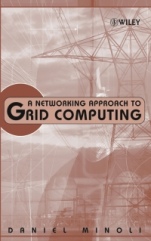
A Networking Approach to Grid Computing
ISBN 9780471687566
Autor: Daniel Minoli
Wydawca: Wiley
Dostępność: 3-6 tygodni
Cena: 665,70 zł
Przed złożeniem zamówienia prosimy o kontakt mailowy celem potwierdzenia ceny.
ISBN13: |
9780471687566 |
ISBN10: |
0471687561 |
Autor: |
Daniel Minoli |
Oprawa: |
Hardback |
Rok Wydania: |
2004-11-23 |
Ilość stron: |
400 |
Wymiary: |
241x158 |
Tematy: |
TJ |
Successfully migrate to a grid computing system
Grid computing is a virtual distributed computing environment in which an organization can transparently integrate, streamline, and share dispersed groups of hosts, servers, storage systems, data, and networks into one synergistic system. Long used to solve large–scale problems in science and engineering, grid computing is now beginning to offer significant efficiencies and savings to the commercial world, including financial services operations.
A Networking Approach to Grid Computing explores the practical advantages of grid computing and explains what is needed in order to migrate successfully to this new computing paradigm and exploit the business opportunities afforded by grid computing.
This book offers the knowledge and skills needed to architect and deploy a grid computing environment that contributes directly to key business goals, including:The benefits of grid computing and the status of the technologyStandards supporting grid computing including OGSI and OGSADeployment and management of computing gridsThe economics of grid systemsCommunication systems for local, national, and global grids
Familiarizing readers with the services, reference architectures, storage, and software necessary for successful implementation of a grid system, A Networking Approach to Grid Computing shows how to set up an organization′s grid environment faster, easier, and at a lower cost than its competitors.
Spis treści:
About the Author.
Preface.Acknowldegments.
1. Introduction.
1.1 What Is Grid Computing And What Are The Key Issues?
1.2 Potential Applications and Financial Benefits of Grid Computing.
1.3 Grid Types, Topologies, Components, Layers – A Preliminary View.
1.4 Comparison With Other Approaches.
1.5 A First View at Grid Computing Standards.
1.6 A Pragmatic Course of Investigation.
2. Grid Benefits and Status of Technology.
2.1 Motivations For Considering Computational Grids.
2.2 Brief History of Computing, Communications, and Grid Computing.
Communication.
Computation.
Grid Technology.
2.3 Is Grid Computing Ready for Prime Time?
2.4 Early Suppliers and Vendors.
2.5 Possible Economic Value.
2.5.1 Possible Economic Value: One State′s Positioning.
2.5.2 Possible Economic Value: Extrapolation.
2.6 Challenges.
3. Components of Grid Computing Systems/Architectures.
3.1 Overview.
3.2 Basic Constituent Elements – A Functional View.
Portal/User Interface Function/Functional Block.
The Grid Security Infrastructure: User Security Function/Functional Block.
Node Security Function/Functional Block.
Broker Function/Functional Block And Directory.
Scheduler Function/Functional Block.
Data Management Function/Functional Block.
Job Management And Resource Management Function/Functional Block.
User/Application Submission Function/Functional Block.
Resources.
Protocols.
3.3 Basic Constituent Elements – A Physical View.
Networks.
Computation.
Storage.
Scientific Instruments.
Software and licenses.
3.4 Basic Constituent Elements – Service View.
4. Standards Supporting Grid Computing: OGSI.
4.1 Introduction.
4.2 Motivations for Standardization.
4.3 Architectural Constructs.
4.3.1 Definitions.
4.3.2 Protocol Perspective.
4.3.3 Going From "Art" To "Science".
4.4 What is OGSA/OGSI? A Practical View.
4.5 OGSA/OGSI Service Elements and Layered Model.
4.5.1 Key Aspects.
4.5.2 Ancillary Aspects.
4.5.3 Implementations of OGSI.
4.6 What is OGSA/OGSI? A More Detailed View.
4.6.1 Introduction.
4.6.2 Setting the Context.
4.6.3 The Grid Service.
4.6.4 WSDL Extensions and Conventions.
4.6.5 Service Data.
4.6.6 Core Grid Service Properties.
4.6.7 Other Details.
4.7 A Possible Appl
ication Of OGSA/OGSI To Next–Generation Open–Source Outsourcing.
4.7.1 Opportunities.
4.7.2 Outsourcing Trends.
5. Standards Supporting Grid Computing: OGSA.
5.1 Introduction.
5.2 Functionality Requirements.
5.2.1 Basic Functionality Requirements.
5.2.2 Security Requirements.
5.2.3 Resource Management Requirements.
5.2.4 System Properties Requirements.
5.2.5 Other Functionality Requirements.
5.3 OGSA Service Taxonomy.
5.3.1 Core Services.
5.3.2 Data Services.
5.3.3 Program Execution.
5.3.4 Resource Management.
5.4 Service Relationships.
5.4.1 Service Composition.
5.4.2 Service Orchestration.
5.4.3 Types of Relationships.
5.4.4 Platform Services.
5.5 OGSA Services.
5.5.1 Handle Resolution.
5.5.2 Virtual Organization Creation and Management.
5.5.3 Service Groups and Discovery Services.
5.5.4 Choreography, Orchestration and Workflow.
5.5.5 Transactions.
5.5.6 Metering Service.
5.5.7 Rating Service.
5.5.8 Accounting Service.
5.5.9 Billing and Payment Service.
5.5.10 Installation, Deployment, and Provisioning.
5.5.11 Distributed Logging.
5.5.12 Messaging and Queuing.
5.5.13 Event.
5.5.14 Policy and Agreements.
5.5.15 Base Data Services.
5.5.16 Other Data Services.
5.5.17 Discovery Services.
5.5.18 Job Agreement Service.
5.5.19 Reservation Agreement Service.
5.5.20 Data Access Agreement Service.
5.5.21 Queuing Service.
5.5.22 Open Grid Services Infrastructure.
5.5.23 Common Management Model.
5.6 Security Considerations.
5.7 Examples of OGSA Mechanisms in Support of VO Structures.
6. Grid System Deployment Issues and Approaches.
6.1 Generic Implementations: Globus Toolkit.
6.1.1 Globus Toolkit tools and APIs.
6.1.2 Details on Key Tookit Protocols.
6.1.3 Globus Toolkit Version 3.
6.1.4 Applications.
6.2 Grid Computing Environments.
6.3 Basic Grid Deployment and Management Issues.
6.3.1
Products Categories.
6.3.2 Business Grid Types.
6.3.3 Deploying a Basic Computing Grid.
6.3.4 Deploying More Complex Computing Grids.
6.3.5 Grid Networking Infrastucture Required for Deployment.
6.3.6 Grid Operation – Basic Steps.
6.3.7 Deployment Challenges and Approaches.
6.4 Grid Security Details – Deployment Peace of Mind.
6.4.1 Basic Approach and Mechanisms.
6.4.2 Additional Perspectives.
6.4.3 Conclusion.
7. Grid System Economics.
7.1 Introduction.
7.2 Grid Economic Services Architecture.
7.2.1 Introduction.
7.2.2 Overview.
7.2.3 The Chargeable Grid Service (CGS).
7.2.4 The Grid Payment System.
7.2.5 GPSHold Service.
7.2.6 The Grid CurrencyExchange Service.
7.2.7 An Example.
7.2.8 Security Considerations.
8. Communication Systems for Local Grids.
8.1 Introduction and Positioning.
8.2 SAN–related Technology.
8.2.1 Fibre Channel Technology – Native Mode.
8.2.2 Fibre Channel Technology – Tunneled Modes.
8.3 LAN–related Technology.
8.3.1 Standards.
8.3.2 Key concepts.
9. Communication systems for national grids.
9.1 MLF.
9.1.1 Motivations and Scope.
9.1.2 Multilink Frame Relay.
9.2 MPLS Technology.
9.2.1 Approaches.
9.2.2 MPLS Operation.
9.2.3 Key Mechanisms Supporting MPLS.
9.2.4 Service Availability.
10. Communication Systems for Global Grids.
10.1 The Basics of Layer 2 and layer 3 VPNs.
10.2 The Layer 3 Approach.
10.3 Layer 2 MPLS VPNs–A Different Philosophy.
10.4 Which Works Better Where?.
10.5 A Grid Computing Application.
References.
Glossary.
Index.
Nota biograficzna:
DANIEL MINOLI has many years of IT, telecom, and networking experience for end users and carriers including work at AIG, ARPA think tanks, Bell Telephone Laboratories, ITT, Prudential Securities, Bell Communications Research (Bellcore/Telcordia), AT&T, Gartner
Koszyk
Książek w koszyku: 0 szt.
Wartość zakupów: 0,00 zł
Informacje


Kontakt
Gambit
Centrum Oprogramowania
i Szkoleń Sp. z o.o.
Al. Pokoju 29b/22-24
31-564 Kraków
Siedziba Księgarni
ul. Kordylewskiego 1
31-542 Kraków
+48 12 410 5991
+48 12 410 5987
+48 12 410 5989
Subskrypcje
Administratorem danych osobowych jest firma Gambit COiS Sp. z o.o. Na podany adres będzie wysyłany wyłącznie biuletyn informacyjny.
Autoryzacja płatności

Informacje na temat autoryzacji płatności poprzez PayU.

© Copyright 2012: GAMBIT COiS Sp. z o.o. Wszelkie prawa zastrzeżone.
Projekt i wykonanie: Alchemia Studio Reklamy