


Wydawcy
Katalog tematyczny
- Archeologia (109)
- Ekonomia, finanse, business (13704)
- Filozofia (1445)
- Historia (3040)
- Języki i językoznawstwo (2356)
- Lifestyle, hobby i rozrywka (475)
- Medycyna (9704)
- Nauki humanistyczne (4)
- Nauki o Ziemi i środowisku (2638)
- Nauki ścisłe (20412)
- Astronomia (294)
- Biologia (5119)
- Chemia (6540)
- Chemia analityczna (361)
- Chemia fizyczna (346)
- Chemia nieorganiczna (137)
- Chemia organiczna (535)
- Krystalografia (27)
- Minerologia (46)
- Fizyka (3309)
- Matematyka (4574)
- Nauki ścisłe, ogólnie (503)
- Nauki społeczne (8486)
- Nauki techniczne (13450)
- Prawo (1696)
- Publikacje informacyjne i interdyscyplinarne (1288)
- Religia i wierzenia (917)
- Technika komputerowa (4067)
- Zdrowie, relacje międzyludzkie i rozwój osobisty (657)





Informacje szczegółowe o książce
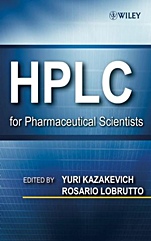
HPLC for Pharmaceutical Scientists
ISBN 9780471681625
Autor: Yuri V. Kazakevich, Rosario LoBrutto
Wydawca: Wiley
Dostępność: 3-6 tygodni
Cena: 1 098,30 zł
Przed złożeniem zamówienia prosimy o kontakt mailowy celem potwierdzenia ceny.
ISBN13: |
9780471681625 |
ISBN10: |
0471681628 |
Autor: |
Yuri V. Kazakevich, Rosario LoBrutto |
Oprawa: |
Hardback |
Rok Wydania: |
2007-01-22 |
Ilość stron: |
1136 |
Wymiary: |
243x167 |
Tematy: |
PN |
Comprehensive coverage of modern HPLC theory, methodologies, and applications
This guide is a valuable resource for both novice and experienced pharmaceutical chemists who regularly use HPLC as an analytical tool to solve challenging problems in the pharmaceutical industry. A unified approach to HPLC with an equal and balanced treatment of the theory and practice of HPLC in the pharmaceutical industry is provided throughout the book.In–depth discussions of retention processes, modern HPLC separation theory, and properties of stationary phases and columns are well blended with the practical aspects of fast and effective method development and method validationPractical and pragmatic approaches and numerous examples of effective development of selective and rugged HPLC methods from a physico–chemical point of view are givenThis book elucidates the role of HPLC throughout the entire drug development process, from drug candidate inception to marketed drug product, and gives detailed specifics of HPLC application at each stage of drug development The latest advancements and trends in hyphenated and specialized HPLC techniques (LC–MS—small molecules and proteins, LC–NMR, Preparative HPLC, High temperature HPLC, Chiral HPLC, and Fast LC) are discussed
Authoritative and up to date, HPLC for Pharmaceutical Scientists is an ideal reference for pharmaceutical researchers working with HPLC, as well as for graduate students in analytical chemistry/biochemistry and pharmaceutical analysis programs.
Spis treści:
PREFACE.
CONTRIBUTORS.
PART I HPLC THEORY AND PRACTICE.
1 Introduction (Yuri Kazakevich and Rosario LoBrutto).
1.1 Chromatography in the Pharmaceutical World.
1.2 Chromatographic Process.
1.3 Classification.
1.4 History of Discovery and Early Development (1903–1933).
1.5 General Separation Process.
1.6 T
ypes of HPLC.
1.7 HPLC Descriptors (Vr, k, N, etc.).
2 HPLC Theory (Yuri Kazakevich).
2.1 Introduction.
2.2 Basic Chromatographic Descriptors.
2.3 Efficiency.
2.4 Resolution.
2.5 HPLC Retention.
2.6 Retention Mechanism.
2.7 General Column Mass Balance.
2.8 Partitioning Model.
2.9 Adsorption Model.
2.10 Total and Excess Adsorption.
2.11 Mass Balance in Adsorption Model.
2.12 Adsorption of the Eluent Components.
2.13 Void Volume Considerations.
2.14 Thermodynamic Relationships.
2.15 Adsorption–Partitioning Retention Mechanism.
2.16 Secondary Equilibria.
2.17 Gradient Elution Principles.
2.18 Types of Analyte Interactions with the Stationary Phase.
2.19 Conclusion.
3 Stationary Phases (Yuri Kazakevich and Rosario LoBrutto).
3.1 Introduction.
3.2 Type of Packing Material (Porous, Nonporous, Monolithic).
3.3 Base Material (Silica, Zirconia, Alumina, Polymers).
3.4 Geometry.
3.5 Adsorbent Surface Chemistry.
3.6 Surface of Chemically Modified Material.
3.7 Polymer–Based Adsorbents.
3.8 Stationary Phases for Chiral Separations.
3.9 Columns.
4 Reversed–Phase HPLC (Rosario LoBrutto and Yuri Kazakevich).
4.1 Introduction.
4.2 Retention in Reversed–Phase HPLC.
4.3 Stationary Phases for RPLC.
4.4 Mobile Phases for RPLC.
4.5 pH Effect on HPLC Separations.
4.6 Effect of Organic Eluent Composition on Analyte Ionization.
4.7 Synergistic Effect of pH, Organic Eluent, and Temperature on Ionizable Analyte Retention and Selectivity.
4.8 Examples of Applying pH Shift and Analyte pKa Shift Rules.
4.9 Effect of Temperature on Analyte Ionization.
4.10 Ion–Interaction Chromatography.
4.11 Concluding Remarks.
5 Normal–Phase HPLC (Yong Liu and Anant Vailaya).
5.1 Introduction.
5.2 Theory of Retention in Normal–Phase Chromatography.
5.3 Effect of Mobil
e Phase on Retention.
5.4 Selectivity.
5.5 Applications.
5.6 Conclusions.
6 Size–Exclusion Chromatography (Yuri Kazakevich and Rosario LoBrutto).
6.1 Separation of the Analyte Molecules by Their Size.
6.2 Molecular Size and Molecular Weight.
6.3 Separation Mechanism.
6.4 Calibration.
6.5 Columns.
6.6 Molecular Weight Distribution.
6.7 Effect of Eluent.
6.8 Effect of Temperature.
6.9 Detectors.
6.10 Solving Mass Balance Issues.
6.11 Aqueous SEC Applications.
7 LC/MS: Theory, Instrumentation, and Applications to Small Molecules (Guodong Chen, Li–Kang Zhang, and Birendra N. Pramanik).
7.1 Introduction.
7.2 Ionization Methods and LC/MS Interfaces.
7.3 Mass Analyzers.
7.4 Role of Instrumental Parameters on Ionization Efficiency in LC/MS.
7.5 Effect of Mobile–Phase Composition on Ionization Efficiency in LC/MS.
7.6 MS Interpretation.
7.7 Practical Applications.
7.8 Conclusions.
8 Method Development (Rosario LoBrutto).
8.1 Introduction.
8.2 Types of Methods.
8.3 Defining the Method.
8.4 Method Development Considerations.
8.5 Method Development Approaches.
8.6 Effect of pH on UV Absorbance.
8.7 Analyte pKa—From an Analytical Chemist’s Perspective.
8.8 Reversed–Phase Versus Normal–Phase Separations.
8.9 Instrument/System Considerations.
8.10 Column Testing (Stability and Selectivity).
8.11 Concluding Remarks.
9 Method Validation (Rosario LoBrutto and Tarun Patel).
9.1 Introduction.
9.2 Validation Report.
9.3 Revalidation.
9.4 Assignment of Validation Parameters.
9.5 Distinguishing Drug–Related and Non–Drug–Related Degradation Products.
9.6 Concluding Remarks.
10 Computer–Assisted HPLC and Knowledge Management (Yuri Kazakevich, Michael McBrien, and Rosario LoBrutto).
10.1 Introduction.
10.2 Predicti
on of Retention and Simulation of Profiles.
10.3 Optimization of HPLC Methods.
10.4 Structure–Based Tools.
10.5 Conclusion.
PART II HPLC IN THE PHARMACEUTICAL INDUSTRY.
11 The Expanding Role of HPLC in Drug Discovery (Daniel B. Kassel).
11.1 Introduction.
11.2 Applications of HPLC/MS for Protein Identification and Characterization.
11.3 Applications of HPLC/MS/MS in Support of Protein Chemistry.
11.4 Applications of HPLC/MS/MS in Support of Assay Development and Screening.
11.5 Sources of Compounds for Biological Screening.
11.6 HPLC/MS Analysis to Support Compound Characterization.
11.8 Higher–Throughput Purification Strategies.
11.9 ADME Applications.
11.10 Fast Serial ADME Analyses Incorporating LC–MS and LC–MS/MS.
11.11 Parallel Approaches to Speeding ADME Analyses.
11.12 Automated “Intelligent” Metabolic Stability and Metabolite ID.
11.13 Conclusions.
12 Role of HPLC in Preformulation (Irina Kazakevich).
12.1 Introduction.
12.2 Initial Physicochemical Characterization (Discovery Support).
12.3 Chemical Stability.
12.4 Salt Selection.
12.5 Polymorphism.
12.6 Preformulation Late Stage (Development Support).
12.7 Conclusions.
13 The Role of Liquid Chromatography–Mass Spectrometry in Pharmacokinetics and Drug Metabolism (Ray Bakhtiar, Tapan K. Majumdar, and Francis L. S. Tse).
13.1 Introduction.
13.3 Tandem–Mass Spectrometry (MS/MS).
13.4 Sample Preparation Using an Off–Line Approach.
13.5 Automated Sample Transfer.
13.6 Sample Processing Using an On–Line Approach.
13.7 Matrix Effect and Ion Suppression.
13.8 Regulatory Requirements for LC/MS Method Validation.
13.9 Ritalin®: An Application of Enantioselective LC–MS/MS.
13.10 GleevecTM (STI571).
13.11 Biomarkers.
13.12 Conclusions.
14 Role of HPLC in Process Development (
Koszyk
Książek w koszyku: 0 szt.
Wartość zakupów: 0,00 zł
Informacje


Kontakt
Gambit
Centrum Oprogramowania
i Szkoleń Sp. z o.o.
Al. Pokoju 29b/22-24
31-564 Kraków
Siedziba Księgarni
ul. Kordylewskiego 1
31-542 Kraków
+48 12 410 5991
+48 12 410 5987
+48 12 410 5989
Subskrypcje
Administratorem danych osobowych jest firma Gambit COiS Sp. z o.o. Na podany adres będzie wysyłany wyłącznie biuletyn informacyjny.
Autoryzacja płatności

Informacje na temat autoryzacji płatności poprzez PayU.

© Copyright 2012: GAMBIT COiS Sp. z o.o. Wszelkie prawa zastrzeżone.
Projekt i wykonanie: Alchemia Studio Reklamy