


Wydawcy
Katalog tematyczny
- Archeologia (109)
- Ekonomia, finanse, business (13704)
- Filozofia (1445)
- Historia (3040)
- Języki i językoznawstwo (2356)
- Lifestyle, hobby i rozrywka (475)
- Medycyna (9704)
- Nauki humanistyczne (4)
- Nauki o Ziemi i środowisku (2638)
- Nauki ścisłe (20412)
- Astronomia (294)
- Biologia (5119)
- Chemia (6540)
- Chemia analityczna (361)
- Chemia fizyczna (346)
- Chemia nieorganiczna (137)
- Chemia organiczna (535)
- Krystalografia (27)
- Minerologia (46)
- Fizyka (3309)
- Matematyka (4574)
- Nauki ścisłe, ogólnie (503)
- Nauki społeczne (8486)
- Nauki techniczne (13450)
- Prawo (1696)
- Publikacje informacyjne i interdyscyplinarne (1288)
- Religia i wierzenia (917)
- Technika komputerowa (4067)
- Zdrowie, relacje międzyludzkie i rozwój osobisty (657)





Informacje szczegółowe o książce
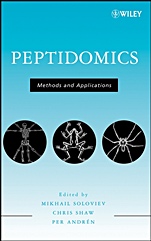
Peptidomics: Methods and Applications
ISBN 9780471677819
Autor: Mikhail Soloviev, Per Andrén, Chris Shaw
Wydawca: Wiley
Dostępność: 3-6 tygodni
Cena: 681,45 zł
Przed złożeniem zamówienia prosimy o kontakt mailowy celem potwierdzenia ceny.
ISBN13: |
9780471677819 |
ISBN10: |
0471677817 |
Autor: |
Mikhail Soloviev, Per Andrén, Chris Shaw |
Oprawa: |
Hardback |
Rok Wydania: |
2008-01-11 |
Ilość stron: |
424 |
Wymiary: |
237x166 |
Tematy: |
PN |
The definitive guide to peptidomics— a hands–on lab reference
The first truly comprehensive book about peptidomics for protein and peptide analysis, this reference provides a detailed description of the hows and whys of peptidomics and how the techniques have evolved. With chapters contributed by leading experts, it covers naturally occurring peptides, peptidomics methods and new developments, and the peptidomics approach to biomarker discovery. Explaining both the principles and the applications, Peptidomics: Methods and Applications:
Features examples of applications in diverse fields, including pharmaceutical science, toxicity biomarkers, and neuroscience
Details the successful peptidomic analyses of biological material ranging from plants to mammals
Describes a cross section of analytical techniques, including traditional methodologies, emerging trends, and new techniques for high throughput approaches
An enlightening reference for experienced professionals, this book is sufficiently detailed to serve as a step–by–step guide for beginning researchers and an excellent resource for students taking biotechnology and proteomics courses. It is an invaluable reference for protein chemists and biochemists, professionals and researchers in drug and biopharmaceutical development, analytical and bioanalytical chemists, toxicologists, and others.
Spis treści:
SECTION 1: STUDIES OF NATURALLY OCCURRING PEPTIDES.
Chapter 1: Analysis of the peptidomes of amphibian skin granular gland secretions – an integrated functional genomic strategy (Chris Shaw, and Tianbao Chen).
Chapter 2: A short history of insect (neuro)peptidomics – A personal story of the birth and youth of an excellent model for studying peptidome biology (Peter D.E.M. Verhaert, Martijn W.H. Pinkse, Maria C. Prieto–Conaway, and Markus Kellmann).
Chapter 3: Peptidomics of short lin
ear cytolytic peptides from spider venom (Sergey A. Kozlov, Alexander A. Vassilevski, and Eugene V. Grishin).
Chapter 4: Molecular cloning approaches to peptidomics: the identification of novel cDNAs encoding neurotoxin–like peptide pools (Zhensheng Pan, Richard Barry, and Mikhail Soloviev).
Chapter 5: Wheat antimicrobial peptides (Tatyana I. Odintsova, and Tsezi A. Egorov).
Chapter 6: Immunopeptidomics: Applications to dissect immune responses through proteomic–based approaches (Ernesto Oviedo–Orta, and Alexandra Bermudez–Fajardo).
Chapter 7: Strategies for reliable and improved identification of peptides (Karl Skuld, Maria Folth, Marcus Svensson, Anna Nilsson, Per Svenningsson, and Per E. Andrun).
SECTION 2: PEPTIDOMICS METHODS AND NEW DEVELOPMENTS.
Chapter 8: Peptidomics approach to proteomics (Petra Zarbig, and Harald Mischak).
Chapter 9: The importance of sample handling in neuropeptidomics (Karl Skuld, Marcus Svensson, Anna Nilsson, Maria Folth, Per Svenningsson, and Per E. Andrun).
Chapter 10: Affinity peptidomics and protein microarrays: application to forensics and biometrics (Julian Bailes, and Mikhail Soloviev).
Chapter 11: Selective depletion and enrichment methods for the analysis of protein and peptide pools (Paul Finch, and Mikhail Soloviev).
Chapter 12: Detection of target peptides in foods and feeds by mass spectrometry (Mireia Fernandez Ocaca).
Chapter 13: Quantification of Polypeptides by Mass Spectrometry (Pedro R. Cutillas).
SECTION 3: PEPTIDOMICS APPROACH TO BIOMARKER DISCOVERY.
Chapter 14: Biomarker discovery (Petra Zarbig, and Harald Mischak).
Chapter 15: Can peptidomics provide a useful approach for the identification of biomarkers of toxicological exposure or effect (Helen Griffiths)?
Chapter 16: Peptidomics in Neuroendocrine research: a Caenorhabditis elegans and Mus musculus study (Kurt Boonen, Steven J. Husson, Geert Baggerman, Anja Cerstiaens, Walter Luy
ten, and Liliane Schoofs).
CONCLUSION.
Chapter 17: Peptidomics and Biology: two scientific disciplines driving each other (Chris Shaw, and Peter D.E.M. Verhaert).
Nota biograficzna:
Mikhail Soloviev is a Senior Lecturer in Biological Chemistry at theRoyal Holloway University of London and serves as the Editor–in–Chiefof the Journal of Nanobiotechnology. CHRIS SHAW is a Professor in DrugDiscovery in the School of Pharmacy at Queen′s University in Belfast.PER ANDRéN is an Adjunct Professor in the Department of Pharmaceutical Biosciences at Uppsala University in Sweden.
Okładka tylna:
The definitive guide to peptidomics— a hands–on lab reference
The first truly comprehensive book about peptidomics for protein and peptide analysis, this reference provides a detailed description of the hows and whys of peptidomics and how the techniques have evolved. With chapters contributed by leading experts, it covers naturally occurring peptides, peptidomics methods and new developments, and the peptidomics approach to biomarker discovery. Explaining both the principles and the applications, Peptidomics: Methods and Applications:
Features examples of applications in diverse fields, including pharmaceutical science, toxicity biomarkers, and neuroscience
Details the successful peptidomic analyses of biological material ranging from plants to mammals
Describes a cross section of analytical techniques, including traditional methodologies, emerging trends, and new techniques for high throughput approaches
An enlightening reference for experienced professionals, this book is sufficiently detailed to serve as a step–by–step guide for beginning researchers and an excellent resource for students taking biotechnology and proteomics courses. It is an invaluable reference for protein chemists and biochemists, professionals and researche
rs in drug and biopharmaceutical development, analytical and bioanalytical chemists, toxicologists, and others.
Koszyk
Książek w koszyku: 0 szt.
Wartość zakupów: 0,00 zł
Informacje


Kontakt
Gambit
Centrum Oprogramowania
i Szkoleń Sp. z o.o.
Al. Pokoju 29b/22-24
31-564 Kraków
Siedziba Księgarni
ul. Kordylewskiego 1
31-542 Kraków
+48 12 410 5991
+48 12 410 5987
+48 12 410 5989
Subskrypcje
Administratorem danych osobowych jest firma Gambit COiS Sp. z o.o. Na podany adres będzie wysyłany wyłącznie biuletyn informacyjny.
Autoryzacja płatności

Informacje na temat autoryzacji płatności poprzez PayU.

© Copyright 2012: GAMBIT COiS Sp. z o.o. Wszelkie prawa zastrzeżone.
Projekt i wykonanie: Alchemia Studio Reklamy