


Wydawcy
Katalog tematyczny
- Archeologia (109)
- Ekonomia, finanse, business (13704)
- Filozofia (1445)
- Historia (3040)
- Języki i językoznawstwo (2356)
- Lifestyle, hobby i rozrywka (475)
- Medycyna (9704)
- Nauki humanistyczne (4)
- Nauki o Ziemi i środowisku (2638)
- Nauki ścisłe (20412)
- Nauki społeczne (8486)
- Edukacja (229)
- Kryminologia, opieka spełeczna (284)
- Obronność (10)
- Polityka (1389)
- Psychologia (777)
- Socjologia (410)
- Społeczeństwo i kultura (187)
- Nauki techniczne (13450)
- Prawo (1696)
- Publikacje informacyjne i interdyscyplinarne (1288)
- Religia i wierzenia (917)
- Technika komputerowa (4067)
- Zdrowie, relacje międzyludzkie i rozwój osobisty (657)





Informacje szczegółowe o książce
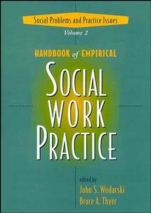
Handbook of Empirical Social Work Practice, 2 Volume Set
ISBN 9780471671688
Autor: Bruce A. Thyer, John S. Wodarski
Wydawca: Wiley
Dostępność: 3-6 tygodni
Cena: 801,15 zł
Przed złożeniem zamówienia prosimy o kontakt mailowy celem potwierdzenia ceny.
ISBN13: |
9780471671688 |
ISBN10: |
0471671681 |
Autor: |
Bruce A. Thyer, John S. Wodarski |
Oprawa: |
Paperback |
Rok Wydania: |
2004-05-28 |
Ilość stron: |
1024 |
Wymiary: |
251x182 |
Tematy: |
JC |
The last two decades in social work have seen tremendous strides in field research, from the development of improved research designs to more accurate methods of problem measurement and outcome analysis. Drawing upon these significant advances, this two–volume handbook brings together empirically validated interventions for many of the psychosocial problems most frequently encountered by social workers in their daily practice.
Spis treści:
VOLUME 1.
Chapter 1. First Principles of Empirical Social Work Practice (Bruce A. Thyer and John S. Wodarski).
PART I. DISORDERS USUALLY FIRST DIAGNOSED IN INFANCY, CHILDHOOD, OR ADOLESCENCE.
Chapter 2. Mental Retardation (John Gerdtz and Joel Bregman).
Chapter 3. Attention Deficit Hyperactivity Disorder (Martha J. Markward).
Chapter 4. Conduct Disorder (Lisa A. Rapp and John S. Wodarski).
Chapter 5. Oppositional Defiant Disorder (Peter Lehmann and Richard F. Dangel).
Chapter 6. Feeding Disorders of Infancy and Early Childhood (MaryLouise E. Kerwin and Nancy Hale Sills).
Chapter 7. Enuresis and Encopresis (John F. Butler and Rick L. Campise).
Chapter Seperation Anxiety Disorder (Karen P. Sowers–Hoag and Toni M. DiDona).
PART II. SUBSTANCE–RELATED DISORDERS.
Chapter 9. Alcohol Abuse (Nancy J. Smyth).
Chapter 10. Cocaine Abuse (Patrick S. Bordnick, Joy Schmitz and Judith R. Bordnick)
Chapter 11. Opiate Abuse (Cheryl Davenport Dozier and J. Aaron Johnson).
PART III. SCHIZOPHRENIA AND OTHER PSYCHOTIC DISORDERS.
Chapter 12. Schizophrenia (Rsemary L. Farmer, Joseph Walsh and Kia J. Bentley).
PART IV. MOOD DISORDERS.
Chapter 13. Major Depressive Disorder and Dysthymic Disorder (Catherine N. Dulmus and John S. Wodarski).
Chapter 14. Bipolar Disorder (Bruce Brotter, John F. Clarkin and Daniel Carpenter).
PART V. ANXIETY DISORDERS.
Chapter 15. Panic Disorder with Agoraphobia (Joseph Himle and Daniel J. Fischer).
Chapter 16. Specific and S
ocial Phobias (Joseph J. Plaud and Keith G. Vavrovsky).
Chapter 17. Obsessive–Compulsive Disorder (Iris Cohen and Gail Steketee).
Chapter 18. Post–Traumatic Stress Disorder (M. Elizabeth Vonk and Bonnie L. Yegidis).
Chapter 19. Generalized Anxiety Disorder (Robert W. McLellarn and Julie M. Rosenzweig).
PART VI. SEXUAL DISORDERS.
Chapter 20. Sexual Desire and Arousal Disorders (Sophia F. Dziegielewski and Cheryl Resnick).
Chapter 21. Orgasmic Disorders (Sophia F. Dziegielewski and Cheryl Resnick).
PART VII. EATING DISORDERS.
Chapter 22. Bulimia Nervosa (Laura L. Myers).
PART VIII. PERSONALITY DISORDERS.
Chapter 23. Borderline Personality Disorder (André Ivanoff, Marsha M. Linehan and Karrie L. Recknor).
Index.
VOLUME 2.
PART I. SOCIAL PROBLEMS.
Chapter 1. Social Problems: A Cost–Effective Psychosocial Prevention Paradigm (John S. Wodarski).
Chapter 2. Child Maltreatment (Peter Lyons).
Chapter 3. Educationally Disadvantaged Children (Catherine N. Dulmus and John S. Wodarski).
Chapter 4. Violence in the Schools (Lisa A. Rapp and John S. Wodarski).
Chapter 5. Adolescent Sexuality (John S. Wodarski).
Chapter 6. Preventing HIV Disease in Adolescents (Charles W. Mueller, et al.).
Chapter 7. Substance Abuse (Nancy J. Smyth).
Chapter 8. Crime (Lisa A. Rapp and John S. Wodarski).
Chapter 9. Urban Decline and Family Homelessness (Namkee G. Choi).
Chapter 10. Unemployment (Anna Celeste Burke).
Chapter 11. Marital Conflict, Domestic Violence, and Family Preservation (M.E. Betsy Garrison and M.A. Keresman).
Chapter 12. The Impact of Race in Social Work Practice (Marvin D. Feit, et al.).
Chapter 13. Practice Approaches with Older Clients (Nancy P. Kropf, et al.).
Chapter 14. Retirement (Virginia L. Fitch, et al.).
Chapter 15. Promoting Self–Management of Chronic Medical Problems (Jan Ligon).
Chapter 16. Hospice Care (Michael J. Holosko an
d D. Rosemary Cassano).
Chapter 17. Treating Chronic Grief (Thomas A. Artelt and Bruce A. Thyer).
PART II. PRACTICE ISSUES.
Chapter 18. Prevention (Steven P. Schinke and Kristin C. Cole).
Chapter 19. Measurement of Social Problems (Walter W. Hudson and Annatjie C. Faul).
Chapter 20. Empirical Approaches to Case Management (Patricia G. Moseley and Kevin L. Deweaver).
Chapter 21. Empirical Approaches to Social Work Supervision (Thomas A. Artelt and Bruce A. Thyer).
Chapter 22. Obstacles to Conducting Empirically Based Practice (Michael J. Holosko and Donald Leslie).
Index.
Koszyk
Książek w koszyku: 0 szt.
Wartość zakupów: 0,00 zł
Informacje


Kontakt
Gambit
Centrum Oprogramowania
i Szkoleń Sp. z o.o.
Al. Pokoju 29b/22-24
31-564 Kraków
Siedziba Księgarni
ul. Kordylewskiego 1
31-542 Kraków
+48 12 410 5991
+48 12 410 5987
+48 12 410 5989
Subskrypcje
Administratorem danych osobowych jest firma Gambit COiS Sp. z o.o. Na podany adres będzie wysyłany wyłącznie biuletyn informacyjny.
Autoryzacja płatności

Informacje na temat autoryzacji płatności poprzez PayU.

© Copyright 2012: GAMBIT COiS Sp. z o.o. Wszelkie prawa zastrzeżone.
Projekt i wykonanie: Alchemia Studio Reklamy