


Wydawcy
Katalog tematyczny
- Archeologia (109)
- Ekonomia, finanse, business (13704)
- Filozofia (1445)
- Historia (3040)
- Języki i językoznawstwo (2356)
- Lifestyle, hobby i rozrywka (475)
- Medycyna (9704)
- Nauki humanistyczne (4)
- Nauki o Ziemi i środowisku (2638)
- Nauki ścisłe (20412)
- Nauki społeczne (8486)
- Nauki techniczne (13450)
- Budownictwo lądowe (1045)
- Chemia przemysłowa (2258)
- Elektronika i telekomunikacja (3287)
- Energetyka (1122)
- Inne nauki stosowane (363)
- Inżynieria biochemiczna (507)
- Inżynieria transportu (232)
- Mechanika i materiały (3316)
- Nauka o środowisku (321)
- Rolnictwo (507)
- Technika, ogólnie (475)
- Prawo (1696)
- Publikacje informacyjne i interdyscyplinarne (1288)
- Religia i wierzenia (917)
- Technika komputerowa (4067)
- Zdrowie, relacje międzyludzkie i rozwój osobisty (657)





Informacje szczegółowe o książce
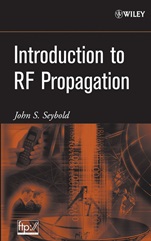
Introduction to RF Propagation
ISBN 9780471655961
Autor: John S. Seybold
Wydawca: Wiley
Dostępność: 3-6 tygodni
Cena: 590,10 zł
Przed złożeniem zamówienia prosimy o kontakt mailowy celem potwierdzenia ceny.
ISBN13: |
9780471655961 |
ISBN10: |
0471655961 |
Autor: |
John S. Seybold |
Oprawa: |
Hardback |
Rok Wydania: |
2005-10-18 |
Ilość stron: |
352 |
Wymiary: |
250x158 |
Tematy: |
TJ |
An introduction to RF propagation that spans all wireless applications
This book provides readers with a solid understanding of the concepts involved in the propagation of electromagnetic waves and of the commonly used modeling techniques. While many books cover RF propagation, most are geared to cellular telephone systems and, therefore, are limited in scope. This title is comprehensive—it treats the growing number of wireless applications that range well beyond the mobile telecommunications industry, including radar and satellite communications.
The author′s straightforward, clear style makes it easy for readers to gain the necessary background in electromagnetics, communication theory, and probability, so they can advance to propagation models for near–earth, indoor, and earth–space propagation. Critical topics that readers would otherwise have to search a number of resources to find are included:RF safety chapter provides a concise presentation of FCC recommendations, including application examples, and prepares readers to work with real–world propagating systemsAntenna chapter provides an introduction to a wide variety of antennas and techniques for antenna analysis, including a detailed treatment of antenna polarization and axial ratio; the chapter contains a set of curves that permit readers to estimate polarization loss due to axial ratio mismatch between transmitting and receiving antennas without performing detailed calculationsAtmospheric effects chapter provides curves of typical atmospheric loss, so that expected loss can be determined easilyRain attenuation chapter features a summary of how to apply the ITU and Crane rain modelsSatellite communication chapter provides the details of earth–space propagation analysis including rain attenuation, atmospheric absorption, path length determination and noise temperature determination
Examples of widely used mod
els provide all the details and information needed to allow readers to apply the models with confidence. References, provided throughout the book, enable readers to explore particular topics in greater depth. Additionally, an accompanying Wiley ftp site provides supporting MathCad files for select figures in the book.
With its emphasis on fundamentals, detailed examples, and comprehensive coverage of models and applications, this is an excellent text for upper–level undergraduate or graduate students, or for the practicing engineer who needs to develop an understanding of propagation phenomena.
Spis treści:
Preface.
1. Introduction.
1.1 Frequency Designations.
1.2 Modes of Propagation.
1.3 Why Model Propagation?
1.4 Model Selection and Application.
1.4.1 Model Sources.
1.5 Summary.
2. Electromagnetics and RF Propagation.
2.1 Introduction.
2.2 The Electric Field.
2.3 The Magnetic Field.
2.4 Electromagnetic Waves.
2.5 Wave Polarization.
2.6 Propagation of Electromagnetic Waves at Material Boundaries.
2.7 Propagation Impairment.
2.8 Ground Effects on Circular Polarization.
2.9 Summary.
3. Antenna Fundamentals.
3.1 Introduction.
3.2 Antenna Parameters.
3.3 Antenna Radiation Regions.
3.4 Some Common Antennas.
3.5 Antenna Polarization.
3.6 Antenna Pointing loss.
3.7 Summary.
4. Communication Systems and the Link Budget.
4.1 Introduction.
4.2 Path Loss.
4.3 Noise.
4.4 Interference.
4.5 Detailed Link Budget.
4.6 Summary.
5. Radar Systems.
5.1 Introduction.
5.2 The Radar Range Equation.
5.3 Radar Measurements.
5.4 Clutter.
5.5 Atmospheric Impairments.
5.6 Summary.
6. Atmospheric Effects.
6.1 Introduction.
6.2 Atmospheric Refraction.
6.3 Atmospheric Attenuation.
6.4 Loss From Moisture and Precipitation.
6.5 Summary.
7. Near–Earth Propagation Models.
7.1 Introduction.
7.2 Foliage Models.
7.3 Terrain Modeling.
7.4 Propagation in Built–Up Areas.
7.5 Summary.
8. Fading and Multipath Characterization.
8.1 Introduction.
8.2 Ground–Bounce Multipath.
8.3 Large–Scale or Log–Normal Fading.
8.4 Small–Scale Fading.
8.5 Summary.
9. Indoor Propagation Modeling.
9.1 Introduction.
9.2 Interference.
9.3 The Indoor Environment.
9.4 Summary.
10. Rain Attenuation of Microwave and Millimeter Wave Signals.
10.1 Introduction.
10.2 Link Budget.
10.3 Rain Fades.
10.4 The Link Distance Chart.
10.5 Availability Curves.
10.6 Other Precipitation.
10.7 Cross–Polarization Effects.
10.8 Summary.
11. Satellite Communications.
11.1 Introduction.
11.2 Satellite Orbits.
11.3 Satellite Operating Frequency.
11.4 Satellite Path Free–Space Loss.
11.5 Atmospheric Attenuation.
11.6 Ionospheric Effects.
11.7 Rain Fades.
11.8 Antenna Considerations.
11.10 Summary.
12. RF Safety.
12.1 Introduction.
12.2 Biological Effects of RF Exposure.
12.3 CC Guidelines.
12.4 Antenna Considerations.
12.5 FCC Computations.
12.6 Station Evaluations.
12.7 Summary.
Appendix A: Review of Probability for Propagation Modeling.
Index.
Nota biograficzna:
JOHN S. SEYBOLD, PHD, is a Communication Systems Engineer at the Harris Corporation. Prior to joining Harris, he was an associate professor of electrical engineering at Florida Institute of Technology where he also served as the associate director of the Institute′s Wireless Center of Excellence. During his career, Dr. Seybold has worked in radar systems, digital signal processing, and communication systems, including spread spectrum.
Okładka tylna:
An introduction to RF propagation that spans all wireless applications
This book provides readers with a so
lid understanding of the concepts involved in the propagation of electromagnetic waves and of the commonly used modeling techniques. While many books cover RF propagation, most are geared to cellular telephone systems and, therefore, are limited in scope. This title is comprehensive—it treats the growing number of wireless applications that range well beyond the mobile telecommunications industry, including radar and satellite communications.
The author′s straightforward, clear style makes it easy for readers to gain the necessary background in electromagnetics, communication theory, and probability, so they can advance to propagation models for near–earth, indoor, and earth–space propagation. Critical topics that readers would otherwise have to search a number of resources to find are included:RF safety chapter provides a concise presentation of FCC recommendations, including application examples, and prepares readers to work with real–world propagating systemsAntenna chapter provides an introduction to a wide variety of antennas and techniques for antenna analysis, including a detailed treatment of antenna polarization and axial ratio; the chapter contains a set of curves that permit readers to estimate polarization loss due to axial ratio mismatch between transmitting and receiving antennas without performing detailed calculationsAtmospheric effects chapter provides curves of typical atmospheric loss, so that expected loss can be determined easilyRain attenuation chapter features a summary of how to apply the ITU and Crane rain modelsSatellite communication chapter provides the details of earth–space propagation analysis including rain attenuation, atmospheric absorption, path length determination and noise temperature determination
Examples of widely used models provide all the details and information needed to allow readers to apply the models with confidence. Refere
Koszyk
Książek w koszyku: 0 szt.
Wartość zakupów: 0,00 zł
Informacje


Kontakt
Gambit
Centrum Oprogramowania
i Szkoleń Sp. z o.o.
Al. Pokoju 29b/22-24
31-564 Kraków
Siedziba Księgarni
ul. Kordylewskiego 1
31-542 Kraków
+48 12 410 5991
+48 12 410 5987
+48 12 410 5989
Subskrypcje
Administratorem danych osobowych jest firma Gambit COiS Sp. z o.o. Na podany adres będzie wysyłany wyłącznie biuletyn informacyjny.
Autoryzacja płatności

Informacje na temat autoryzacji płatności poprzez PayU.

© Copyright 2012: GAMBIT COiS Sp. z o.o. Wszelkie prawa zastrzeżone.
Projekt i wykonanie: Alchemia Studio Reklamy