


Wydawcy
Katalog tematyczny
- Archeologia (109)
- Ekonomia, finanse, business (13704)
- Filozofia (1445)
- Historia (3040)
- Języki i językoznawstwo (2356)
- Lifestyle, hobby i rozrywka (475)
- Medycyna (9704)
- Nauki humanistyczne (4)
- Nauki o Ziemi i środowisku (2638)
- Nauki ścisłe (20412)
- Nauki społeczne (8486)
- Edukacja (229)
- Kryminologia, opieka spełeczna (284)
- Obronność (10)
- Polityka (1389)
- Psychologia (777)
- Socjologia (410)
- Społeczeństwo i kultura (187)
- Nauki techniczne (13450)
- Prawo (1696)
- Publikacje informacyjne i interdyscyplinarne (1288)
- Religia i wierzenia (917)
- Technika komputerowa (4067)
- Zdrowie, relacje międzyludzkie i rozwój osobisty (657)





Informacje szczegółowe o książce
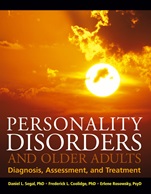
Personality Disorders and Older Adults: Diagnosis, Assessment, and Treatment
ISBN 9780471649830
Autor: Daniel L. Segal, Frederick L. Coolidge, Erlene Rosowsky
Wydawca: Wiley
Dostępność: 3-6 tygodni
Cena: 372,75 zł
Przed złożeniem zamówienia prosimy o kontakt mailowy celem potwierdzenia ceny.
ISBN13: |
9780471649830 |
ISBN10: |
047164983X |
Autor: |
Daniel L. Segal, Frederick L. Coolidge, Erlene Rosowsky |
Oprawa: |
Hardback |
Rok Wydania: |
2006-05-19 |
Ilość stron: |
352 |
Wymiary: |
236x197 |
Tematy: |
JC |
Praise for Personality Disorders and Older Adults
The authors have presented a valuable addition to the literature of geropsychology, a clinically relevant work whose virtues are its comprehensiveness, ease of understanding, and simplicity of expression.
—Theodore Millon, PhD, DSc, Dean and Scientific Director Institute for Advanced Studies in Personology and Psychopathology
...a "must–have" for all clinicians working with this population and an important resource for students and trainees.
—Bob Knight, PhD, University of Southern California
...[this book] should be on the bookshelf of all mental health professionals who work with "problem" clients in geriatric settings, and of all academics who want to understand the latest thinking on aging, personality, and dysfunction.
—Victor Molinari, PhD, ABPPLouis de la Parte Florida Mental Health Institute University of South Florida
...this volume is a much–needed state–of–the–art compendium for both clinicians and researchers.
—Michael Duffy, PhDTexas A&M University
Improving quality of life for older adults with personality disorders
This book provides a theorized pattern for each personality disorder in later life. It examines the potential impact of aging on each of the personality disorders and offers extended case examples for odd and eccentric, dramatic and erratic, and fearful and anxious personality disorders as well as other personality disorders that affect older adults: sadistic, self–defeating, depressive, passive–aggressive, and inadequate. The authors offer guidance based on scholarly research and scientific evidence. The book covers epidemiology and comorbidity, theories of personality disorders, assessment, and intervention strategies.
Personality disorder represents a tough and often frustrating challenge for clinicians. On top of this already challenging clinical situation, man
aging older patients entails contending with the physical and cognitive declines, social losses, reduced independence, and financial strains associated with the aging process. Armed with a better understanding of this very challenging clinical population, readers can help personality–disorderedolder adults age more gracefully and successfully, and help improve their quality of life.
Spis treści:
Foreword.
Preface.
Acknowledgments.
Chapter 1. Introduction to Personality Disorders and Aging.
The Demographics of Aging.
Mental Health and Aging: The Big Picture.
Overview of Personality and Personality Disorder.
History of the Personality Disorder Category.
Modern Conceptualizations.
The DSM–IV–TR Personality Disorders.
Challenges Associated with Personality Disorder Psychopathology.
Conclusions.
About This Book.
Chapter 2. The Odd and Eccentric (Cluster A) Personality Disorders and Aging.
General Diagnostic Criteria.
Cluster A Personality Disorders: Paranoid, Schizoid, and Schizotypal.
Paranoid Personality Disorder.
Schizoid Personality Disorder.
Schizotypal Personality Disorder.
Chapter 3. The Dramatic, Emotional, and Erratic (Cluster B) Personality Disorders and Aging.
Cluster B Personality Disorders: Antisocial, Borderline, Histrionic, and Narcissistic.
Antisocial Personality Disorder.
Borderline Personality Disorder.
Histrionic Personality Disorder.
Narcissitic Personality Disorder.
Chapter 4. The Fearful or Anxious (Cluster C) Personality Disorders and Aging.
Cluster C Personality Disorders: Avoidant, Dependent, and Obsessive–Compulsive.
Avoidant Personality Disorder.
Dependent Personality Disorder.
Obsessive–Compulsive Personality Disorder.
Chapter 5. Other Personality Disorders and Aging: Sadistic, Self–Defeating, Depressive, Passive–Aggressive,
and Inadequate.
Personality Disorders in DSM–III–R Appendix A and in DSM–IV–TR Appendix B.
Sadistic Personality Disorder: DSM–III–R Appendix A.
Self–Defeating Personality Disorder: DSM–III–R Appendix A.
Depressive Personality Disorder: DSM–IV–TR Appendix B.
Passive–Aggressive Personality Disorder: DSM–IV–TR Appendix B.
Inadequate Personality Disorder—A Manifestation of Frontal Lobe Syndrome?
Inadequate Personality Disorder.
Chapter 6. Epidemiology and Comorbidity.
Epidemiology of Personality Disorders in Later Adult Life.
Community and Psychiatric Samples.
The Debate about Stability versus Change for the Personality Disorders.
Epidemiology and Gender.
Course and Prognosis for the Personality Disorders.
Comorbidity: General Issues.
Comorbidity of Personality Disorders with Clinical Disorders and with other Personality Disorders.
Personality Disorders and Dementia.
Conclusions.
Chapter 7. Theories of Personality Disorders: Cognitive, Psychoanalytic, and Interpersonal.
Cognitive Theories of Personality Disorders.
Cognitive Therapy Basics.
Application to Personality Disorders.
Psychoanalytic Theories of Personality Disorders.
Provinces and Instincts of the Psyche.
Neuroses, Psychoses, and Personality Disorders.
Psychoanalytic Theory and Aging.
A Brief Note about the Humanistic Approach.
Interpersonal Theories of Personality Disorders.
Horney’s Interpersonal View of the Personality, Personality Disorders, and the Basic Conflict.
Horney’s Description of Types.
The Resolution of Neurotic Conflict.
Horney, Feminist Psychology, and Humanism.
Horney, Aging, and Personality Disorders.
Conclusions.
Chapter 8. Theories of Personality Disorders: Evolutionary and Neurobiological.
Evolutionary Theor
ies of Personality Disorders.
Basic Concepts of Evolutionary Theory.
Application to Antisocial, Histrionic, Narcissistic, Dependent, and Avoidant Personality Disorders.
Application to Borderline Personality Disorder.
Application to Paranoid Personality Disorder.
Application to Schizoid, Schizotypal, and Avoidant Personality Disorders.
Neurobiological Theories of Personality Disorders.
Conclusions.
Chapter 9. Assessment.
Chart/Records Review.
The Clinical Interview of the Patient.
Interview with Informants.
Self–Report Objective Personality Instruments.
Millon Clinical Multiaxial Inventory–III.
Personality Diagnostic Questionnaire–Fourth Edition Plus.
Coolidge Axis II Inventory.
Minnesota Multiphasic Personality Inventory–2.
NEO Personality Inventory–Revised.
Application of Personality Inventorieswith Older Adults.
Semi–Structured Clinical Interview.
Structured Interview for DSM–IV Personality.
International Personality Disorder Examination.
Structured Clinical Interview for DSM–IV Axis II Personality Disorders.
Personality Disorder Interview–IV 258
Diagnostic Interview for DSM–IV Personality Disorders.
Application of Semi–Structured Interviews with Older Adults.
Conclusions.
Chapter 10. Treatment: General Issues and Models.
Core Features of Personality Disorder Affecting Treatment.
Reliance on Primitive Defenses.
Rigidity of Character Structure and Limited Repertoire.
Effect on Others.
Course of Personality Disorders.
Routes into Treatment.
Function of Buffering.
Function of Bolstering.
Function of Binding.
An Essential Caveat.
Goals of Treatment.
Invisibility of Personality Disorders.
What (Little) Is Known.
Comorbidity of Axis I and Axis II Disorders.
Understanding the Comorbidity.
Treatments and Therapies.
Somatic Treatments.
Psyc
Koszyk
Książek w koszyku: 0 szt.
Wartość zakupów: 0,00 zł
Informacje


Kontakt
Gambit
Centrum Oprogramowania
i Szkoleń Sp. z o.o.
Al. Pokoju 29b/22-24
31-564 Kraków
Siedziba Księgarni
ul. Kordylewskiego 1
31-542 Kraków
+48 12 410 5991
+48 12 410 5987
+48 12 410 5989
Subskrypcje
Administratorem danych osobowych jest firma Gambit COiS Sp. z o.o. Na podany adres będzie wysyłany wyłącznie biuletyn informacyjny.
Autoryzacja płatności

Informacje na temat autoryzacji płatności poprzez PayU.

© Copyright 2012: GAMBIT COiS Sp. z o.o. Wszelkie prawa zastrzeżone.
Projekt i wykonanie: Alchemia Studio Reklamy