


Wydawcy
Katalog tematyczny
- Archeologia (109)
- Ekonomia, finanse, business (13704)
- Filozofia (1445)
- Historia (3040)
- Języki i językoznawstwo (2356)
- Lifestyle, hobby i rozrywka (475)
- Medycyna (9704)
- Nauki humanistyczne (4)
- Nauki o Ziemi i środowisku (2638)
- Nauki ścisłe (20412)
- Nauki społeczne (8486)
- Nauki techniczne (13450)
- Prawo (1696)
- Publikacje informacyjne i interdyscyplinarne (1288)
- Religia i wierzenia (917)
- Technika komputerowa (4067)
- Zdrowie, relacje międzyludzkie i rozwój osobisty (657)





Informacje szczegółowe o książce
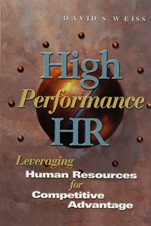
High Performance HR: Leveraging Human Resources for Competitive Advantage
ISBN 9780471643852
Autor: David S. Weiss
Wydawca: Wiley
Dostępność: 3-6 tygodni
Cena: 203,70 zł
Przed złożeniem zamówienia prosimy o kontakt mailowy celem potwierdzenia ceny.
ISBN13: |
9780471643852 |
ISBN10: |
0471643858 |
Autor: |
David S. Weiss |
Oprawa: |
Hardback |
Rok Wydania: |
1999-06-16 |
Ilość stron: |
316 |
Wymiary: |
244x165 |
Tematy: |
KJ |
A fresh perspective on the HR function, High Performance HR challenges the traditional view of HR as a service function and replaces it with a new vision of HR as an internal business accountable for the return on investment of essential corporate assets—people and organizational processes. High Performance HR not only challenges HR’s traditional role, but also provides practical strategies for leveraging HR’s role, priorities, accountabilities, and organizational design.
Get your copy today!
Spis treści:
PREFACE.
ACKNOWLEDGMENTS.
PART ONE: The Challenge.
CHAPTER ONE: The Irish Elk.
The Focus for HR′s Transformation.
The Growth Curve.
Phase One— The Start–up Phase.
Phase Two— The Growth Phase.
Phase Three— The Mature Phase.
Respond to Company Risk with HR Professional Discipline.
Summary
CHAPTER TWO: An HR Business within a Business.
Business and Organizations.
Becoming an HR Business within a Business.
Align HR To Deliver Value to the External Customer.
Redefining HR′s Internal Client Relationships.
All Roads Lead to the External Customer.
Summary.
CHAPTER THREE: The Discipline of Abandonment.
Why Disciplined Abandonment Is Important.
Leadership and Abandonment.
Abandonment and Removing "Noise" from the System.
People, Organizational, and Business Processes.
An Exercise in Abandonment.
Three Kinds of Abandonment for HR.
The Discipline of the "Tie Goes to the Runner" in Abandonment.
Life After Abandonment.
Summary.
PART TWO: People And Organizational Processes.
CHAPTER FOUR: Core People Processes.
The "Hatch" People Processes.
The "Match" People Processes.
Performance Development.
Compensation and Recognition.
Employee Services.
The "Dispatch" People Processes.
Delivering Core and Strategic Process Outcomes.
Su
mmary.
CHAPTER FIVE: Organizational Value–Add.
T: Technology as an Enabler to Allow Many of the New HR Activities to Occur.
L: Learning— Building a Continuous Learning Environment.
C: Consulting to Enhance Organizational Performance.
A Final Note on Organizational Value–Add Processes.
Summary.
PART THREE: Strategic Business Processes.
CHAPTER SIX: Business Transformation: An Overview.
Choosing the Priority Risks and Opportunities.
HR Professional Must Be Strategic Partners to Deliver the Business Transformation.
Two Contrasting Examples of HR′s Potential Role in Business Transformation.
The Next Four Chapters.
Summary.
CHAPTER SEVEN: Cultivate a Flexible Culture.
How to Cultivate a Flexible Culture.
Create and Live the Shared Values.
Develop Leaders Who Inspire Shared Meaning in the Work.
Foster Organizational Elasticity.
Insure Rewards and Recognition Support the Flexible Culture.
Human Resources Enables the Flexible Culture.
Summary.
CHAPTER EIGHT: Champion Strategic Alignment.
The Five Areas of Strategic Alignment.
1. Alignment to the Vision of the Company.
2. Alignment with Other Strategic Teams and Changes within the Company.
3. Alignment to the Customer′s Needs.
4. Alignment with Preferred Suppliers.
5. Internal Alignment within the Strategic Team.
How to Fail at Strategic Alignment.
HR Measures 360 Alignment.
Human Resources Models Strategic Alignment.
Summary.
CHAPTER NINE: Implement Change and Transition.
Change and Transition.
The Process of Implementing Change and Transition.
Element #1: Understand Competitive Forces and Customer Value.
Element #2: Select Change Leaders and Define Accountabilities.
Element #3: Identify the Preferred Future and the Urgency for the Change.
Element #4: Engage Key Stakeholders and Identify Their Interests.
Element #5: Plan the Chang
e in Detail and Anticipate Contingencies.
Element #6: Roll–Out: Communicate, Train and Help People Adjust to Gain Commitment to the Change.
Element #7: Roll–In: Implement the Change and Make It Business As Usual.
Element #8: Roll–On: Measure Results, Share Learnings and Continuously Improve.
HR Applies the Implementing Change and Transition Process to Its Own Changes.
Summary.
CHAPTER TEN: Insure a Return on Investment in Human Capital.
The Strategic Value of the Return on Investment in Human Capital.
Identifying a Metric of Human Capital.
Calculating the Investment Made in Human Capital.
Implications of RIHC for the HR "People and Organizational Processes".
The Assessment of the RIHC for Performance Development.
HR Prepares Dynamic Reports on the Return on Investment in Human Capital.
The HR Competencies Needed to Support RIHC Analysis.
Benefits for HR When It Takes Accountability for RIHC.
Barriers for HR in Leading the RIHC Business Transformation.
Summary.
PART FOUR: The Way Forward.
CHAPTER ELEVEN: HR Structure, Roles, and Relationships.
An Approach to Organizational Structure for HR.
Roles and Relationships for the HR Strategic Partners.
Roles and Relationships for the HR Process Owners.
Roles and Relationships for the HR Strategy Council.
Summary.
CHAPTER TWELVE: The Solution after Next: Integrating Internal Service Businesses.
Five Levels of Integrating Internal Service Businesses.
Level 1— Shared Learnings among Internal Service Businesses.
Level 2— Integration through Joint Planning and Project Management.
Level 3— Integration through Common Processes and Approaches but Still Operating Separately.
Level 4— Integration through Collaborative Work for Specific Initiatives.
Level 5— Structural Integration of Internal Service Businesses.
The Extent to Which Internal Service
Businesses Can Be Integrated.
Epilogue: High Performance HR Professionals Lead the Transformation.
Summary.
APPENDIX: An Interview with Dr. David Weiss.
A COMPREHENSIVE READING LIST FOR HR PROFESSIONALS.
INDEX.
Nota biograficzna:
About the Author Dr. David Weiss is a Partner in the international human resources consulting firm of Geller, Shedletsky #38; Weiss. They specialize in providing consulting services in business strategy, organizational change, human resources development, management assessments, and career management. David Weiss has developed an extensive practice providing HR consulting and executive development to a wide range of clients throughout North America in many industries including telecommunications, pharmaceuticals and financial services. He specializes in redesigning human resource functions to provide strategic value to the company, facilitating senior executive strategic thinking processes and team building, realigning businesses to achieve customer focus, implementing national change management initiatives, and mediating conflicts in all aspects of employee management and customer relations to achieve effective solutions. David received his Doctorate from the University of Toronto and has two Masters degrees from Columbia University in New York. He is a Senior Fellow of the Industrial Relations Centre of Queen′s University, a Past President of the Organizational Psychology Section of the Ontario Psychological Association, and an honored member of the International Who′s Who of Professionals. He is a sought–after motivational speaker, trainer, and facilitator, and he is on the editorial board of the Canadian Learning Journal. He is the author of Beyond the Walls of Conflict: Mutual Gains Negotiating for Unions and Management. High Performance HR is his second book. More information about David and his firm is available at www.gswconsultants.com.
Koszyk
Książek w koszyku: 0 szt.
Wartość zakupów: 0,00 zł
Informacje


Kontakt
Gambit
Centrum Oprogramowania
i Szkoleń Sp. z o.o.
Al. Pokoju 29b/22-24
31-564 Kraków
Siedziba Księgarni
ul. Kordylewskiego 1
31-542 Kraków
+48 12 410 5991
+48 12 410 5987
+48 12 410 5989
Subskrypcje
Administratorem danych osobowych jest firma Gambit COiS Sp. z o.o. Na podany adres będzie wysyłany wyłącznie biuletyn informacyjny.
Autoryzacja płatności

Informacje na temat autoryzacji płatności poprzez PayU.

© Copyright 2012: GAMBIT COiS Sp. z o.o. Wszelkie prawa zastrzeżone.
Projekt i wykonanie: Alchemia Studio Reklamy