


Wydawcy
Katalog tematyczny
- Archeologia (109)
- Ekonomia, finanse, business (13704)
- Filozofia (1445)
- Historia (3040)
- Języki i językoznawstwo (2356)
- Lifestyle, hobby i rozrywka (475)
- Medycyna (9704)
- Nauki humanistyczne (4)
- Nauki o Ziemi i środowisku (2638)
- Nauki ścisłe (20412)
- Astronomia (294)
- Biologia (5119)
- Chemia (6540)
- Fizyka (3309)
- Matematyka (4574)
- Nauki ścisłe, ogólnie (503)
- Nauki społeczne (8486)
- Nauki techniczne (13450)
- Prawo (1696)
- Publikacje informacyjne i interdyscyplinarne (1288)
- Religia i wierzenia (917)
- Technika komputerowa (4067)
- Zdrowie, relacje międzyludzkie i rozwój osobisty (657)





Informacje szczegółowe o książce
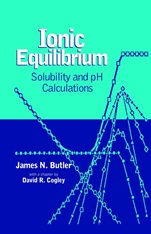
Ionic Equilibrium: Solubility and pH Calculations
ISBN 9780471585268
Autor: James N. Butler
Wydawca: Wiley
Dostępność: 3-6 tygodni
Cena: 927,15 zł
Przed złożeniem zamówienia prosimy o kontakt mailowy celem potwierdzenia ceny.
ISBN13: |
9780471585268 |
ISBN10: |
0471585262 |
Autor: |
James N. Butler |
Oprawa: |
Hardback |
Rok Wydania: |
1998-04-22 |
Ilość stron: |
576 |
Wymiary: |
242x160 |
Tematy: |
PDW |
A celebrated classic in the field updated and expanded to include the latest computerized calculation techniques
In 1964, James N. Butler published a book in which he presented some simple graphical methods of performing acid–base, solubility, and complex formation equilibrium calculations. Today, both the book and these methods have become standard for generations of students and professionals in fields ranging from environmental science to analytical chemistry. Named a "Citation Classic" by the Science Citation Index in 1990, the book, Ionic Equilibrium, continues to be one of the most widely used texts on the subject. So why tamper with near–perfection by attempting a revision of that classic? The reason is simple— the recent rapid development and wide availability of personal computers.
In the revised Ionic Equilibrium, Dr. Butler updates his 1964 work by abandoning the slide rule and graph paper for the PC spreadsheet. He also expands the original coverage with extensive material on basic principles and recent research.
The first part of Ionic Equilibrium is devoted to the fundamentals of acid–base, solubility, and complex formation equilibria. In the second part, the author discusses oxidation–reduction equilibria, develops the principles of carbon dioxide equilibria, presents case studies demonstrating the ways in which carbon dioxide equilibria are used in physiology and oceanography, and explores the possibility of a pH scale for brines. The concluding chapter, written by David R. Cogley, gives examples of general computer programs that are capable of performing equilibrium calculations on systems of many components.
Replete with real–world examples, details of important calculations, and practical problems, Ionic Equilibrium is an ideal course text for students of environmental chemistry, engineering, or health; analytical chemistry; oceanography; geochemistry; biochemistry; physical chemistry; and clini
cal chemistry. It is also a valuable working resource for professionals in those fields as well as industrial chemists involved with solution chemistry.
Spis treści:
Basic Principles.
Activity Coefficients and pH.
Strong Acids and Bases.
Monoprotic Acids and Bases.
Polyprotic Acids and Bases.
Solubility.
Complex Formation.
Organic Complexes.
Oxidation––Reduction Equilibria.
Carbon Dioxide.
pH in Brines.
Automated Computation Methods (by David R. Cogley).
Index.
Nota biograficzna:
JAMES N. BUTLER, PhD, is Gordon McKay Professor of Applied Chemistry in the Division of Engineering and Applied Sciences at Harvard University.
Okładka tylna:
A celebrated classic in the field updated and expanded to include the latest computerized calculation techniques
In 1964, James N. Butler published a book in which he presented some simple graphical methods of performing acid–base, solubility, and complex formation equilibrium calculations. Today, both the book and these methods have become standard for generations of students and professionals in fields ranging from environmental science to analytical chemistry. Named a "Citation Classic" by the Science Citation Index in 1990, the book, Ionic Equilibrium, continues to be one of the most widely used texts on the subject. So why tamper with near–perfection by attempting a revision of that classic? The reason is simple— the recent rapid development and wide availability of personal computers.
In the revised Ionic Equilibrium, Dr. Butler updates his 1964 work by abandoning the slide rule and graph paper for the PC spreadsheet. He also expands the original coverage with extensive material on basic principles and recent research.
The first part of Ionic Equilibrium is devoted to the fundamentals of acid–base, solubility, and complex formation equilibria. In the second part, the author discusses
oxidation–reduction equilibria, develops the principles of carbon dioxide equilibria, presents case studies demonstrating the ways in which carbon dioxide equilibria are used in physiology and oceanography, and explores the possibility of a pH scale for brines. The concluding chapter, written by David R. Cogley, gives examples of general computer programs that are capable of performing equilibrium calculations on systems of many components.
Replete with real–world examples, details of important calculations, and practical problems, Ionic Equilibrium is an ideal course text for students of environmental chemistry, engineering, or health; analytical chemistry; oceanography; geochemistry; biochemistry; physical chemistry; and clinical chemistry. It is also a valuable working resource for professionals in those fields as well as industrial chemists involved with solution chemistry.
Koszyk
Książek w koszyku: 0 szt.
Wartość zakupów: 0,00 zł
Informacje


Kontakt
Gambit
Centrum Oprogramowania
i Szkoleń Sp. z o.o.
Al. Pokoju 29b/22-24
31-564 Kraków
Siedziba Księgarni
ul. Kordylewskiego 1
31-542 Kraków
+48 12 410 5991
+48 12 410 5987
+48 12 410 5989
Subskrypcje
Administratorem danych osobowych jest firma Gambit COiS Sp. z o.o. Na podany adres będzie wysyłany wyłącznie biuletyn informacyjny.
Autoryzacja płatności

Informacje na temat autoryzacji płatności poprzez PayU.

© Copyright 2012: GAMBIT COiS Sp. z o.o. Wszelkie prawa zastrzeżone.
Projekt i wykonanie: Alchemia Studio Reklamy