


Wydawcy
Katalog tematyczny
- Archeologia (109)
- Ekonomia, finanse, business (13704)
- Filozofia (1445)
- Historia (3040)
- Języki i językoznawstwo (2356)
- Lifestyle, hobby i rozrywka (475)
- Medycyna (9704)
- Nauki humanistyczne (4)
- Nauki o Ziemi i środowisku (2638)
- Nauki ścisłe (20412)
- Astronomia (294)
- Biologia (5119)
- Chemia (6540)
- Chemia analityczna (361)
- Chemia fizyczna (346)
- Chemia nieorganiczna (137)
- Chemia organiczna (535)
- Krystalografia (27)
- Minerologia (46)
- Fizyka (3309)
- Matematyka (4574)
- Nauki ścisłe, ogólnie (503)
- Nauki społeczne (8486)
- Nauki techniczne (13450)
- Prawo (1696)
- Publikacje informacyjne i interdyscyplinarne (1288)
- Religia i wierzenia (917)
- Technika komputerowa (4067)
- Zdrowie, relacje międzyludzkie i rozwój osobisty (657)





Informacje szczegółowe o książce
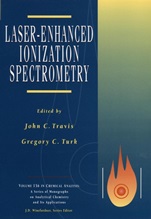
Laser–Enhanced Ionization Spectroscopy
ISBN 9780471576846
Autor: John C. Travis, Gregory C. Turk
Wydawca: Wiley
Dostępność: 3-6 tygodni
Cena: 1 014,30 zł
Przed złożeniem zamówienia prosimy o kontakt mailowy celem potwierdzenia ceny.
ISBN13: |
9780471576846 |
ISBN10: |
0471576840 |
Autor: |
John C. Travis, Gregory C. Turk |
Oprawa: |
Hardback |
Rok Wydania: |
1996-04-26 |
Ilość stron: |
334 |
Wymiary: |
236x157 |
Tematy: |
PN |
Laser–enhanced ionization (LEI) is a type of optical spectrometry that employs photoexcitation to ionize atoms selectively. Over the past two decades, this method—originally known as the optogalvanic effect—has been the object of extensive worldwide research and the subject of numerous papers and published articles. Until now, however, no single volume has presented this wealth of theory and data in a cohesive and accessible form.
Laser–Enhanced Ionization Spectrometry fills this gap in the literature. It synthesizes vast amounts of information previously available only through scattered research papers and covers every aspect of the technology, from underlying principles and theory to methodology and applications. This book examines the state of the art of LEI, compares it with other methods, and demonstrates how laser–enhanced collisional ionization is especially well suited to analytical atomic spectrometry.
The contributors to this collaborative effort—from Russia, Australia, Europe, and the United States—clarify terminology, explain the inner workings of LEI, and offer derivations for both idealized forms and realistic approximations. They also analyze the capabilities and limitations of this technique as an analytical method, including instrumentation, sources of noise, limits of detection, interferences, and applications.
After concentrating largely on flame LEI as the most commonly used method to derive LEI measurements, the discussion moves to the development of nonflame technologies for LEI. There is also extended coverage of the relationship between LEI and laser–induced fluorescence, including an examination of the interplay of laser–induced ionization and fluorescence techniques in different atomic and molecular reservoirs.
Laser–Enhanced Ionization Spectrometry places understanding, usefulness, and practical applications ahead of detailed derivations. For practicin
g analytical chemists and spectroscopists, it offers a clear and uncluttered approach to a complex subject, as well as a fresh perspective on a still–emerging technology.
This book sums up the present understanding and state of the art of laser–enhanced ionization (LEI)–a unique but underutilized tool for analytical atomic spectrometry. LEI possesses the special ability to ionize atoms selectively. The text focuses on the role of this technology in analytical chemistry, and covers both theory and applications in one complete, self–contained volume.
Carefully crafted by leading experts from around the globe, with contributions under six key headings, Laser–Enhanced Ionization Spectrometry Draws on hundreds of research papers to create a comprehensive reference for LEI Describes in depth how ions are produced, and how a signal is generated and detected Provides an extensive and up–to–date compilation of published LEI detection limits Emphasizes basic understanding and practical applications rather than detailed derivations Discusses terms and definitions and clears up sources of confusion in the field Offers up–to–date coverage of instrumentation and applications Evaluates the usefulness of LEI as an analytical tool Deals with questions of limits of detection, interference, and noise Devotes an entire segment to nonflame technologies for LEI Extends the discussion to fluorescence techniques and how they can be interrelated with LEI in various atomic and molecular reservoirs
Spis treści:
Fundamental Mechanisms of Laser–Enhanced Ionization: The Production of Ions (O. Axner & H. Rubinsztein–Dunlop).
Fundamental Mechanisms of Laser–Enhanced Ionization: Signal Detection (J. Travis & G. Turk).
Analytical Performance of Laser–Enhanced Ionization in Flames (G. Turk).
Applications of Laser–Enhanced Io
nization Spectrometry (R. Green).
Non Flame Reservoirs for Laser–Enhanced Ionization Spectrometry (N. Zorov).
Ions and Photons: Interplay of Laser–Induced Ionization and Fluorescence Techniques in Different Atomic and Molecular Reservoirs (N. Omenetto & P. Farnsworth).
Index.
Nota biograficzna:
About the editors
JOHN C. TRAVIS is a chemical physicist who has been with the Analytical Chemistry Division of the National Institute of Standards and Technology (formerly the National Bureau of Standards) since earning his PhD in physics from the University of Texas in 1967. His research interests have resulted in more than 75 papers spanning Mossbauer spectroscopy, applications of tunable lasers to chemical analysis, Fourier Transform spectroscopy, atomic emission, molecular absorption, and spectroscopic methods in process analytical chemistry.
GREGORY C. TURK received his bachelor′s degree in 1973 from Rutgers College, and his PhD in 1978 from the University of Maryland, where his dissertation research included the first analytical applications of laser–enhanced ionization. He has been employed as a research chemist at the National Bureau of Standards and the National Institute of Standards and Technology since 1976, studying analytical applications of laser spectroscopy and mass spectrometry.
Okładka tylna:
Laser–enhanced ionization (LEI) is a type of optical spectrometry that employs photoexcitation to ionize atoms selectively. Over the past two decades, this method—originally known as the optogalvanic effect—has been the object of extensive worldwide research and the subject of numerous papers and published articles. Until now, however, no single volume has presented this wealth of theory and data in a cohesive and accessible form.
Laser–Enhanced Ionization Spectrometry fills this gap in the literature. It synthesizes vast amounts of information previou
sly available only through scattered research papers and covers every aspect of the technology, from underlying principles and theory to methodology and applications. This book examines the state of the art of LEI, compares it with other methods, and demonstrates how laser–enhanced collisional ionization is especially well suited to analytical atomic spectrometry.
The contributors to this collaborative effort—from Russia, Australia, Europe, and the United States—clarify terminology, explain the inner workings of LEI, and offer derivations for both idealized forms and realistic approximations. They also analyze the capabilities and limitations of this technique as an analytical method, including instrumentation, sources of noise, limits of detection, interferences, and applications.
After concentrating largely on flame LEI as the most commonly used method to derive LEI measurements, the discussion moves to the development of nonflame technologies for LEI. There is also extended coverage of the relationship between LEI and laser–induced fluorescence, including an examination of the interplay of laser–induced ionization and fluorescence techniques in different atomic and molecular reservoirs.
Laser–Enhanced Ionization Spectrometry places understanding, usefulness, and practical applications ahead of detailed derivations. For practicing analytical chemists and spectroscopists, it offers a clear and uncluttered approach to a complex subject, as well as a fresh perspective on a still–emerging technology.
This book sums up the present understanding and state of the art of laser–enhanced ionization (LEI)–a unique but underutilized tool for analytical atomic spectrometry. LEI possesses the special ability to ionize atoms selectively. The text focuses on the role of this technology in analytical chemistry, and covers both theory and applications in one complete, self–contained volume.
Carefull
Koszyk
Książek w koszyku: 0 szt.
Wartość zakupów: 0,00 zł
Informacje


Kontakt
Gambit
Centrum Oprogramowania
i Szkoleń Sp. z o.o.
Al. Pokoju 29b/22-24
31-564 Kraków
Siedziba Księgarni
ul. Kordylewskiego 1
31-542 Kraków
+48 12 410 5991
+48 12 410 5987
+48 12 410 5989
Subskrypcje
Administratorem danych osobowych jest firma Gambit COiS Sp. z o.o. Na podany adres będzie wysyłany wyłącznie biuletyn informacyjny.
Autoryzacja płatności

Informacje na temat autoryzacji płatności poprzez PayU.

© Copyright 2012: GAMBIT COiS Sp. z o.o. Wszelkie prawa zastrzeżone.
Projekt i wykonanie: Alchemia Studio Reklamy