


Wydawcy
Katalog tematyczny
- Archeologia (109)
- Ekonomia, finanse, business (13704)
- Filozofia (1445)
- Historia (3040)
- Języki i językoznawstwo (2356)
- Lifestyle, hobby i rozrywka (475)
- Medycyna (9704)
- Chirurgia (272)
- Inne gałęzie medycyny (1871)
- Medycyna kliniczna (4187)
- Choroby wewnętrzne (514)
- Dermatologia (51)
- Diagnostyka medyczna (3)
- Endokrynologia (144)
- Gastroenterologia (27)
- Geriatria (50)
- Ginekologia i położnictwo (134)
- Hematologia (46)
- Hepatologia (10)
- Kardiologia (71)
- Laryngologia (12)
- Nefrologia (10)
- Neurologia (500)
- Oftalmologia (50)
- Pediatria (33)
- Pulmunologia (32)
- Reumatologia (14)
- Terapia genowa (1)
- Układ mięśniowo-szkieletowy (1)
- Urologia (14)
- Medycyna niekonwencjonalna (14)
- Medycyna przedkliniczna (269)
- Medycyna, ogólnie (1740)
- Medyczne służby pomocnicze (745)
- Studia medyczne (16)
- Weterynaria (548)
- Nauki humanistyczne (4)
- Nauki o Ziemi i środowisku (2638)
- Nauki ścisłe (20412)
- Nauki społeczne (8486)
- Nauki techniczne (13450)
- Prawo (1696)
- Publikacje informacyjne i interdyscyplinarne (1288)
- Religia i wierzenia (917)
- Technika komputerowa (4067)
- Zdrowie, relacje międzyludzkie i rozwój osobisty (657)





Informacje szczegółowe o książce
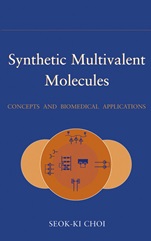
Synthetic Multivalent Molecules: Concepts and Biomedical Applications
ISBN 9780471563471
Autor: Seok–Ki Choi
Wydawca: Wiley
Dostępność: 3-6 tygodni
Cena: 849,45 zł
Przed złożeniem zamówienia prosimy o kontakt mailowy celem potwierdzenia ceny.
ISBN13: |
9780471563471 |
ISBN10: |
0471563471 |
Autor: |
Seok–Ki Choi |
Oprawa: |
Hardback |
Rok Wydania: |
2004-09-03 |
Ilość stron: |
448 |
Wymiary: |
235x164 |
Tematy: |
MJ |
The first reference devoted solely to multivalent molecules
Interest in multivalent molecules has recently increased due to the biomedical applications of multivalent interaction. This interaction, analogous to the process of a zipper closing, occurs with receptor contact at multiple binding sites simultaneously. While conventional drugs are monovalent, a new class of multivalent drugs has the potential to treat a broad range of diseases with improved safety, efficacy, potency, and duration of action.
Synthetic Multivalent Molecules: Concepts and Biomedical Applications presents both the basic principles of multivalent interactions and up–to–date coverage of the design concepts, synthesis, and biological activity of multivalent molecules. With a systematic summary of experimentally tested case studies, this clearly written text serves to bring together otherwise scattered research material. Chapters cover multivalent molecules in the context of:Definition and structural elementsMechanistic basis of interactionBiological functionsBiological targets in viruses, bacteria, and mammalian cellsMethods for synthesis of multivalent molecules
Synthetic Multivalent Molecules functions admirably as both a textbook for students and a reference for libraries and professionals. Special features include more than 300 figures and illustrations that show multivalent concepts, molecular design, and chemical synthesis; summaries of all examples in tabular form in an appendix; and an extensive bibliography referencing over 900 citations.
Intended for a broad community of audiences made up of educators, advanced students, and professional researchers in academia and industry, Synthetic Multivalent Molecules: Concepts and Biomedical Applications stands as an invaluable, state–of–the–art reference.
Spis treści:
Preface.
Notes for Organization and Classification.
A
bbreviations.
1 Introduction.
1.1 Nomenclature and Definitions.
1.2 Mechanistic Aspects of Multivalent Interaction.
1.3 Biological Roles of Multivalent Ligands.
2 Multivalent Molecules Applied to Viral Targets.
2.1 Influenza Virus.
2.2 Human Immunodeficiency Virus.
2.3 Rotavirus.
2.4 Polyoma Virus.
2.5 Picorna Virus.
2.6 Respiratory Syncytial Virus.
2.7 Dengue Virus.
2.8 Nucleic Acids of Viruses.
2.9 Synthetic Multivalent Vaccines.
3 Multivalent Molecules Applied to Bacterial Targets.
3.1 Targets in Bacterial Cell Membranes.
3.2 Bacterial Toxins.
3.3 Bacterial Enzymes.
3.4 Bacterial Nucleic Acids.
3.5 Multivalent Molecules as Synthetic Vaccines.
3.6 Fungal Cells.
4 Multivalent Molecules Applied to Cellular Targets.
4.1 Carbohydrate–Recognition Receptors on Cell Surfaces.
4.2 Peptide and Hormone Recognition Receptors on Cell Surfaces.
4.3 Ligand–Mediated Receptor Dimerization.
4.4 Enzymes.
4.5 G–Protein–Coupled Receptors.
4.6 Ion Channels.
4.7 Nucleic Acids.
4.8 Antibodies.
4.9 Cell Surface Engineering.
5 Chemical Synthesis of Multivalent Molecules.
5.1 Selected Synthetic Methods for Multimerization.
5.2 Combinatorial Chemistry.
Appendix.
Table 1. Divalent Ligands Linked to Enzymes in Human Immunodeficiency Virus (HIV).
Table 2. Multivalent Ligands Linked to gp120 Surface Receptors in Human Immunodeficiency Virus.
Table 3. Multivalent Ligands Linked to Surface Receptors on Viruses.
Table 4. Multivalent Receptors Targeting Multivalent Ligands in Bacterial Cell Walls.
Table 5. Multivalent Ligands Targeting Bacterial Receptors in Membrane Surfaces.
Table 6. Multivalent Ligands Linked to Bacterial Toxins.
Table 7. Multivalent Molecules Targeting Bacterial Enzymes.
Table 8. Multivalent Ligands Targeting Carbohydrate–Recognition Receptors on Cellular Surfaces.
Table 9. Mu
ltivalent Ligands Targeting Noncarbohydrate–Recognition Receptors on Cellular Surfaces.
Table 10. Multivalent Ligands Linked to Selectins on Cell Surfaces.
Table 11. Multivalent Ligands Linked to Lectins.
Table 12. Multivalent Ligands Linked to Cellular Enzymes.
Table 13. Multivalent Ligands Linked to G–Protein–Coupled Receptors (GPCRs).
Table 14. Multivalent Ion Channel–Binding Molecules.
Table 15. Homo– and Heterodivalent Chemical Inducers of Dimerization (CIDs).
Table 16. Multivalent Ligands Linked to Nucleic Acids.
Table 17. Synthetic Multivalent Antigens.
Table 18. Multivalent Ligands Displayed on Self–Assembled Monolayer (SAM) Made of Alkanethiolate on Gold.
Table 19. (Bio)chemical Modification of Cell Surface Antigens.
Table 20. Multivalent Targets.
References.
Index.
Nota biograficzna:
SEOK–KI CHOI works for Theravance, Inc., where he gained firsthand insight into the application of multivalent drug design and development. Prior to his work at Theravance, he served on the faculty in the Department of Chemistry and Chemical Biology at Harvard University, establishing his credentials in the field. He is a member of the American Chemical Society and has authored several papers and articles in the biochemistry field.
Okładka tylna:
The first reference devoted solely to multivalent molecules
Interest in multivalent molecules has recently increased due to the biomedical applications of multivalent interaction. This interaction, analogous to the process of a zipper closing, occurs with receptor contact at multiple binding sites simultaneously. While conventional drugs are monovalent, a new class of multivalent drugs has the potential to treat a broad range of diseases with improved safety, efficacy, potency, and duration of action.
Synthetic Multivalent Molecules: Concepts and Biomedical Applications presents both the basic principle
s of multivalent interactions and up–to–date coverage of the design concepts, synthesis, and biological activity of multivalent molecules. With a systematic summary of experimentally tested case studies, this clearly written text serves to bring together otherwise scattered research material. Chapters cover multivalent molecules in the context of:Definition and structural elementsMechanistic basis of interactionBiological functionsBiological targets in viruses, bacteria, and mammalian cellsMethods for synthesis of multivalent molecules
Synthetic Multivalent Molecules functions admirably as both a textbook for students and a reference for libraries and professionals. Special features include more than 300 figures and illustrations that show multivalent concepts, molecular design, and chemical synthesis; summaries of all examples in tabular form in an appendix; and an extensive bibliography referencing over 900 citations.
Intended for a broad community of audiences made up of educators, advanced students, and professional researchers in academia and industry, Synthetic Multivalent Molecules: Concepts and Biomedical Applications stands as an invaluable, state–of–the–art reference.
Koszyk
Książek w koszyku: 0 szt.
Wartość zakupów: 0,00 zł
Informacje


Kontakt
Gambit
Centrum Oprogramowania
i Szkoleń Sp. z o.o.
Al. Pokoju 29b/22-24
31-564 Kraków
Siedziba Księgarni
ul. Kordylewskiego 1
31-542 Kraków
+48 12 410 5991
+48 12 410 5987
+48 12 410 5989
Subskrypcje
Administratorem danych osobowych jest firma Gambit COiS Sp. z o.o. Na podany adres będzie wysyłany wyłącznie biuletyn informacyjny.
Autoryzacja płatności

Informacje na temat autoryzacji płatności poprzez PayU.

© Copyright 2012: GAMBIT COiS Sp. z o.o. Wszelkie prawa zastrzeżone.
Projekt i wykonanie: Alchemia Studio Reklamy