


Wydawcy
Katalog tematyczny
- Archeologia (109)
- Ekonomia, finanse, business (13704)
- Filozofia (1445)
- Historia (3040)
- Języki i językoznawstwo (2356)
- Lifestyle, hobby i rozrywka (475)
- Medycyna (9704)
- Nauki humanistyczne (4)
- Nauki o Ziemi i środowisku (2638)
- Nauki ścisłe (20412)
- Nauki społeczne (8486)
- Nauki techniczne (13450)
- Budownictwo lądowe (1045)
- Chemia przemysłowa (2258)
- Elektronika i telekomunikacja (3287)
- Energetyka (1122)
- Inne nauki stosowane (363)
- Inżynieria biochemiczna (507)
- Inżynieria transportu (232)
- Mechanika i materiały (3316)
- Nauka o środowisku (321)
- Rolnictwo (507)
- Technika, ogólnie (475)
- Prawo (1696)
- Publikacje informacyjne i interdyscyplinarne (1288)
- Religia i wierzenia (917)
- Technika komputerowa (4067)
- Zdrowie, relacje międzyludzkie i rozwój osobisty (657)





Informacje szczegółowe o książce
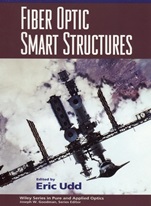
Fiber Optic Smart Structures
ISBN 9780471554486
Autor: Eric Udd
Wydawca: Wiley
Dostępność: 3-6 tygodni
Cena: 1 085,70 zł
Przed złożeniem zamówienia prosimy o kontakt mailowy celem potwierdzenia ceny.
ISBN13: |
9780471554486 |
ISBN10: |
0471554480 |
Autor: |
Eric Udd |
Oprawa: |
Hardback |
Rok Wydania: |
1995-05-04 |
Ilość stron: |
688 |
Wymiary: |
240x168 |
Tematy: |
TGM |
Recent earthquakes and space program–related news serve as potent reminders of the uses fiber optic technology offers to an increasingly complex world. Like living organisms sensitive to subtle changes in the environment, buildings, structures, and space vehicles can be equipped to sense and react to their surroundings by means of hair–thin glass fiber sensors embedded in structural materials and capable of carrying information and measuring changes in stress and other environmental factors. Data is collected and transmitted to a central location, where the findings are assessed and damage corrected.
Fiber Optic Smart Structures pools the expertise of thirty–three leading professionals, many of whom are pioneers in the field, and offers a comprehensive introduction to this fast growing technology. Beginning with a historical overview and a look at the background technology, the book goes on to discuss methods of embedding optical fibers in modern high–strength, lightweight composite materials; ingress and egress of optical fibers; and more specialized application concerns, including use of the Fabry–Perot interferometer and Bragg grating sensors. Lower cost options are considered in light of performance trade–offs, and broad area coverage through single–line stringing of multiple fiber sensors is compared with single and distributed sensor approaches.
The last section of the book treats the use of fiber optic smart structures in a wide range of settings. Discussions include applications in environments where high temperature and ultrasonic waves play a role; in the aerospace industry, where changes in the structural integrity of the system demand real–time automatic changes; and a rapidly emerging new direction, earthquake–resistant buildings and, along similar lines, bridges that perform self–diagnostics.
The first and only comprehensive professional reference in this important, emerging field, F
iber Optic Smart Structures is a major addition to the libraries of aerospace engineers, mechanical scientists, fiber optics researchers and engineers, architects, and structural engineers. It is also a first–rate graduate–level textbook.
The first and only comprehensive reference on this important and emerging field...
Fiber Optic Smart Structures is the ultimate resource for engineers, architects, researchers, and anyone with an interest in this promising new technology. Thirty–three of the world′s leading professionals—many of them pioneers in the field—bring you comprehensive coverage of every important aspect of fiber optic smart structure technology, including its history and evolution, background technologies, structural and assembly issues, sensing devices, and numerous applications.
Topics of particular interest include: An introduction to advanced composite materials associated with fiber optic smart structures Structural integrity of materials containing embedded optical fibers Methods of fiber optic ingress and egress for smart structures Detailed descriptions of the most useful and promising fiber optic sensors, including those based on the Fabry–Perot interferometer and Bragg grating Extended discussions of applications, including the use of fiber optic smart structures in high–temperature environments, quality control procedures, aircraft and space vehicles, earthquake–resistant buildings, and bridges that perform self–diagnostics And much more
Spis treści:
Partial table of contents:
Fiber Optic Smart Structure Technology (E. Udd).
Optical Fiber/Composite Interaction Mechanics (J. Sirkis & A. Dasgupta).
Integrity of Composite Structures with Embedded Optical Fibers (D. Jensen & J. Sirkis).
Fiber Optic Strain Sensing (R. Measures).
Sensors for Smart Structures Based on the Fabry–Perot Interfer
ometer (C. Lee & H. Taylor).
Elliptical–Core Two–Mode Optical Fiber Sensors (K. Murphy, et al.).
Fluorescence Optrode Sensors (FOS) for Composite Processing Control and Smart Structure Applications (R. Levy & S. Schwab).
Distributed Optical Fiber Sensors (J. Dakin).
Actuators for Smart Structures (A. Chaudhry & C. Rogers).
Interferometric Optical Fiber Sensors for Ultrasonic Wave Measurement (R. Claus, et al.).
Control of Smart Space Structures (A. Bicos).
Fiber Optic Smart Civil Structures (D. Huston & P. Fuhr).
Index.
Nota biograficzna:
About the editor
ERIC UDD is President of Blue Road Research, Inc., a company he founded in 1993 to develop fiber optic sensor and smart materials and structure technology. Prior to establishing Blue Road Research, he was Staff Senior Manager and McDonnell Douglas Fellow in the Advanced Products and Technology Division of McDonnell Douglas Aerospace. Mr. Udd has been responsible for fiber optic sensor and communication system design for a series of major research and development programs. While at McDonnell Douglas from 1977 to 1993, he acted as principal investigator and/or program manager on over 20 Department of Defense, commercial and internal research and development efforts on fiber optic gyros, acoustic sensors and accelerometers; seismic, strain, temperature and pressure sensors; as well as fiber optic communication systems and the area of fiber optic smart structures. He has been involved in the area of fiber optic smart structures since its inception and chaired the first international conference in this area (Fiber Optic Smart Structures and Skins, SPIE Proceedings, Volume 986, Boston, 1988). Mr. Udd has approximately 25 domestic and foreign patents issued or pending on fiber optic technology, has written and or presented over 50 papers, and has chaired 17 conferences on fiber optic sensor and smart structure technology. He is the editor of Fiber Op
tic Sensors: An Introduction for Engineers and Scientists, also available from Wiley. Mr. Udd received his MSE in electro–optics and applied physics from Princeton University in 1978.
Okładka tylna:
Recent earthquakes and space program–related news serve as potent reminders of the uses fiber optic technology offers to an increasingly complex world. Like living organisms sensitive to subtle changes in the environment, buildings, structures, and space vehicles can be equipped to sense and react to their surroundings by means of hair–thin glass fiber sensors embedded in structural materials and capable of carrying information and measuring changes in stress and other environmental factors. Data is collected and transmitted to a central location, where the findings are assessed and damage corrected.
Fiber Optic Smart Structures pools the expertise of thirty–three leading professionals, many of whom are pioneers in the field, and offers a comprehensive introduction to this fast growing technology. Beginning with a historical overview and a look at the background technology, the book goes on to discuss methods of embedding optical fibers in modern high–strength, lightweight composite materials; ingress and egress of optical fibers; and more specialized application concerns, including use of the Fabry–Perot interferometer and Bragg grating sensors. Lower cost options are considered in light of performance trade–offs, and broad area coverage through single–line stringing of multiple fiber sensors is compared with single and distributed sensor approaches.
The last section of the book treats the use of fiber optic smart structures in a wide range of settings. Discussions include applications in environments where high temperature and ultrasonic waves play a role; in the aerospace industry, where changes in the structural integrity of the system demand real–time automatic changes; and a rapidly
Koszyk
Książek w koszyku: 0 szt.
Wartość zakupów: 0,00 zł
Informacje


Kontakt
Gambit
Centrum Oprogramowania
i Szkoleń Sp. z o.o.
Al. Pokoju 29b/22-24
31-564 Kraków
Siedziba Księgarni
ul. Kordylewskiego 1
31-542 Kraków
+48 12 410 5991
+48 12 410 5987
+48 12 410 5989
Subskrypcje
Administratorem danych osobowych jest firma Gambit COiS Sp. z o.o. Na podany adres będzie wysyłany wyłącznie biuletyn informacyjny.
Autoryzacja płatności

Informacje na temat autoryzacji płatności poprzez PayU.

© Copyright 2012: GAMBIT COiS Sp. z o.o. Wszelkie prawa zastrzeżone.
Projekt i wykonanie: Alchemia Studio Reklamy