


Wydawcy
Katalog tematyczny
- Archeologia (109)
- Ekonomia, finanse, business (13704)
- Filozofia (1445)
- Historia (3040)
- Języki i językoznawstwo (2356)
- Lifestyle, hobby i rozrywka (475)
- Medycyna (9704)
- Nauki humanistyczne (4)
- Nauki o Ziemi i środowisku (2638)
- Nauki ścisłe (20412)
- Astronomia (294)
- Biologia (5119)
- Chemia (6540)
- Chemia analityczna (361)
- Chemia fizyczna (346)
- Chemia nieorganiczna (137)
- Chemia organiczna (535)
- Krystalografia (27)
- Minerologia (46)
- Fizyka (3309)
- Matematyka (4574)
- Nauki ścisłe, ogólnie (503)
- Nauki społeczne (8486)
- Nauki techniczne (13450)
- Prawo (1696)
- Publikacje informacyjne i interdyscyplinarne (1288)
- Religia i wierzenia (917)
- Technika komputerowa (4067)
- Zdrowie, relacje międzyludzkie i rozwój osobisty (657)





Informacje szczegółowe o książce
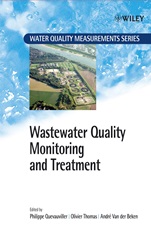
Wastewater Quality Monitoring and Treatment
ISBN 9780471499299
Autor: Philippe Quevauviller, Olivier Thomas, André Van Der Beken
Wydawca: Wiley
Dostępność: 3-6 tygodni
Cena: 994,35 zł
Przed złożeniem zamówienia prosimy o kontakt mailowy celem potwierdzenia ceny.
ISBN13: |
9780471499299 |
ISBN10: |
0471499293 |
Autor: |
Philippe Quevauviller, Olivier Thomas, André Van Der Beken |
Oprawa: |
Hardback |
Rok Wydania: |
2006-11-17 |
Ilość stron: |
408 |
Wymiary: |
232x161 |
Tematy: |
PN |
Wastewater monitoring procedures are subject to many drawbacks due to the difficulties in accurately and frequently measuring the necessary variables, which essentially rely on ‘classical’ monitoring approaches involving sampling, storage and laboratory analysis. The only way to make progress in wastewater treatment, and hence to comply with related regulations, is to ensure that the plants are able to work with complete reliability. This implies that reliable monitoring of the wastewater quality and quantity and of the treatment efficiency should be performed for the characterisation of raw and treated wastewaters and for the control of the plant itself.
This book reflects this awareness by summarising different views on wastewater treatment–related monitoring and control. It is composed of six different parts as follows:
The first part provides an overview of EU and US wastewater policies, standard methodologies, reference materials and discusses sampling assistance, biosensors and alternative methods.Sewer quality control is examined in the second part, including considerations on sewage characterisation and evolution, flow measurements and monitoring in rural areas.This is followed in the third and fourth parts, by chapters concerning urban wastewater treatment plant control and industrial wastewater treatment plant control.Part Five discusses monitoring in the context of discharges and receiving medium, including water quality modelling.Finally, socio–economic aspects are considered in the sixth part with a focus on data collection and merging, as well as training.
This book has been written by experts in the field of wastewater treatment policy, control and monitoring. It provides an overview of the existing knowledge in wastewater monitoring and identifies emerging needs, which will be of direct interest to policy makers, water scientist and industry, and analytical control laboratories.
Wat
er Quality Measurement Series
This series provides a comprehensive coverage of the analytical techniques used for the measurement of substances in water, from sampling through to laboratory analysis. The scope of the series encompasses topic issues including quality assurance, standard procedures, and the best practices in measuring water quality, from surface and drinking water to coastal and wastewater. The techniques will be discussed in relation to current legislation and guidelines.
The series aims to offer workable answers to specific practical issues related to measurements of the water cycle quality, using a comprehensive and scientifically sound approach.
Spis treści:
Series Preface.
Preface.
List of Contributors.
1.1 Wastewater Regulation (Violeta Vinceviciene).
1.2 Sampling Assistance (Olivier Thomas).
1.3 Standard Methodologies (Estelle Dupuit).
1.4 Alternative Methods (Olivier Thomas).
1.5 Biosensors and Biological Monitoring for Assessing Water Quality (Carmen Rebollo, Juan Azc´arate and Yolanda Madrid).
1.6 Reference Materials (Philippe Quevauviller, Christian Dietz and Carmen Cámara).
2.1 Sewers (Characterization and Evolution of Sewage) (Olivier Thomas and Marie–Florence Pouet).
2.2 Sewer Flow Measurement (Charles S. Melching).
2.3 Monitoring in Rural Areas (Ann van Griensven and Véronique Vandenberghe).
3.1 Elements of Modelling and Control of UrbanWastewater Treatment Systems (Olivier Potier and Marie–No¨elle Pons).
3.2 Treatability Evaluation (Gianni Andreottola and Paola Foladori).
3.3 Toxicity Evaluation (Martijn Devisscher, Chris Thoeye, Greet De Gueldre and Boudewijn Van De Steene).
3.4 Nutrient Control (Victor Cerdà and José M. Estela).
4.1 State Estimation for Wastewater
Treatment Processes (Olivier Bernard, Benoˆıt Chachuat and Jean–Philippe Steyer).
4.2 IndustrialWastewater Quality Monitoring (Olivier Thomas and Marie–Florence Pouet).
5.1 Quality Survey of Wastewater Discharges (Marie–Florence Pouet, Genevi`eve Marcoux and Olivier Thomas).
5.2 Monitoring for Water Quality Modelling (Véronique Vandenberghe, Ann van Griensven and Peter Vanrolleghem).
5.3 Discharges in Sensitive Receiving Waters (Giuliano Ziglio, Marco Vian and Claudia Lasagna).
5.4 Water Reuse (Davide Bixio, Thomas Wintgens, Aldo Ravazzini, Chris Thoeye, Haim Cikurel, Av Aharoni, Jaap De Koning and Thomas Melin).
6.1 Collecting and Merging Data from Widespread and Disparate Sources (Michael J. Scott).
6.2 Training (Jean–Luc Cécile and Evelyne Touraud).
Index.
Okładka tylna:
Wastewater monitoring procedures are subject to many drawbacks due to the difficulties in accurately and frequently measuring the necessary variables, which essentially rely on ‘classical’ monitoring approaches involving sampling, storage and laboratory analysis. The only way to make progress in wastewater treatment, and hence to comply with related regulations, is to ensure that the plants are able to work with complete reliability. This implies that reliable monitoring of the wastewater quality and quantity and of the treatment efficiency should be performed for the characterisation of raw and treated wastewaters and for the control of the plant itself.
This book reflects this awareness by summarising different views on wastewater treatment–related monitoring and control. It is composed of six different parts as follows:
The first part provides an overview of EU and US wastewater policies, standard methodologies, reference materials and discusses sampling assistance, biosensors and alternati
ve methods.Sewer quality control is examined in the second part, including considerations on sewage characterisation and evolution, flow measurements and monitoring in rural areas.This is followed in the third and fourth parts, by chapters concerning urban wastewater treatment plant control and industrial wastewater treatment plant control.Part Five discusses monitoring in the context of discharges and receiving medium, including water quality modelling.Finally, socio–economic aspects are considered in the sixth part with a focus on data collection and merging, as well as training.
This book has been written by experts in the field of wastewater treatment policy, control and monitoring. It provides an overview of the existing knowledge in wastewater monitoring and identifies emerging needs, which will be of direct interest to policy makers, water scientist and industry, and analytical control laboratories.
Water Quality Measurement Series
This series provides a comprehensive coverage of the analytical techniques used for the measurement of substances in water, from sampling through to laboratory analysis. The scope of the series encompasses topic issues including quality assurance, standard procedures, and the best practices in measuring water quality, from surface and drinking water to coastal and wastewater. The techniques will be discussed in relation to current legislation and guidelines.
The series aims to offer workable answers to specific practical issues related to measurements of the water cycle quality, using a comprehensive and scientifically sound approach.
Koszyk
Książek w koszyku: 0 szt.
Wartość zakupów: 0,00 zł
Informacje


Kontakt
Gambit
Centrum Oprogramowania
i Szkoleń Sp. z o.o.
Al. Pokoju 29b/22-24
31-564 Kraków
Siedziba Księgarni
ul. Kordylewskiego 1
31-542 Kraków
+48 12 410 5991
+48 12 410 5987
+48 12 410 5989
Subskrypcje
Administratorem danych osobowych jest firma Gambit COiS Sp. z o.o. Na podany adres będzie wysyłany wyłącznie biuletyn informacyjny.
Autoryzacja płatności

Informacje na temat autoryzacji płatności poprzez PayU.

© Copyright 2012: GAMBIT COiS Sp. z o.o. Wszelkie prawa zastrzeżone.
Projekt i wykonanie: Alchemia Studio Reklamy