


Wydawcy
Katalog tematyczny
- Archeologia (109)
- Ekonomia, finanse, business (13704)
- Filozofia (1445)
- Historia (3040)
- Języki i językoznawstwo (2356)
- Lifestyle, hobby i rozrywka (475)
- Medycyna (9704)
- Nauki humanistyczne (4)
- Nauki o Ziemi i środowisku (2638)
- Nauki ścisłe (20412)
- Astronomia (294)
- Biologia (5119)
- Chemia (6540)
- Chemia analityczna (361)
- Chemia fizyczna (346)
- Chemia nieorganiczna (137)
- Chemia organiczna (535)
- Krystalografia (27)
- Minerologia (46)
- Fizyka (3309)
- Matematyka (4574)
- Nauki ścisłe, ogólnie (503)
- Nauki społeczne (8486)
- Nauki techniczne (13450)
- Prawo (1696)
- Publikacje informacyjne i interdyscyplinarne (1288)
- Religia i wierzenia (917)
- Technika komputerowa (4067)
- Zdrowie, relacje międzyludzkie i rozwój osobisty (657)





Informacje szczegółowe o książce
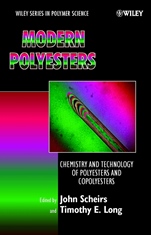
Modern Polyesters: Chemistry and Technology of Polyesters and Copolyesters
ISBN 9780471498568
Autor: John Scheirs, Timothy E. Long
Wydawca: Wiley
Dostępność: 3-6 tygodni
Cena: 2 055,90 zł
Przed złożeniem zamówienia prosimy o kontakt mailowy celem potwierdzenia ceny.
ISBN13: |
9780471498568 |
ISBN10: |
0471498564 |
Autor: |
John Scheirs, Timothy E. Long |
Oprawa: |
Hardback |
Rok Wydania: |
2003-10-07 |
Ilość stron: |
788 |
Wymiary: |
243x167 |
Tematy: |
PN |
Polyesters are one of the most important class of polymers in use today.Hundreds of polyesters exist although only about a dozen are of commercialsignificance. Polyesters are ubiquitous materials in modern life and areused in diverse applications from drink bottles and photographic film toshirts and fabrics. This book serves as a comprehensive, up–to–datereference and includes the following sections:Historical development
Polymerization & polycondensation
Polyester types
Fibers, compounds and modifying additives
Depolymerization & degradation
Liquid crystal polyesters
Unsaturated polyestersComprehensive coverage of polyester resins with an emphasis on theirstructure–property relationships is provided. Polyester types covered indetail include: PET, PET copolymers, PCT, PCTG, PCTA, PBT, PEN, PTT, cyclicpolyester oligomers, LCP and UP′s. The latest advances in polyesters aredescribed along with current and emerging application areas.
This work contains more than 20 contributions with experts from bothacademia and industry from North America, Europe, the Far East andAustralia.
An essential book for plastics engineers, polymer chemists, materialscientists and those working in the plastics manufacturing and processingindustries that deal with polyester resins.
Spis treści:
Contributors.
Series Preface.
Preface.
About the Editors.
I HISTORICAL OVERVIEW.
1 The Historical Development of Polyesters (J. Eric McIntyre).
1 Introduction.
2 Alkyd and Related Resins.
3 Fibres from Partially Aromatic Polyesters.
3.1 Early Work Leading to Poly(ethylene Terephthalate).
3.2 Spread of Polyester Fibre Production.
3.3 Intermediates.
3.4 Continuous Polymerisation.
3.5 Solid–phase Polymerisation.
3.6 End–use Development.
3.7 High–speed Spinning.
3.8 Ultra–fine Fibres.
4 Other Uses for Semi–aromati
c Polyesters.
4.1 Films.
4.2 Moulding Products.
4.3 Bottles.
5 Liquid–crystalline Polyesters.
6 Polyesters as Components of Elastomers.
7 Surface–active Agents.
8 Absorbable Fibres.
9 Polycarbonates.
10 Natural Polyesters.
10.1 Occurrence.
10.2 Poly(β–hydroxyalkanoate)s.
11 Conclusion.
References.
II POLYMERIZATION AND POLYCONDENSATION.
2 Poly(ethylene Terephthalate) Polymerization – Mechanism, Catalysis, Kinetics, Mass Transfer and Reactor Design (Thomas Rieckmann and Susanne Volker).
Notation.
1 Introduction .35
2 Chemistry, Reaction Mechanisms, Kinetics and Catalysis.
2.1 Esterification/Hydrolysis.
2.2 Transesterification/Glycolysis.
2.3 Reactions with Co–monomers.
2.4 Formation of Short Chain Oligomers.
2.5 Formation of Diethylene Glycol and Dioxane.
2.6 Thermal Degradation of Diester Groups and Formation of Acetaldehyde.
2.7 Yellowing.
2.8 Chemical Recycling.
2.9 Conclusions.
3 Phase Equilibria, Molecular Diffusion and Mass Transfer.
3.1 Phase Equilibria.
3.2 Diffusion and Mass Transfer in Melt–phase Polycondensation.
3.3 Diffusion and Mass Transfer in Solid–state Polycondensation.
3.4 Conclusions.
4 Polycondensation Processes and Polycondensation Plants.
4.1 Batch Processes.
4.2 Continuous Processes.
5 Reactor Design for Continuous Melt–phase Polycondensation.
5.1 Esterification Reactors.
5.2 Polycondensation Reactors for Low Melt Viscosity.
5.3 Polycondensation Reactors for High Melt Viscosity.
6 Future Developments and Scientific Requirements.
Acknowledgements .
References.
3 Synthesis and Polymerization of Cyclic Polyester Oligomers (Daniel J. Brunelle).
1 Introduction.
2 History.
3 Preparation of Polyester Cyclic Oligomers from Acid Chlorides.
4 Polyester Cyclic Oligomers via Ring–Chain Equilibration (Depolymerization).
5 Mechanism for
Formation of Cyclics via Depolymerization.
6 Polymerization of Oligomeric Ester Cyclics.
7 Conclusions.
References.
4 Continuous Solid–state Polycondensation of Polyesters (Brent Culbert and Andreas Christel).
1 Introduction.
2 The Chemical Reactions of PET in the Solid State.
2.1 Basic Chemistry.
2.2 Mechanism and Kinetics.
2.3 Parameters Affecting SSP.
3 Crystallization of PET.
3.1 Nucleation and Spherulite Growth.
3.2 Crystal Annealing.
4 Continuous Solid–state Polycondensation Processing.
4.1 PET–SSP for Bottle Grade.
4.2 Buhler PET–SSP Bottle–grade Process.
4.3 Process Comparison.
4.4 PET–SSP for Tyre Cord.
4.5 Other Polyesters.
5 PET Recycling.
5.1 PET Recycling Market.
5.2 Material Flow.
5.3 Solid–state Polycondensation in PET Recycling.
References .
5 Solid–state Polycondensation of Polyester Resins: Fundamentals and Industrial Production (Wolfgang Goltner).
1 Introduction.
2 Principles.
2.1 Aspects of Molten–state Polycondensation.
2.2 Aspects of Solid–state Polycondensation.
2.3 Physical Aspects.
3 Equipment.
3.1 Batch Process.
3.2 Continuous Process.
3.3 SSP of Small Particles and Powders.
3.4 SSP in the Suspended State.
4 Practical Aspects of the Reaction Steps.
4.1 Crystallization and Drying.
4.2 Solid–state Polycondensation.
5 Economic Considerations.
6 Solid–state Polycondensation of Other Polyesters.
7 Conclusions.
References.
III TYPES OF POLYESTERS
6 New Poly(Ethylene Terephthalate) Copolymers (David A. Schiraldi).
1 Introduction.
2 Crystallinity and Crystallization Rate Modification.
2.1 Amorphous Copolyesters of PET.
2.2 Increased Crystallization Rates and Crystallinity in PET .3 PET Copolymers with Increased Modulus and Thermal Properties.
3.1 Semicrystalline Materials.
3.2 Liquid Crystalline Copolyesters of PET.4 Increased Flexibility Copolymers of PET.
5 Copolymers as a Scaffold for Additional Chemical Reactions.
6 Other PET Copolymers.
6.1 Textile–related Copolymers.
6.2 Surfaced–modified PET.
6.3 Biodegradable PET Copolymers.
6.4 Terephthalate Ring Substitutions.
6.5 Flame–retardant PET.
7 Summary and Comments.
References.
7 Amorphous and Crystalline Polyesters based on 1,4–Cyclohexanedimethanol (S. Richardurner, Robert W. Seymour and John R. Dombroski).
Notation.
1 Introduction.
2 1,4–Cyclohexanedimethanol.
3 1,3– and 1,2–Cyclohexanedimethanol: Other CHDM Isomers.
3.1 Definitions: PCT, PCTG, PCTA and PETG.
4 Synthesis of CHDM–based Polyesters.
5 Poly(1,4–Cyclohexylenedimethylene Terephthalate).
5.1 Preparation and Properties.
5.2 Other Crystalline Polymers Based on PCT or CHDM.
5.3 Processing of Crystalline PCT–based Polymers.
5.4 Applications For PCT–based Polymers.
6 GLYCOL–modified PCT Copolyester: Preparation and Properties.
7 CHDM–modified PET Copolyester: Preparation and Properties.
8 Dibasic–acid–modified PCT Copolyester: Preparation and Properties.
9 Modification of CHDM–based Polyesters with Other Glycols and Acids.
9.1 CHDM–based Copolyesters with Dimethyl 2,6–naphthalenedicarboxylate.
9.2 Polyesters Prepared with 1,4–Cyclohexanedicarboxylic Acid.
9.3 CHDM–based Copolyesters with 2,2,4,4–tetramethyl–1,3–cyclobutanediol.
9.4 CHDM–based Copolyesters with Other Selected Monomers.
Acknowledgments.
References.
8 Poly(Butylene Terephthalate) (Robert R. Gallucci and Bimal R. Patel).
1 Introduction.
2 Polymerization of PBT.
2.1 Monomers.
Acid.
2.2 Catalysts.
2.3 Process Chemistry.
2.4 Commercial Processes.
3 Properties of PBT.
3.1 Unfilled PBT.
3.2 Fiberglass–filled PBT.
3.3 Mineral&
Koszyk
Książek w koszyku: 0 szt.
Wartość zakupów: 0,00 zł
Informacje


Kontakt
Gambit
Centrum Oprogramowania
i Szkoleń Sp. z o.o.
Al. Pokoju 29b/22-24
31-564 Kraków
Siedziba Księgarni
ul. Kordylewskiego 1
31-542 Kraków
+48 12 410 5991
+48 12 410 5987
+48 12 410 5989
Subskrypcje
Administratorem danych osobowych jest firma Gambit COiS Sp. z o.o. Na podany adres będzie wysyłany wyłącznie biuletyn informacyjny.
Autoryzacja płatności

Informacje na temat autoryzacji płatności poprzez PayU.

© Copyright 2012: GAMBIT COiS Sp. z o.o. Wszelkie prawa zastrzeżone.
Projekt i wykonanie: Alchemia Studio Reklamy