


Wydawcy
Katalog tematyczny
- Archeologia (109)
- Ekonomia, finanse, business (13704)
- Filozofia (1445)
- Historia (3040)
- Języki i językoznawstwo (2356)
- Lifestyle, hobby i rozrywka (475)
- Medycyna (9704)
- Nauki humanistyczne (4)
- Nauki o Ziemi i środowisku (2638)
- Nauki ścisłe (20412)
- Astronomia (294)
- Biologia (5119)
- Chemia (6540)
- Fizyka (3309)
- Matematyka (4574)
- Nauki ścisłe, ogólnie (503)
- Nauki społeczne (8486)
- Nauki techniczne (13450)
- Prawo (1696)
- Publikacje informacyjne i interdyscyplinarne (1288)
- Religia i wierzenia (917)
- Technika komputerowa (4067)
- Zdrowie, relacje międzyludzkie i rozwój osobisty (657)





Informacje szczegółowe o książce
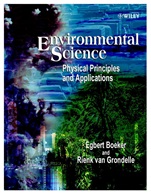
Environmental Science: Physical Principles and Applications
ISBN 9780471495772
Autor: Egbert Boeker, Rienk van Grondelle
Wydawca: Wiley
Dostępność: 3-6 tygodni
Cena: 322,35 zł
Przed złożeniem zamówienia prosimy o kontakt mailowy celem potwierdzenia ceny.
ISBN13: |
9780471495772 |
ISBN10: |
0471495778 |
Autor: |
Egbert Boeker, Rienk van Grondelle |
Oprawa: |
Paperback |
Rok Wydania: |
2001-09-27 |
Ilość stron: |
380 |
Wymiary: |
246x192 |
Tematy: |
PDW |
Environmental Science: Physical Principles and Applications examines the fundamental problems that arise from the interaction between humans and their natural environment. Taken from a physicists perspective, this comprehensive introduction considers how the negative impact of our modern existence upon our environment can be avoided, or at the very least reduced.
Providing extensive coverage of the field, this book brings together the latest developments, theories, research and concerns from both a scientific and social perspective. Beginning with an introduction on approaching environmental problems, the text then moves on to look at climatic change, conventional energy, the transport of pollutants, experimental methods and ends with a discussion on science and society.
Mathematics is only introduced where necessary, and is carefully explained with derivations generally avoided. The science is made more accessible through the introduction of many illustrative examples in the theoretical parts of the text combined with the inclusion of numerous mini–case studies.
Environmental Science: Physical Principles and Applications features: Extensive coverage of the latest concerns, issues and developments within the field from both a scientific and social perspective. Numerous relevant examples and mini–case studies (appetisers) combined with exercises in each chapter and references for further reading. A supplementary website where students can access experiments and simple models relevant to the book This introductory textbook will be invaluable to all students taking a first course in environmental science, environmental physics, environmental analysis or environmental monitoring.
Spis treści:
Preface
Acknowledgements
1. Introduction: A Physical Approach to Environmental Problems
What are Environmental Problems –
Pollution
The Economic and Social Cont
ext
Sunlight and the Solar Spectrum
The Greenhouse Effect
Transport of Pollutants
The Carbon Cycle
2. Weather and Climate
Energy Transport
The Atmsophere, Vertical Structure and Motion
Horizontal Motion of Air
The Oceans
3. Climate Change
Natural Changes of Climate
Human induced changes
Consequences of Climate Change
Reactions to Climate Change
4. Conventional Energy
Physics of Heat
Heat and Power: Thermodynamics
Converting Heat into Power: Problems and ′Solutions′
5. Carbonfree Energies
Renewable energies
Nuclear Power
6. Making up the Balance
Greenhouse Gases, Pollution and Resources
Defining the task
7. Transport of Pollutants
Basic Concepts
Dispersion in the Air
Dispersion in Surface Waters
Dispersion by Groundwater
8. Noise
Physics of Sound
Human hearing
Reducing Sound Levels
9. Environmental Spectroscopy
Basic Spectrospcopy
The Solar Spectrum at Ground Level
Experimental Techniques in Environmental Spectroscopy
Solar UV, Ozone and Life
10. Geophysical Methods
Radioactive Clocks
Isotope Ratios as Environmental Sensors
Magnetic Surveys
Seismic Probing
11. Science and Society
Finite Resources of Energy
Pollution and Health Effects
Environmental Policy
Thinijhng about the Environment and Human Life
The Responsibility of the Scientist
Appendices
References
Index
Okładka tylna:
Environmental Science: Physical Principles and Applications examines the fundamental problems that arise from the interaction between humans and their natural environment. Taken from a physicists perspective, this comprehensive introduction considers how the negative impact of our modern existence upon our environment can be avoided, or at the very least reduced.
Providing extensive coverage of the field, this book brings together the latest
developments, theories, research and concerns from both a scientific and social perspective. Beginning with an introduction on approaching environmental problems, the text then moves on to look at climatic change, conventional energy, the transport of pollutants, experimental methods and ends with a discussion on science and society.
Mathematics is only introduced where necessary, and is carefully explained with derivations generally avoided. The science is made more accessible through the introduction of many illustrative examples in the theoretical parts of the text combined with the inclusion of numerous mini–case studies.
Environmental Science: Physical Principles and Applications features: Extensive coverage of the latest concerns, issues and developments within the field from both a scientific and social perspective. Numerous relevant examples and mini–case studies (appetisers) combined with exercises in each chapter and references for further reading. A supplementary website where students can access experiments and simple models relevant to the book This introductory textbook will be invaluable to all students taking a first course in environmental science, environmental physics, environmental analysis or environmental monitoring.
Koszyk
Książek w koszyku: 0 szt.
Wartość zakupów: 0,00 zł
Informacje


Kontakt
Gambit
Centrum Oprogramowania
i Szkoleń Sp. z o.o.
Al. Pokoju 29b/22-24
31-564 Kraków
Siedziba Księgarni
ul. Kordylewskiego 1
31-542 Kraków
+48 12 410 5991
+48 12 410 5987
+48 12 410 5989
Subskrypcje
Administratorem danych osobowych jest firma Gambit COiS Sp. z o.o. Na podany adres będzie wysyłany wyłącznie biuletyn informacyjny.
Autoryzacja płatności

Informacje na temat autoryzacji płatności poprzez PayU.

© Copyright 2012: GAMBIT COiS Sp. z o.o. Wszelkie prawa zastrzeżone.
Projekt i wykonanie: Alchemia Studio Reklamy