


Wydawcy
Katalog tematyczny
- Archeologia (109)
- Ekonomia, finanse, business (13704)
- Filozofia (1445)
- Historia (3040)
- Języki i językoznawstwo (2356)
- Lifestyle, hobby i rozrywka (475)
- Medycyna (9704)
- Nauki humanistyczne (4)
- Nauki o Ziemi i środowisku (2638)
- Nauki ścisłe (20412)
- Nauki społeczne (8486)
- Nauki techniczne (13450)
- Budownictwo lądowe (1045)
- Chemia przemysłowa (2258)
- Elektronika i telekomunikacja (3287)
- Energetyka (1122)
- Inne nauki stosowane (363)
- Inżynieria biochemiczna (507)
- Inżynieria transportu (232)
- Mechanika i materiały (3316)
- Nauka o środowisku (321)
- Rolnictwo (507)
- Technika, ogólnie (475)
- Prawo (1696)
- Publikacje informacyjne i interdyscyplinarne (1288)
- Religia i wierzenia (917)
- Technika komputerowa (4067)
- Zdrowie, relacje międzyludzkie i rozwój osobisty (657)





Informacje szczegółowe o książce
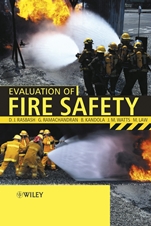
Evaluation of Fire Safety
ISBN 9780471493822
Autor: D. Rasbash, G. Ramachandran, B. Kandola, J. Watts, M. Law
Wydawca: Wiley
Dostępność: 3-6 tygodni
Cena: 694,05 zł
Przed złożeniem zamówienia prosimy o kontakt mailowy celem potwierdzenia ceny.
ISBN13: |
9780471493822 |
ISBN10: |
0471493821 |
Autor: |
D. Rasbash, G. Ramachandran, B. Kandola, J. Watts, M. Law |
Oprawa: |
Hardback |
Rok Wydania: |
2004-02-17 |
Ilość stron: |
496 |
Wymiary: |
251x178 |
Tematy: |
TG |
Fire safety is a major concern in many industries, particularly as there have been significant increases in recent years in the quantities of hazardous materials in process, storage or transport. Plants are becoming larger and are often situated in or close to densely populated areas, and the hazards are continually highlighted with incidents such as the fires and explosions at the Piper Alpha oil and gas platform, and the Enschede firework factory. As a result, greater attention than ever before is now being given to the evaluation and control of these hazards.
In a comprehensive treatment of the subject unavailable elsewhere, this book describes in detail the applications of hazard and risk analysis to fire safety, going on to develop and apply quantification methods. It also gives an explanation in quantitative terms of improvements in fire safety in association with the costs that are expended in their achievement. Furthermore, a quantitative approach is applied to major fire and explosion disasters to demonstrate crucial faults and events.
Featuring:Full international coverage and a review of several major fires and explosion disasters.Presentation of the properties and science of fire including the latest research.Detailed coverage of the performance of fire safety measures.
This is an essential book for practitioners in fire safety engineering, loss prevention professionals, technical personnel in insurance companies as well as academics involved in fire science and postgraduate students. This book is also a useful reference for fire safety officers, building designers, engineers in the process industries, safety practitioners and risk assessment consultants.
Spis treści:
Preface.
PART I: STRUCTURE OF THE FIRE PROBLEM.
1 The place of fire safety in the community.
1.1 The nature of the fire hazard.
1.2 Interaction between fire hazard and other hazards.
1.3 Major fire hazard areas.
1.
4 The total cost of fires.
1.5 Prescriptive and functional approach to fire safety.
1.6 Purpose and outline of this book.
1.7 Definitions.
Symbols.
References.
2 The fire safety system.
2.1 Basic questions of fire safety.
2.2 Fire safety objectives.
2.3 Steps in fire safety design.
2.4 Sources of fire safety data.
2.5 Subsystems.
2.5.1 Fire occurrence and fire prevention.
2.5.2 Fire development and fire control.
2.5.3 Harmful effects.
2.5.4 Direct detriment.
2.5.5 Consequential effects and fire accommodation.
2.5.6 Fire safety design and management.
2.6 Contribution of fire safety engineering.
2.7 Approaches to quantitative evaluation of fire safety.
2.8 Other systems approaches.
2.9 Risk management.
2.10 Trade–off, equivalency, cost benefit, and cost effectiveness.
2.11 How safe is “safe enough?”.
Symbols.
References.
3 Review of some major fire & explosion disasters.
3.1 Introduction.
3.2 Major disasters in buildings involving sudden rapid spread of fire.
3.2.1 Summerland Leisure Center, Isle of Man, 1973.
3.2.2 The Stardust Dance Club fire, Dublin, 1981.
3.2.3 King’s Cross Underground Station, London, 1987.
3.2.4 Bradford City Football Ground, 1985.
3.2.5 Interstate Bank, Los Angeles, 1988.
3.2.6 Dupont Plaza Hotel, Puerto Rico, 1986.
3.3 Fires in which extensive spread of smoke was a major factor.
3.3.1 Beverly Hills Supper Club, Kentucky, 1977.
3.3.2 Fairfield Home, Nottinghamshire, 1974.
3.4 Fires associated with explosions.
3.4.1 MV Betelgeuse, Ireland, 1979.
3.4.2 Ronan Point, London, 1968.
3.4.3 Piper Alpha Platform, North Sea, 1988.
References.
4 Requirements from public and private authorities for fire safety.
4.1 Introduction.
4.2 US regulatory environment.
4.2.1 Codes and standards.
4.2.2 Consensus codes and standards.
4.2.3 Limitations of existing codes.
4.2.4 Code adoption a
nd enforcement.
4.3 National Fire Protection Association.
4.3.1 NFPA codes and standard–making process.
4.3.2 Performance option.
4.3.3 Life safety code.
4.3.4 NFPA building code.
4.4 Model building and fire codes.
4.4.1 Model code writing organizations.
4.4.2 International Code Council (ICC).
4.5 Other nonprofit organizations.
4.5.1 Product standards and testing.
4.5.2 Underwriters laboratories.
4.5.3 Engineering societies.
4.5.4 Insurance organizations.
4.6 US federal agencies.
4.6.1 Workplace fire safety.
4.6.2 Consumer products.
4.6.3 Transport.
4.6.4 Nonregulatory activities.
4.7 Canadian regulations.
4.7.1 National Research Council.
4.7.2 Canadian Commission on Building and Fire Codes.
4.7.3 Objective–Based Codes.
4.7.4 Institute for Research in Construction.
4.7.5 Canadian Standards.
4.8 United Kingdom.
4.8.1 Buildings.
4.8.2 Industrial and process hazards.
4.8.3 Consumer fire safety.
4.8.4 Transport.
4.8.5 Fire safety audits and checklists.
References.
PART II: QUANTIFYING FIRE SAFETY.
5 Physical data.
5.1 Introduction.
5.2 Burning and ignition.
5.2.1 Mechanisms of burning.
5.2.2 Properties of flaming combustion of liquids and solids.
5.2.3 Ignition.
5.2.4 Identification and power of ignition sources.
5.3 Spread of fire.
5.3.1 Radiation from flames.
5.3.2 Convection from flames.
5.3.3 Measurements of heat transfer from flames.
5.3.4 Radiation from hot gas layers.
5.3.5 Convection from hot gas layers.
5.3.6 Fire spread along surfaces.
5.4 Circumstances favorable to rapid fire spread.
5.5 Sudden massive flaming in buildings.
5.6 Sudden massive flaming during fires in process industries.
5.7 Production and movement of smoke and toxic gases.
5.8 Postflashover fires in buildings.
5.9 Interaction between fire and structures.
5.10 Defenses against smoke.
5.11 Fire detection.
5.12 Fir
e suppression.
5.13 Interaction between fire and people.
5.14 Explosions.
5.15 Fire scenarios in fire safety design.
Nomenclature.
References.
6 Sources of statistical data.
6.1 Introduction.
6.2 Fire departments and brigades.
6.2.1 United Kingdom.
6.2.2 United States of America.
6.2.3 Japan.
6.2.4 Other countries.
6.3 Insurance organizations and fire protection associations.
6.3.1 United Kingdom.
6.3.2 United States of America.
6.3.3 Other Countries.
6.4 Special databases.
6.4.1 United Kingdom.
6.4.2 United States of America.
6.4.3 International.
6.5 Other data sources.
6.5.1 Minor databases.
6.5.2 Research studies.
6.6 Ancillary statistics.
6.6.1 Population data.
6.6.2 Building stock.
6.6.3 Economic data.
6.6.4 Other ancillary statistics.
6.6.5 International sources.
6.7 Discussion.
6.7.1 Use of statistics.
6.7.2 Limitations in the use of national statistics.
6.7.3 Gaps in national fire statistics.
6.7.4 International comparisons.
Acronyms.
References.
7 Occurrence and growth of fire.
7.1 Introduction.
7.2 Probabilistic approach.
7.3 Probability of fire starting.
7.4 Probable damage in a fire.
7.5 Extent of spread.
7.6 Fire growth rate.
7.7 Fire severity.
7.8 Special factors.
Symbols.
References.
8 Life loss.
8.1 Introduction.
8.2 Characteristics of fire casualties.
8.3 Location of casualties.
8.4 Nature of injuries.
8.5 Materials first ignited.
8.6 Casualty rate per fire.
8.7 The time factor.
8.8 Evacuation model.
8.9 Multiple–death fires.
8.10 Other measurements of life risk.
8.11 Impact of product choices on life risk – US method.
Symbols.
References.
9 Property damage.
9.1 Introduction.
9.2 Probability distribution.
9.3 Extreme value theory.
9.3.1 Introduction.
9.3.2 Extreme order distributions.
9.3.3 Estimation of extreme order parameters.
9.3
Koszyk
Książek w koszyku: 0 szt.
Wartość zakupów: 0,00 zł
Informacje


Kontakt
Gambit
Centrum Oprogramowania
i Szkoleń Sp. z o.o.
Al. Pokoju 29b/22-24
31-564 Kraków
Siedziba Księgarni
ul. Kordylewskiego 1
31-542 Kraków
+48 12 410 5991
+48 12 410 5987
+48 12 410 5989
Subskrypcje
Administratorem danych osobowych jest firma Gambit COiS Sp. z o.o. Na podany adres będzie wysyłany wyłącznie biuletyn informacyjny.
Autoryzacja płatności

Informacje na temat autoryzacji płatności poprzez PayU.

© Copyright 2012: GAMBIT COiS Sp. z o.o. Wszelkie prawa zastrzeżone.
Projekt i wykonanie: Alchemia Studio Reklamy