


Wydawcy
Katalog tematyczny
- Archeologia (109)
- Ekonomia, finanse, business (13704)
- Filozofia (1445)
- Historia (3040)
- Języki i językoznawstwo (2356)
- Lifestyle, hobby i rozrywka (475)
- Medycyna (9704)
- Nauki humanistyczne (4)
- Nauki o Ziemi i środowisku (2638)
- Nauki ścisłe (20412)
- Astronomia (294)
- Biologia (5119)
- Chemia (6540)
- Chemia analityczna (361)
- Chemia fizyczna (346)
- Chemia nieorganiczna (137)
- Chemia organiczna (535)
- Krystalografia (27)
- Minerologia (46)
- Fizyka (3309)
- Matematyka (4574)
- Nauki ścisłe, ogólnie (503)
- Nauki społeczne (8486)
- Nauki techniczne (13450)
- Prawo (1696)
- Publikacje informacyjne i interdyscyplinarne (1288)
- Religia i wierzenia (917)
- Technika komputerowa (4067)
- Zdrowie, relacje międzyludzkie i rozwój osobisty (657)





Informacje szczegółowe o książce
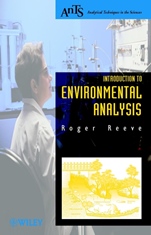
Introduction to Environmental Analysis
ISBN 9780471492955
Autor: Roger N. Reeve
Wydawca: Wiley
Dostępność: 3-6 tygodni
Cena: 533,40 zł
Przed złożeniem zamówienia prosimy o kontakt mailowy celem potwierdzenia ceny.
ISBN13: |
9780471492955 |
ISBN10: |
0471492957 |
Autor: |
Roger N. Reeve |
Oprawa: |
Paperback |
Rok Wydania: |
2002-01-11 |
Ilość stron: |
328 |
Wymiary: |
227x151 |
Tematy: |
PN |
Global awareness of the importance of monitoring and protecting our environment has grown considerably over the last ten years. Environmental concerns are now an integral part of today′s legislation, product design and development, waste minimization and disposal. As well as background monitoring of the environment, scientists are involved in monitoring liquid and gaseous discharges and surveying contaminated land and landfill sites – very topical issues due to concern over waste dumping and potential problems with reuse of old industrial sites.
As well as covering long–established methods, this book includes the breadth of new developments which have taken place in the field of environmental analysis. New techniques have emerged which have now become acceptable as alternatives to more long–standing methods. There is also more use of automated techniques. Quality assurance and quality control aspects have become increasingly important for the environmental analyst with a growing emphasis on accurate quantification. The techniques discussed develop in complexity from simple volumetric measurements for water quality to the special problems of ultra–trace analysis. As well as covering all of the laboratory techniques used in extraction and analysis of samples, attention is also given to in situ monitoring and sampling strategies.
Key features include the following:
∗ Up–to–date information on now widely used analytical techniques such as ICP–MS, ICP–OES, and PM10 sampling.
∗ Written in the AnTS Series style, it is ideal for use as a self–study aid or as the basis of a taught course.
∗ Includes a comprehensive bibliography to guide the reader to more specialized texts and sources for the various standard methods.
Introduction to Environmental Analysis will be invaluable to students on environmental science and analytical chemistry courses, as well as laboratory technicians,
biologists and analytical chemists involved in environmental monitoring.
Spis treści:
Series Preface
Preface
Acronyms, Abbeviations and Symbols
About the Author
1. Introduction
The Environment
Reasons for Concern
Pollution
The Necessity of Chemical Analysis
2. Transport of Pollutants in the Environment and Approaches to their Analysis
Introduction
Sources, Dispersal, Reconcentration and Degradation
Transport and Reconcentration of Neutral Organic Compounds
Transport and Reconcentration of Metal Ions
What is a Safe Level?
Sampling and Sample Variability
General Apporoach to Analysis
The Choice of Laboratory or Field Analysis
Quality Assurance
3. Water Analysis –
Major Constituents
Introduction
Sampling
Measurement of Water Quality
Techniques for the Analysis of Common Ions
4. Water Analysis –
Pollutants
Introduction
Organic Trace Pollutants
Metal Ions
5. Analysis of Land, Solids and Waste
Introduction
Common Problem Areas in the Analysis of Solids
Specific Considerations for the Analysis of Biological Samples
Specific Considerations for the Analysis of Soils
Speicifc Considerations for the Analysis of Contaminated Land
Specific Considerations for the Analysis involved in Waste and Its Disposal by Landfill
Specific Considerations of Sediments and Sewage Sludge
New Extraction and Dissolution Techniques
6. Atmospheric Analysis –
Gases
Introduction
Determination of Time–weighted Average Concentrations
Determination of Instanteous Concentrations
7. Atmsopheric Analysis –
Particles
Introduction
Sampling Methods
Analytical Methods involving Sample Dissolution
Direct Analysis of Solids
8. Ultra–Trace Analysis
Introduction
Analytical Methods
A Typical Analytical Scheme
Responses to Self–Assessment Questions
Bibliography
Glossary of Terms
Units
of Measurement and Physical Constants
Periodic Table
Index
Okładka tylna:
Global awareness of the importance of monitoring and protecting our environment has grown considerably over the last ten years. Environmental concerns are now an integral part of today′s legislation, product design and development, waste minimization and disposal. As well as background monitoring of the environment, scientists are involved in monitoring liquid and gaseous discharges and surveying contaminated land and landfill sites – very topical issues due to concern over waste dumping and potential problems with reuse of old industrial sites.
As well as covering long–established methods, this book includes the breadth of new developments which have taken place in the field of environmental analysis. New techniques have emerged which have now become acceptable as alternatives to more long–standing methods. There is also more use of automated techniques. Quality assurance and quality control aspects have become increasingly important for the environmental analyst with a growing emphasis on accurate quantification. The techniques discussed develop in complexity from simple volumetric measurements for water quality to the special problems of ultra–trace analysis. As well as covering all of the laboratory techniques used in extraction and analysis of samples, attention is also given to in situ monitoring and sampling strategies.
Key features include the following:
∗ Up–to–date information on now widely used analytical techniques such as ICP–MS, ICP–OES, and PM10 sampling.
∗ Written in the AnTS Series style, it is ideal for use as a self–study aid or as the basis of a taught course.
∗ Includes a comprehensive bibliography to guide the reader to more specialized texts and sources for the various standard methods.
Introduction to Environmental Analysis will be invaluable to s
tudents on environmental science and analytical chemistry courses, as well as laboratory technicians, biologists and analytical chemists involved in environmental monitoring.
Koszyk
Książek w koszyku: 0 szt.
Wartość zakupów: 0,00 zł
Informacje


Kontakt
Gambit
Centrum Oprogramowania
i Szkoleń Sp. z o.o.
Al. Pokoju 29b/22-24
31-564 Kraków
Siedziba Księgarni
ul. Kordylewskiego 1
31-542 Kraków
+48 12 410 5991
+48 12 410 5987
+48 12 410 5989
Subskrypcje
Administratorem danych osobowych jest firma Gambit COiS Sp. z o.o. Na podany adres będzie wysyłany wyłącznie biuletyn informacyjny.
Autoryzacja płatności

Informacje na temat autoryzacji płatności poprzez PayU.

© Copyright 2012: GAMBIT COiS Sp. z o.o. Wszelkie prawa zastrzeżone.
Projekt i wykonanie: Alchemia Studio Reklamy