


Wydawcy
Katalog tematyczny
- Archeologia (109)
- Ekonomia, finanse, business (13704)
- Filozofia (1445)
- Historia (3040)
- Języki i językoznawstwo (2356)
- Lifestyle, hobby i rozrywka (475)
- Medycyna (9704)
- Nauki humanistyczne (4)
- Nauki o Ziemi i środowisku (2638)
- Nauki ścisłe (20412)
- Astronomia (294)
- Biologia (5119)
- Chemia (6540)
- Chemia analityczna (361)
- Chemia fizyczna (346)
- Chemia nieorganiczna (137)
- Chemia organiczna (535)
- Krystalografia (27)
- Minerologia (46)
- Fizyka (3309)
- Matematyka (4574)
- Nauki ścisłe, ogólnie (503)
- Nauki społeczne (8486)
- Nauki techniczne (13450)
- Prawo (1696)
- Publikacje informacyjne i interdyscyplinarne (1288)
- Religia i wierzenia (917)
- Technika komputerowa (4067)
- Zdrowie, relacje międzyludzkie i rozwój osobisty (657)





Informacje szczegółowe o książce
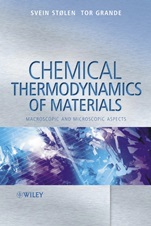
Chemical Thermodynamics of Materials: Macroscopic and Microscopic Aspects
ISBN 9780471492306
Autor: Svein Stølen, Tor Grande
Wydawca: Wiley
Dostępność: 3-6 tygodni
Cena: 540,75 zł
Przed złożeniem zamówienia prosimy o kontakt mailowy celem potwierdzenia ceny.
ISBN13: |
9780471492306 |
ISBN10: |
0471492302 |
Autor: |
Svein Stølen, Tor Grande |
Oprawa: |
Hardback |
Rok Wydania: |
2003-12-16 |
Ilość stron: |
408 |
Wymiary: |
252x170 |
Tematy: |
PN |
Chemical Thermodynamics of Materials is a comprehensive introduction, examining both macroscopic and microscopic aspects of the subject. Aimed at students and researchers in Materials Science, Solid State Chemistry and Physics and Mineralogy, the book applies the theory of thermodynamics to a broad range of materials; from metals, ceramics and other inorganic materials to geological materials.
Focusing on materials rather than the underlying mathematical concepts of the subject, this book will be ideal for the non–specialist requiring an introduction to the energetics and stability of materials. Macroscopic thermodynamic properties are linked to the underlying miscroscopic nature of the materials and trends in important properties are discussed. The later chapters discuss the main experimental and theoretical methods for deriving thermodynamic properties of materials with emphasis placed on methodology.A unique approach covering both macroscopic and microscopic aspects of the subject.Focuses on actual materials rather than theoretical examplesCovers metals, ceramics and other inorganic materials through to geological materials.
Spis treści:
Preface.
1. Thermodynamic foundations.
1.1 Basic concepts.
1.2 The first law of thermodynamics.
1.3 The second and third laws of thermodynamics.
1.4 Open systems and non–expansion work.
References.
Further reading.
2. Single–component systems.
2.1 Phases, phase transitions and phase diagrams.
2.2 The gas phase.
2.3 Condensed phases.
References.
Further reading.
3. Solution thermodynamics.
3.1 Fundamental definitions.
3.2 Thermodynamics of solutions.
3.3 Standard states.
3.4 Analytical solution models.
3.5 Integration of the Gibbs–Duhem equation.
References.
Further reading.
4. Phase diagrams.
4.1 Binary phase diagrams from thermodynamics.
4.2 Multi–
component systems.
4.3 Predominance diagrams.
References.
Further reading.
5. Phase stability.
5.1 Supercooling of liq uids – superheating of crystals.
5.2 Fluctuations and instability.
5.3 Metastable phase equilibria and kinetics.
References.
Further reading.
6. Surfaces, interfaces and adsorption.
6.1 Thermodynamics of interfaces.
6.2 Surface effects on heterogeneous phase equilibria.
6.3 Adsorption and segregation.
References.
Further reading.
7. Trends in enthalpy of formation.
7.1 Compound energetics: trends.
7.2 Compound energetics: rationalization schemes.
7.3 Solution energetics: trends and rationalization schemes.
References.
Further reading.
8. Heat capacity and entropy.
8.1 Simple models for molecules and crystals.
8.2 Lattice heat capacity.
8.3 Vibrational entropy.
8.4 Heat capacity contributions of electronic origin.
8.5 Heat capacity of disordered systems.
References.
Further reading.
9. Atomistic solution models.
9.1 Lattice models for solutions.
9.2 Solutions with more than one sub–lattice.
9.3 Order–disorder.
9.4 Non–stoichiometric compounds.
References.
Further reading.
10. Experimental thermodynamics.
10.1 Determination of temperature and pressure.
10.2 Phase equilibria.
10.3 Energetic properties.
10.4 Volumetric techniques.
Further reading.
11. Thermodynamics and materials modelling (by Neil L. Allan).
11.1 Interatomic potentials and energy minimization.
11.2 Monte Carlo and molecular dynamics.
11.3 Quantum mechanical methods.
11.4 Applications of quantum mechanical methods.
11.5 Discussion.
References.
Further Reading.
Symbols and Data.
Index.
Nota biograficzna:
Professor Svein Stolen was born in 1960. He is Professor at the University of Oslo, Norway in the department of
Chemistry. His e–mail address is svein.stolen@kjemi.uio.no Svein has written about 80 scientific research papers, published in journals worldwide.
Professor Tor Grande was born in 1963. He is Professor in the Department of Materials Technology, at the Norwegian University of Science and Technology, Trondheim, Norway. His e–mail address is tor.grande@material.ntnu.no Tor has written about 80 scientific research papers, published in journals worldwide.
Okładka tylna:
Chemical Thermodynamics of Materials is a comprehensive introduction, examining both macroscopic and microscopic aspects of the subject. Aimed at students and researchers in Materials Science, Solid State Chemistry and Physics and Mineralogy, the book applies the theory of thermodynamics to a broad range of materials; from metals, ceramics and other inorganic materials to geological materials.
Focusing on materials rather than the underlying mathematical concepts of the subject, this book will be ideal for the non–specialist requiring an introduction to the energetics and stability of materials. Macroscopic thermodynamic properties are linked to the underlying miscroscopic nature of the materials and trends in important properties are discussed. The later chapters discuss the main experimental and theoretical methods for deriving thermodynamic properties of materials with emphasis placed on methodology.A unique approach covering both macroscopic and microscopic aspects of the subject.Focuses on actual materials rather than theoretical examplesCovers metals, ceramics and other inorganic materials through to geological materials.
Koszyk
Książek w koszyku: 0 szt.
Wartość zakupów: 0,00 zł
Informacje


Kontakt
Gambit
Centrum Oprogramowania
i Szkoleń Sp. z o.o.
Al. Pokoju 29b/22-24
31-564 Kraków
Siedziba Księgarni
ul. Kordylewskiego 1
31-542 Kraków
+48 12 410 5991
+48 12 410 5987
+48 12 410 5989
Subskrypcje
Administratorem danych osobowych jest firma Gambit COiS Sp. z o.o. Na podany adres będzie wysyłany wyłącznie biuletyn informacyjny.
Autoryzacja płatności

Informacje na temat autoryzacji płatności poprzez PayU.

© Copyright 2012: GAMBIT COiS Sp. z o.o. Wszelkie prawa zastrzeżone.
Projekt i wykonanie: Alchemia Studio Reklamy