


Wydawcy
Katalog tematyczny
- Archeologia (109)
- Ekonomia, finanse, business (13704)
- Filozofia (1445)
- Historia (3040)
- Języki i językoznawstwo (2356)
- Lifestyle, hobby i rozrywka (475)
- Medycyna (9704)
- Nauki humanistyczne (4)
- Nauki o Ziemi i środowisku (2638)
- Nauki ścisłe (20412)
- Astronomia (294)
- Biologia (5119)
- Chemia (6540)
- Chemia analityczna (361)
- Chemia fizyczna (346)
- Chemia nieorganiczna (137)
- Chemia organiczna (535)
- Krystalografia (27)
- Minerologia (46)
- Fizyka (3309)
- Matematyka (4574)
- Nauki ścisłe, ogólnie (503)
- Nauki społeczne (8486)
- Nauki techniczne (13450)
- Prawo (1696)
- Publikacje informacyjne i interdyscyplinarne (1288)
- Religia i wierzenia (917)
- Technika komputerowa (4067)
- Zdrowie, relacje międzyludzkie i rozwój osobisty (657)





Informacje szczegółowe o książce
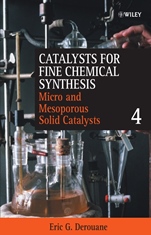
Microporous and Mesoporous Solid Catalysts
ISBN 9780471490548
Autor: Eric G. Derouane, Stanley M. Roberts
Wydawca: Wiley
Dostępność: 3-6 tygodni
Cena: 1 089,90 zł
Przed złożeniem zamówienia prosimy o kontakt mailowy celem potwierdzenia ceny.
ISBN13: |
9780471490548 |
ISBN10: |
0471490547 |
Autor: |
Eric G. Derouane, Stanley M. Roberts |
Oprawa: |
Hardback |
Rok Wydania: |
2006-08-25 |
Ilość stron: |
258 |
Wymiary: |
236x155 |
Tematy: |
PN |
Catalysts are increasingly used by chemists engaged in fine chemical synthesis within both industry and academia. Today, there is a huge choice of high–tech catalysts that adds enormously to the repertoire of synthetic possibilities. However, catalysts are occasionally capricious, sometimes difficult to use and almost always require both skill and experience in order to achieve optimal results. This series offers practical help for advanced undergraduate, graduate and postgraduate students, as well as experienced chemists in industry and academia working with catalysts in organic and organometallic synthesis. It features tested and validated procedures, authoritative reviews on classes of catalysts, and assessments of all types of catalysts.
Micro– and Mesoporous Solid Catalysts describes the use of zeolites and mesoporous solids as catalysts for the production of fine and specialty chemicals. Specific tips and hints are provided and some typical procedures are described in detail. In addition to discussing the pros and cons of various micro– and mesoporous solids used as catalysts, several major organic transformations are examined including aromatic substitutions, heterocyclic ring formation, amines synthesis, oligomerisation, oxidation and hydroxylation, and other regioselective and stereoselective reactions.
Micro– and Mesoporous Solid Catalysts features tutorial introductory chapters, including tips and hints for achieving successful organic transformations. Important reactions are featured together with recommendations to resolve potential problems.
This book is an important text for undergraduate and graduate students, and professionals working as practising zeolite and synthetic organic chemists in industry and academia.
Spis treści:
Series Preface.
Preface to Volume 4.
Abbreviations.
1 An Overview of Zeolite, Zeotype and Mesoporous Solids Chemistry: Design, Synthesis and Catal
ytic Properties (Thomas Maschmeyer and Leon van de Water).
1.1 Zeolites, zeotypes and mesoporous solids: synthetic aspects.
1.2 Design of extra–large pore zeolites and other micro– and mesoporous catalysts.
1.3 Potential of post–synthesis functionalized micro– and mesoporous solids as catalysts for fine chemical synthesis.
2 Problems and Pitfalls in the Applications of Zeolites and other Microporous and Mesoporous Solids to Catalytic Fine Chemical Synthesis (Michel Guisnet and Matteo Guidotti).
2.1 Introduction.
2.2 Zeolite catalysed organic reactions.
2.3 General conclusions.
References.
3 Aromatic Acetylation (Michel Guisnet and Matteo Guidotti).
3.1 Aromatic acetylation.
3.2 Procedures and protocols.
References.
4 Aromatic Benzoylation (Patrick Geneste and Annie Finiels).
4.1 Aromatic benzoylation.
4.2 Acylation of anisole over mesoporous aluminosilicates.
References.
5 Nitration of Aromatic Compounds (Avelino Corma and Sara Iborra).
5.1 Introduction.
5.2 Reaction mechanism.
5.3 Nitration of aromatic compounds using zeolites as catalysts.
5.4 Conclusions.
References.
6 Oligomerization of Alkenes (Avelino Corma and Sara Iborra).
6.1 Introduction.
6.2 Reaction mechanisms.
6.3 Acid zeolites as catalysts for oligomerization of alkenes.
6.4 Mesoporous aluminosilicates as oligomerization catalysts.
6.5 Nickel supported aluminosilicates as catalysts.
References.
7 Microporous and Mesoporous Catalysts for the Transformation of Carbohydrates (Claude Moreau).
7.1 Introduction.
7.2 Hydrolysis of sucrose in the presence of H–form zeolites.
7.3 Hydrolysis of fructose and glucose precursors.
7.4 Isomerization of glucose into fructose.
7.5 Dehydration of fructose and fructose–precursors.
7.6 Dehydration of xylose.
7.7 Synthesis of alkyl–D&#
8211;glucosides.
7.8 Synthesis of alkyl–D–fructosides.
7.9 Hydrogenation of glucose.
7.10 Oxidation of glucose.
7.11 Conclusions.
References.
8 One–pot Reactions on Bifunctional Catalysts (Michel Guisnet and Matteo Guidotti).
8.1 Introduction.
8.2 Examples.
References.
9 Base–type Catalysis (Didier Tichit, Sara Iborra, Avelino Corma and Daniel Brunel).
9.1 Introduction.
9.2 Characterization of solid bases.
9.3 Solid base catalysts.
9.4 Conclusions.
References.
10 Hybrid Oxidation Catalysts from Immobilized Complexes on Inorganic Microporous Supports (Dirk De Vos, Ive Hermans, Bert Sels and Pierre Jacobs).
10.1 Introduction and scope.
10.2 Oxygenation potential of heme–type complexes in zeolite.
10.3 Oxygenation potential of zeolite encapsulated nonheme complexes.
10.4 Conclusions.
Acknowledgements.
References.
Subject Index.
Okładka tylna:
Catalysts are increasingly used by chemists engaged in fine chemical synthesis within both industry and academia. Today, there is a huge choice of high–tech catalysts that adds enormously to the repertoire of synthetic possibilities. However, catalysts are occasionally capricious, sometimes difficult to use and almost always require both skill and experience in order to achieve optimal results. This series offers practical help for advanced undergraduate, graduate and postgraduate students, as well as experienced chemists in industry and academia working with catalysts in organic and organometallic synthesis. It features tested and validated procedures, authoritative reviews on classes of catalysts, and assessments of all types of catalysts.
Micro– and Mesoporous Solid Catalysts describes the use of zeolites and mesoporous solids as catalysts for the production of fine and specialty chemicals. Specific tips and hints are provided and some ty
pical procedures are described in detail. In addition to discussing the pros and cons of various micro– and mesoporous solids used as catalysts, several major organic transformations are examined including aromatic substitutions, heterocyclic ring formation, amines synthesis, oligomerisation, oxidation and hydroxylation, and other regioselective and stereoselective reactions.
Micro– and Mesoporous Solid Catalysts features tutorial introductory chapters, including tips and hints for achieving successful organic transformations. Important reactions are featured together with recommendations to resolve potential problems.
This book is an important text for undergraduate and graduate students, and professionals working as practising zeolite and synthetic organic chemists in industry and academia.
Koszyk
Książek w koszyku: 0 szt.
Wartość zakupów: 0,00 zł
Informacje


Kontakt
Gambit
Centrum Oprogramowania
i Szkoleń Sp. z o.o.
Al. Pokoju 29b/22-24
31-564 Kraków
Siedziba Księgarni
ul. Kordylewskiego 1
31-542 Kraków
+48 12 410 5991
+48 12 410 5987
+48 12 410 5989
Subskrypcje
Administratorem danych osobowych jest firma Gambit COiS Sp. z o.o. Na podany adres będzie wysyłany wyłącznie biuletyn informacyjny.
Autoryzacja płatności

Informacje na temat autoryzacji płatności poprzez PayU.

© Copyright 2012: GAMBIT COiS Sp. z o.o. Wszelkie prawa zastrzeżone.
Projekt i wykonanie: Alchemia Studio Reklamy