


Wydawcy
Katalog tematyczny
- Archeologia (109)
- Ekonomia, finanse, business (13704)
- Filozofia (1445)
- Historia (3040)
- Języki i językoznawstwo (2356)
- Lifestyle, hobby i rozrywka (475)
- Medycyna (9704)
- Nauki humanistyczne (4)
- Nauki o Ziemi i środowisku (2638)
- Nauki ścisłe (20412)
- Astronomia (294)
- Biologia (5119)
- Chemia (6540)
- Chemia analityczna (361)
- Chemia fizyczna (346)
- Chemia nieorganiczna (137)
- Chemia organiczna (535)
- Krystalografia (27)
- Minerologia (46)
- Fizyka (3309)
- Matematyka (4574)
- Nauki ścisłe, ogólnie (503)
- Nauki społeczne (8486)
- Nauki techniczne (13450)
- Prawo (1696)
- Publikacje informacyjne i interdyscyplinarne (1288)
- Religia i wierzenia (917)
- Technika komputerowa (4067)
- Zdrowie, relacje międzyludzkie i rozwój osobisty (657)





Informacje szczegółowe o książce
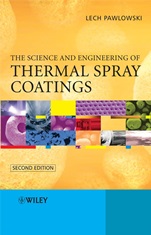
The Science and Engineering of Thermal Spray Coatings
ISBN 9780471490494
Autor: Lech Pawlowski
Wydawca: Wiley
Dostępność: 3-6 tygodni
Cena: 1 129,80 zł
Przed złożeniem zamówienia prosimy o kontakt mailowy celem potwierdzenia ceny.
ISBN13: |
9780471490494 |
ISBN10: |
0471490490 |
Autor: |
Lech Pawlowski |
Oprawa: |
Hardback |
Rok Wydania: |
2008-03-14 |
Numer Wydania: |
2nd Edition |
Ilość stron: |
656 |
Wymiary: |
248x161 |
Tematy: |
PN |
Thermal spraying has become the most versatile coating method in materials engineering. This text describes the state of art o f this technology in a logical way: starting from the feedstock used to spray and the methods of manufacturing, u to the present and potential future industrial applications of sprayed coatings. The book, based on then successful first edition published in 1995, describes new topics in thermal spray technology such as nanostructured deposits, the cold spray method, advanced mathematical methods of process modelling, and many others. This entirely rewritten new edition also covers the advanced methods of coatings characterization and their different mechanical, electrical, physical and chemical properties.
Converge includes:Methods of powder manufacturing including emerging methods of high temperature synthesis, their characterization and the problems related to the transport and injection of a powder into a jet or flame.The technical basis of the coating preparation processes, including pre–spray treatment of a substrate with the methods of surface activation by sand blasting, laser ablation and water jet and the methods of masking the elected areas of the coated surface.The physics and chemistry of thermal spraying and the metallurgy of coating formation as well as a discussion on coating build–up from the individual particles.The methods of coatings characterization such as advanced microstructural investigations including scanning electron microscope; X–ray diffraction; transmission electron microscope; mercury intrusion porosimetry, etc.Application of castings in numerous industrial sectors such as aeronautics, automobiles, chemicals and mechanical engineering, including the status of research of emerging applications in electronic and energy generating sectors.
This book is addressed to graduate and PhD students wishing to familiarize themselves with thermal spraying. Professi
onals working in the area will find it useful as a reminder of the scientific fundamentals of the deposition process, whilst academic and industrial researchers will find up–to–de information on the most important research areas of this rapidly growing field.
Spis treści:
Preface to the Second Edition.
Preface to the First Edition.
Acronyms, Abbreviations and Symbols.
1 Materials Used for Spraying.
1.1 Methods of Powders Production.
1.1.1 Atomization.
1.1.2 Sintering or Fusion.
1.1.3 Spray Drying (Agglomeration).
1.1.4 Cladding.
1.1.5 Mechanical Alloying (Mechanofusion).
1.1.6 Self–propagating High–temperature Synthesis (SHS).
1.1.7 Other Methods.
1.2 Methods of Powders Characterization.
1.2.1 Grain Size.
1.2.2 Chemical and Phase Composition.
1.2.3 Internal and External Morphology.
1.2.4 High–temperature Behaviour.
1.2.5 Apparent Density and Flowability.
1.3 Feeding, Transport and Injection of Powders.
1.3.1 Powder Feeders.
1.3.2 Transport of Powders.
1.3.3 Injection of Powders.
References.
2 Pre–Spray Treatment.
2.1 Introduction.
2.2 Surface Cleaning.
2.3 Substrate Shaping.
2.4 Surface Activation.
2.5 Masking.
References.
3 Thermal Spraying Techniques.
3.1 Introduction.
3.2 Flame Spraying (FS).
3.2.1 History.
3.2.2 Principles.
3.2.3 Process Parameters.
3.2.4 Coating Properties.
3.3 Atmospheric Plasma Spraying (APS).
3.3.1 History.
3.3.2 Principles.
3.3.3 Process Parameters.
3.3.4 Coating Properties.
3.4 Arc Spraying (AS).
3.4.1 Principles.
3.4.2 Process Parameters.
3.4.3 Coating Properties.
3.5 Detonation–Gun Spraying (D–GUN).
3.5.1 History.
3.5.2 Principles.
3.5.3 Process Parameters.
3.5.4 Coating Properties.
3.6 High–Velocity Oxy–Fuel (HVOF) Spraying.
3.6.1 History.
3.6.2 Principl
es.
3.6.3 Process Parameters.
3.6.4 Coating Properties.
3.7 Vacuum Plasma Spraying (VPS).
3.7.1 History.
3.7.2 Principles.
3.7.3 Process Parameters.
3.7.4 Coating Properties.
3.8 Controlled–Atmosphere Plasma Spraying (CAPS).
3.8.1 History.
3.8.2 Principles.
3.8.3 Process Parameters.
3.8.4 Coating Properties.
3.9 Cold–Gas Spraying Method (CGSM).
3.9.1 History.
3.9.2 Principles.
3.9.3 Process Parameters.
3.9.4 Coating Properties.
3.10 New Developments in Thermal Spray Techniques.
References.
4 Post–Spray Treatment.
4.1 Heat Treatment.
4.1.1 Electromagnetic Treatment.
4.1.2 Furnace Treatment.
4.1.3 Hot Isostatic Pressing (HIP).
4.1.4 Combustion Flame Re–melting.
4.2 Impregnation.
4.2.1 Inorganic Sealants.
4.2.2 Organic Sealants.
4.3 Finishing.
4.3.1 Grinding.
4.3.2 Polishing and Lapping.
References.
5 Physics and Chemistry of Thermal Spraying.
5.1 Jets and Flames.
5.1.1 Properties of Jets and Flames.
5.2 Momentum Transfer between Jets or Flames and Sprayed Particles.
5.2.1 Theoretical Description.
5.2.2 Experimental Determination of Sprayed Particles’ Velocities.
5.2.3 Examples of Experimental Determination of Particles Velocities.
5.3 Heat Transfer between Jets or Flames and Sprayed Particles.
5.3.1 Theoretical Description.
5.3.2 Methods of Particles’ Temperature Measurements.
5.4 Chemical Modification at Flight of Sprayed Particles.
References.
6 Coating Build–Up.
6.1 Impact of Particles.
6.1.1 Particle Deformation.
6.1.2 Particle Temperature at Impact.
6.1.3 Nucleation, Solidification and Crystal Growth.
6.1.4 Mechanisms of Adhesion.
6.2 Coating Growth.
6.2.1 Mechanism of Coating Growth.
6.2.2 Temperature of Coatings at Spraying.
6.2.3 Generation of Thermal Stresses at Spraying.
6.2.4 Coatings Surfaces.
6.3 Microstructure of the Coatings.
6.3.1 Crystal Phase Composition.
6.3.2 Coatings’ Inhomogeneity.
6.3.3 Final Microstructure of Sprayed Coatings.
6.4 Thermally Sprayed Composites.
6.4.1 Classification of Sprayed Composites.
6.4.2 Composite Coating Manufacturing.
References.
7 Methods of Coatings’ Characterization.
7.1 Methods of Microstructure Characterization.
7.1.1 Methods of Chemical Analysis.
7.1.2 Crystallographic Analyses.
7.1.3 Microstructure Analyses.
7.1.4 Other Applied Methods.
7.2 Mechanical Properties of Coatings.
7.2.1 Adhesion Determination.
7.2.2 Hardness and Microhardness.
7.2.3 Elastic Moduli, Strength and Ductility.
7.2.4 Properties Related to Mechanics of Coating Fracture.
7.2.5 Friction and Wear.
7.2.6 Residual Stresses.
7.3 Physical Properties of Coatings.
7.3.1 Thickness, Porosity and Density.
7.3.2 Thermophysical Properties.
7.3.3 Thermal Shock Resistance.
7.4 Electrical Properties of Coatings.
7.4.1 Electrical Conductivity.
7.4.2 Properties of Dielectrics.
7.4.3 Electron Emission from Surfaces.
7.5 Magnetic Properties of Coatings.
7.6 Chemical Properties of Coatings.
7.6.1 Aqueous Corrosion.
7.6.2 Hot–gas Corrosion.
7.7 Characterization of Coatings’ Quality.
7.7.1 Acoustical Methods.
7.7.2 Thermal Methods.
References.
8 Properties of Coatings.
8.1 Design of Experiments.
8.2 Mechanical Properties.
8.2.1 Hardness and Microhardness.
8.2.2 Tensile Adhesion Strength.
8.2.3 Elastic Moduli, Strengths and Fracture Toughness.
8.2.4 Friction and Wear.
8.3 Thermophysical Properties.
8.3.1 Thermal Conductivity and Diffusivity.
8.3.2 Specific Heat.
8.3.3 Thermal Expansion.
8.3.4 Emissivity.
8.3.5 Thermal Shock Resistance.
8.4 Electric Properties.
8.4.1 Properties of Conductors.
8.4.2 Properties of Resistors.
8.4.3 Properties of Dielectrics.
8.4.4 Electric Field Emitters.
8.4.5 Properties
Koszyk
Książek w koszyku: 0 szt.
Wartość zakupów: 0,00 zł
Informacje


Kontakt
Gambit
Centrum Oprogramowania
i Szkoleń Sp. z o.o.
Al. Pokoju 29b/22-24
31-564 Kraków
Siedziba Księgarni
ul. Kordylewskiego 1
31-542 Kraków
+48 12 410 5991
+48 12 410 5987
+48 12 410 5989
Subskrypcje
Administratorem danych osobowych jest firma Gambit COiS Sp. z o.o. Na podany adres będzie wysyłany wyłącznie biuletyn informacyjny.
Autoryzacja płatności

Informacje na temat autoryzacji płatności poprzez PayU.

© Copyright 2012: GAMBIT COiS Sp. z o.o. Wszelkie prawa zastrzeżone.
Projekt i wykonanie: Alchemia Studio Reklamy